



Mastering OEE: How to Calculate Overall Equipment Effectiveness and Boost Production Efficiency
 What Is Overall Equipment Effectiveness (OEE)?
Overall Equipment Effectiveness (OEE) is a leading KPI that quantifies how well an asset turns planned production time into valuable, defect‑free output. By dissecting productivity into availability, performance, and quality, OEE provides actionable insight into every loss that erodes throughput.
| Metric | Definition | Formula | Inputs | Example Numbers | Result | Notes |
|---|---|---|---|---|---|---|
| Availability | Actual operating time versus planned time, adjusted for downtime. | Run Time / Planned Production Time | Run Time, Planned Production Time | 240 min / 300 min | 80% | 100% indicates zero downtime. |
| Performance | Speed relative to the ideal cycle time. | (Ideal Cycle Time × Total Count) / Run Time | Ideal Cycle Time, Total Count, Run Time | 1 min × 150 / 240 min | 62.5% | Reflects slow cycles or minor stops. |
| Quality | Good units produced divided by total units. | Good Count / Total Count | Good Count, Total Count | 120 / 150 | 80% | Captures defects and rework. |
| OEE | Composite score combining availability, performance, and quality. | Availability × Performance × Quality | Availability, Performance, Quality | 0.80 × 0.625 × 0.80 | 40% | 100% is theoretical perfection. |
OEE in Manufacturing
Manufacturers use OEE to isolate the exact percentage of planned production time that is genuinely productive. It’s the bridge between raw equipment uptime and finished‑goods quality, guiding continuous improvement initiatives.
Three Pillars of OEE
Availability
Measured by the ratio of actual run time to scheduled production time. A 100% score means the asset operated uninterrupted during its shift.
Performance
Assesses how quickly the equipment runs compared to its ideal cycle time. A 100% score indicates no speed losses.
Quality
Calculates the proportion of defect‑free parts. A 100% score reflects zero defective output.
Overall OEE
By multiplying the three scores, OEE reflects the compounded effect of all losses. A 40% OEE means significant room for improvement across one or more pillars.
Calculating OEE: Step‑by‑Step Example
Let’s walk through a realistic shift scenario.
1. Availability
Run Time = 240 min, Planned Production Time = 300 min → 240/300 = 80%.
2. Performance
Total Count = 150 units, Ideal Cycle Time = 1 min, Run Time = 240 min → (1 × 150)/240 = 62.5%.
3. Quality
Good Count = 120 units, Total Count = 150 units → 120/150 = 80%.
4. OEE
0.80 × 0.625 × 0.80 = 0.40 → 40% OEE.
Key Components for Accurate OEE
- Good Count – Units that meet quality standards.
- Ideal Cycle Time – Fastest achievable cycle for a single good part.
- Planned Production Time – Scheduled operating window.
- Fully Productive Time – Time spent producing good parts without stoppages.
Simple vs. Preferred OEE Formulas
The basic formula is:
OEE = (Good Count × Ideal Cycle Time) / Planned Production Time
This snapshot is useful for quick checks but omits availability losses, making it less actionable for root‑cause analysis.
In contrast, the preferred method—OEE = Availability × Performance × Quality—breaks down losses and pinpoints improvement targets.
Benefits of OEE Tracking
- Enhanced Asset Utilization – Optimise machinery to operate at peak efficiency.
- Early Asset Health Signals – Sudden drops in OEE flag impending equipment failure.
- Performance Benchmarking – Compare similar assets or shifts to uncover best practices.
- Lean Synergy – OEE naturally aligns with waste reduction and continuous improvement.
OEE in Lean Manufacturing
Lean initiatives thrive on identifying and eliminating waste. OEE surfaces the exact loss categories—downtime, slow cycles, and defects—providing a data‑driven roadmap to lean transformation.
OEE and Total Productive Maintenance (TPM)
TPM’s goal is zero unplanned downtime. OEE offers a quantitative baseline and progress metric, allowing TPM teams to track whether preventive maintenance strategies are closing the gap between scheduled and actual uptime.
Interpreting Your OEE Score
A score of 80% is generally considered strong; however, context matters:
- Industry benchmarks: 100% (perfect) → 85% (world‑class) → 60% (typical) → 40% (low).
- Facility baseline: A jump from 60% to 80% signals substantial improvement, even if 80% still falls short of the world‑class threshold.
Setting Realistic OEE Goals
Start with your current baseline, then target incremental gains—e.g., 5–10% improvement in the most impactful pillar each quarter—before aiming for broader system upgrades.
The Six Major Losses and Their OEE Impact
- Breakdown Losses – Unplanned stops due to failures.
- Setup & Adjustment Losses – Planned downtime for changeovers.
- Idling & Minor Stoppages – Brief pauses from calibration or minor issues.
- Startup Losses – Warm‑up periods before stable production.
- Reduced Speed Losses – Decreased throughput from wear or misuse.
- Quality Defects – Defective units requiring rework.
These categories map directly onto the OEE pillars: breakdowns & setups to availability; idling & startup to performance; reduced speed & defects to quality.
Strategies to Minimize Losses
- Implement preventive maintenance plans to reduce breakdowns.
- Apply SMED principles to cut setup time.
- Standardise processes and train operators to handle minor stoppages quickly.
- Develop robust startup procedures and pre‑run checks.
- Replace worn components promptly to maintain speed.
- Enforce strict SOPs and early defect detection to keep quality high.
Common OEE Improvement Challenges
- Data Collection – Real‑time data integration and accuracy.
- Expertise – Proper training on OEE interpretation and equipment variability.
- Culture – Aligning organizational goals with continuous improvement.
- Sustainability – Maintaining gains over time and balancing trade‑offs between pillars.
Implementing OEE in Your Organization
- Build awareness and secure executive sponsorship.
- Define clear metrics for availability, performance, and quality.
- Establish a baseline using current data.
- Set realistic, incremental improvement targets.
- Deploy a robust data platform—e.g., a CMMS—to capture and analyze OEE metrics.
- Adopt a continuous improvement mindset: iterate, learn, and refine.
Enhancing OEE with a CMMS
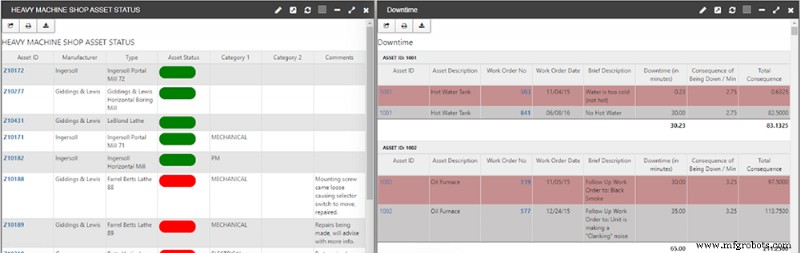
Modern CMMS solutions, such as eMaint, centralise maintenance data, automate real‑time OEE calculations, and generate actionable insights. By integrating your CMMS with production floor sensors, you can track OEE trends, forecast maintenance needs, and drive measurable efficiency gains.
Contact us to discover how eMaint can elevate your maintenance KPIs and unlock higher OEE performance.
Equipment Maintenance and Repair
- Rockwell Automation Partners with ATCC to Expand Automation Training Across Central Minnesota
- BinCloud®: Real‑Time Silo Inventory for Safety and Efficiency
- Why Every Renovation Needs a Commercial Electrician First
- Four Proven Strategies to Organize Your Asset Hierarchy and Find Assets Quickly
- Mastering Maintenance Inventory Management: Strategies to Cut Costs and Boost Reliability
- Why a SaaS CMMS is the Smart Choice for Modern Maintenance Management
- Maximizing Value from Safety Audit & Inspection Findings
- Wireless Condition Monitoring: Boost Production & Cut Downtime
- Top 5 Ways MRO Plants Drain Profits — How to Prevent Hidden Losses
- Boeing Saves Hundreds of Thousands by Tightening Torque Standards