



Whirlpool’s Reliability Revolution: Elevating Uptime, Productivity, and Profitability
Whirlpool Corporation has long been a trusted name in home appliances, powering households with dishwashers and washing machines that rely on precise water and detergent chemistry to eliminate grime.
Financially, the company is a $13 billion‑a‑year enterprise that has consistently earned a spot on the Fortune 500—ranked No. 79 in 2005—and continues to deliver robust returns to shareholders.
In society, Whirlpool is among the most recognizable appliance brands worldwide, outpacing rivals such as General Electric, Maytag and Frigidaire in both market presence and consumer confidence.
Familiarity is a double‑edged sword. While it fuels brand loyalty, it also exposes the company to new competition from low‑wage markets.
“The marketplace is changing, and it’s being led by companies we know less about,” says Larry Dunfee, Manager of Consumer‑Centered Manufacturing at Whirlpool’s Findlay, Ohio plant—the world’s largest dishwasher manufacturer.
Shining examples of emerging competitors include China’s Shian Jing, Wenling Changtian and Taiwan’s Naiko Asia. These firms bring competitive pricing to North America by leveraging lower labor costs, threatening Whirlpool’s high‑cost North American base.
Whirlpool’s response is a sweeping reliability revolution. While remaining the industry leader, the company has redesigned its approach to maximize both mechanical performance and workforce contribution. The result: higher uptime, improved productivity, superior quality, and stronger financial outcomes.

The Pieces Fit Together
With 2,000 employees operating in a 1‑million‑square‑foot facility, the Findlay plant is no stranger to machine reliability and empowerment.
Since the mid‑1990s, maintenance and operations leaders introduced Total Productive Manufacturing (TPM) and Reliability‑Centered Maintenance (RCM). Early on, floor workers played a pivotal role in driving improvement projects.
The key difference between 1995 and 2005 is cohesion. Whirlpool’s improvement tools now align rather than run parallel, and both maintenance and production staff fully embrace the shared vision that “we are all responsible for the equipment.”
TPM + RCM = Results
TPM is a team‑based approach that empowers operators to own equipment, continuously identify improvement opportunities, and implement planned maintenance. Each shift hosts a TPM team of roughly ten area operators and maintenance personnel.
During TPM’s formative years, teams were led by a process engineer or area supervisor. After TPM and Overall Equipment Effectiveness (OEE) training, the team identified loss sources and implemented solutions. Today, hourly workers lead their 32 teams, and RCM is embedded in the TPM curriculum.
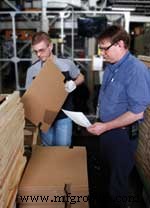
Electrical engineer Tom Jones (right) works closely with production workers.
RCM applies a structured, cross‑functional thought process over three to five days to develop a complete maintenance strategy for a piece of equipment.
In a recent RCM event, senior reliability engineer Richard Word facilitated a 12‑member group that included operators, electricians, an operations supervisor, an engineer, a plastic molding technician, a quality process analyst, a millwright, a maintenance engineer, a maintenance supervisor and a supplier representative.
They meticulously analyzed the vertical plastic press’s components, identified failure modes, and created targeted maintenance actions.
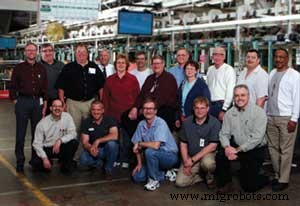
Senior reliability engineer Richard Word (seated in middle) is flanked by his recent RCM team.
The analysis followed a 14‑step process: review history, define failure probability and consequence, list functions, sub‑functions, failure modes, effects, downtime, consequences, navigate a decision tree, determine maintenance tasks, decide on spare parts, review completeness, and conduct a reality check.
“RCM is a great kickoff for TPM teams,” says maintenance and tooling manager John Siefker. “It brings operators, technicians, and engineers together, sparking real‑world insight and new ideas.”
Over 20 % of Findlay workers have participated in RCM events to date.
RCM analyses now inform preventive maintenance (PM) tasks. Unlike generic PM entries, current tasks include equipment status, action verbs, specific components, measurable conditions, and references to condition‑monitoring standards.
Operators and technicians share PM responsibilities 50/50.
“TPM and RCM are no longer separate entities,” says Word. “They complement and intersect, creating a unified improvement engine.”
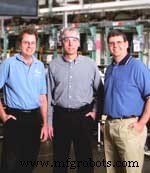
Plant leaders, including facilities engineering manager Randy Statzer (left), Consumer‑Centered Manufacturing manager Larry Dunfee and TPM facilitator Jim Dray, oversee reliability initiatives.
‘We Are All Responsible’
By shifting many maintenance functions to operators, Whirlpool has cultivated genuine equipment ownership.
“Operators once thought their role was only to assemble components,” says TPM facilitator Jim Dray. “Now we emphasize that they are accountable for equipment health and productivity—an organization‑wide responsibility.”
Ownership means operators perform PM tasks such as cleaning, lubricating, belt and hose replacement, and monitoring heat strips. They also conduct predictive maintenance using handheld infrared guns and ultrasound equipment.
“Preventing failure is now our top priority,” says electrical engineer Tom Jones. “Prevention is far more valuable than prediction.”
Maintenance and engineering teams collaborate with suppliers, providing feedback and performance history to build more robust equipment before installation. For example, a Battenfeld injection‑molding machine representative participated in a recent RCM project.
“We continue to explore ways to involve our supply base,” says Dunfee. “This is a key growth area.”
By focusing on prevention, the plant has surpassed 90 % uptime. Unplanned maintenance accounted for only 13.4 % of work orders in a recent 30‑day period.
Stepping Up to The Plate
Failure prevention and unified ownership extend to problem‑solving skills, underscoring Whirlpool’s integrated improvement culture.
TPM teams also receive lean manufacturing training, including Continuous Improvement (CI). The CI process follows a formal seven‑step problem‑solving methodology: state the problem, clarify it, identify contributing processes, root‑cause analysis, suggest countermeasures, plan implementation, and perform follow‑up.
“This disciplined approach ensures we target root causes, not symptoms,” says Jones.
Recent TPM Steering Committee meetings highlighted case studies: non‑fitting console seals, inconsistent screw‑driving performance, and impaired cycle‑indicator visibility. These exercises are required for TPM certification.
Alongside CI, the plant employs gemba walks—Japanese for “the place where value is added.” Leaders, workers and even the vice president stroll the facility, identifying waste, non‑value activities, and safety concerns.
A prominent sign reads: “If it doesn’t add value, it’s waste! What are you doing to reduce waste?”
Critical Process Yield (CPY) is a key metric that tracks availability, performance and quality. Historically, the Findlay plant operated at 60‑70 % capacity, while industry benchmarks suggested 85‑90 %. Recent CPY averages rose to 79 % in 2003, 84 % in 2004, and 85 % in early 2005.
“When we make the right maintenance decisions, everything aligns,” says Jones. “It reduces stress for everyone.”
Revolution’s Evolution
The Findlay plant exemplifies how empowered people and powerful tools drive lasting improvement.
Whirlpool now shares its model across North America, with Word visiting sister sites to teach RCM and Dray historically leading TPM training.
Back in Findlay, the pursuit of continuous improvement never stops. “When your ultimate goal is continuous improvement, you never finish,” says Dray. “It’s an endless cycle—no finish line.”
TPM Certification Guidelines
- Implement a system to measure TPM team progress.
- Clean and inspect equipment.
- Create a comprehensive spare parts list and make it widely available.
- Identify and document all lubrication points.
- Eliminate problem sources and inaccessible areas.
- Develop cleaning, lubricating and inspection schedules.
- Implement skilled trades inspections.
- Define operator, skilled trades and shared tasks.
- Train operators and skilled trades.
- Communicate implementation progress to the whole team.
- Seek continuous improvement.
- Conduct a certification review.
- Achieve certification.
Equipment Maintenance and Repair
- Reliability: The Comprehensive Guide to Asset Management
- From Maintenance to Reliability: Building a Culture of Predictive Excellence
- Building a Reliability Culture: Ownership, Collaboration, and KPI Success
- Cutting Waste to Boost Equipment Reliability
- Raytheon Missile Systems Pursues Reliability Excellence
- Alcoa’s 50‑Year‑Old Smelter Drives Reliability Excellence to Cut Costs and Boost OEE
- The Key to Reliability Success: Culture Change Over Technology
- Reliability‑Centric Sales: Driving Profitability and Reducing Risk
- Enhancing Plant Reliability Through Collaborative Operations and Maintenance
- Reliability: The Core of Sustainable Manufacturing