



Why Filing Maintenance Records at the Component Level Improves Planning Accuracy
In earlier posts I highlighted the most common frustrations that planners face and the undeniable value of thorough planning. Today I continue that discussion by exploring a key principle for effective maintenance planning: how planners should file information. This is Principle 3 in my Maintenance Planning and Scheduling Handbook.
First, leadership must free planners from field‑crew duties and from firefighting jobs in progress so that they can concentrate on future work. Once planners are working on work orders that have not yet been started or assigned, the next challenge is determining the appropriate level—equipment or system—to file completed work.
Consider a condensate polisher, which purifies water by removing anions and cations. The system contains hundreds of distinct pieces of equipment. Imagine a work order is written for the Unit 1 condensate polisher’s anion regeneration valve. The planner’s first task is to review the history file to incorporate lessons learned.
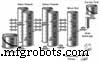
Figure 1. Condensate Polisher
When a plant files work orders at the system level, the planner must sift through hundreds of entries to locate the few that involve the valve in question. This inefficiency prevents planners from leveraging past failures, parts usage, and time data in the current plan.

Figure 2. System‑Level File
Conversely, a component‑level file allows the planner to quickly retrieve the two or three work orders from the past few years on that exact valve. The planner can review failure modes, parts replaced, and labor time to refine the current job plan.

Figure 3. Component‑Level File
Maintenance typically focuses on discrete pieces of equipment, not on entire systems. Even when a system problem is identified, it is usually traced back to a single component. Therefore, maintenance records should be filed at the component level.
Work orders should always include the component number to aid maintenance. When the component number is known from the outset, planners can immediately consult the correct file—or create one if it does not exist. Tags affixed to equipment further streamline this process.
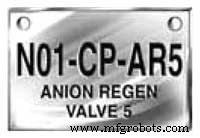
Figure 4. Equipment Tag Matches File
Even computer systems must follow this principle. A hierarchical computer structure may allow a user to write a work order for a generic node like N01‑CP, leading to a system‑level filing problem. With thousands of equipment items, consulting the physical tag is often more reliable than navigating deep computer hierarchies.
Doc Palmer, author of the Maintenance Planning and Scheduling Handbook, is a Certified Maintenance & Reliability Professional (CMRP) with nearly 25 years of hands‑on industrial experience. From 1990 to 1994 he restructured a major electric utility’s maintenance planning organization, a transformation that enabled planning across all crafts and stations.
Equipment Maintenance and Repair
- How Industrial Maintenance Has Evolved: From Reactive to Predictive
- The 70/30 Rule: Why 30% of Workers Deliver 70% of Results
- When Is It Acceptable to Deviate From a Maintenance Schedule?
- Why Accurate Equipment Bill of Materials Is Critical for Reliable Operations
- Reevaluating Maintenance Supervisors: From Desk to Floor
- Standard Procedure for Comprehensive Work Equipment Inspection
- How Regular Equipment Inspections Cut Maintenance Costs & Prevent Downtime
- Unlocking Profitability: The Business Value of Regular Equipment Inspections
- Why Regular Equipment Inspections Save Time, Money, and Ensure Safety
- Elevate Your Summer Landscaping with These 4 Essential Cat Machines