



Louisville Slugger: Crafting the Sweet Spot of Baseball Excellence
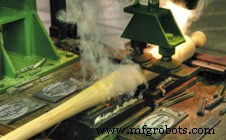
Baseball players often compare the Louisville Slugger bat to a violin’s Stradivarius or a piano’s Steinway. While the language is vivid, the underlying sentiment is clear: the Slugger is synonymous with quality and performance.
Former Boston Red Sox pitcher Charlie Wagner recalls a visit to the Louisville Slugger factory in St. Louis: “Ted Williams was in the room with a new line of bats. He shook his head, swore loudly, and said, ‘These are the best bats.’ He spent hours handling each bat, shaving the grips and testing feel. When he swung a bat at the bedpost, the bed was knocked over. He laughed and told me to call for a replacement.” Wagner’s story captures the passion that drives every Slugger.
The Hillerich & Bradsby Company, founded by John A. “Bud” Hillerich in 1884, has cultivated a storied partnership with baseball for 139 years. The company’s craftsmanship and reliability are reflected in its production of nearly 70 % of major‑league and 80 % of minor‑league bats.
Hall of Famer Ted Williams once declared, “I’d be a .290 hitter without a Louisville Slugger.” His career average of .344—fourth‑best all‑time—attests to the bat’s performance. Yet, even elite hitters accept that a bat can fail: Williams missed 65.6 % of his at‑bats. In contrast, a well‑made Slugger can dramatically reduce that failure rate.
At the heart of this success is the Louisville, KY plant on Main Street, a 100,000‑sq‑ft facility that dedicates 16,000 sq‑ft to bat production. With 155 employees—53 of whom are unionized, including five hourly maintenance workers—the plant produces about 1 million bats annually, 60,000 of which serve major‑league players.
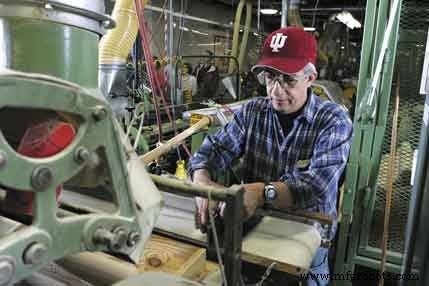
Bill Dreschel, hired in 1966, is one of the plant’s two millwrights.
Just the Facts
Plant: Hillerich & Bradsby, Main Street, Louisville, KY. Founded 1884.
Site size: 100,000 sq‑ft, 16,000 sq‑ft dedicated to bat production.
Employees: 155 total; 53 unionized plant‑floor workers (5 hourly maintenance).
Products: Louisville Slugger bats for major‑league, minor‑league, and recreational players. 70 % of MLB bats and 80 % of minor‑league bats are produced here.
Capacity: ~1 million bats per year, including 60,000 major‑league models.
FYI: The company once produced 7 million wooden bats annually. John A. “Jack” Hillerich III is chairman; John A. Hillerich IV is president and CEO. The Slugger trademark was registered in 1894.
Professional players refine their craft over time, adjusting their swing and equipment. Babe Ruth’s early career featured a high home‑run rate that later balanced with a steady single‑hitting rhythm. Similarly, Ichiro Suzuki’s transition from the Japanese league to MLB shifted his focus from power to precision. Louisville Slugger’s bats accommodate these evolving styles by delivering consistent balance and feel.
Reliability is a cornerstone of Hillerich & Bradsby’s manufacturing philosophy. For more than a century, the plant has leveraged deep-rooted expertise, continuous improvement, and Deming’s quality principles to maintain uptime and minimize breakdowns.
In 2006, the plant’s production staff included 25 hourly workers and five hourly maintenance staff—all with at least 37 years of experience. By 2007, the maintenance team’s two millwrights had a combined 77 years of service, and other long‑standing technicians had been on the job since the 1970s.
“These workers have lived with the machines,” says Bob Hillerich, facilities and maintenance manager. “They built the equipment, they keep it running, and they drive continuous improvement.”
Despite their experience, the plant has embraced modern technology. A 5.25‑inch floppy‑disk CMMS, once used for maintenance records, has been replaced by a state‑of‑the‑art system from Mapcon Technologies, enabling real‑time scheduling, parts management, and predictive diagnostics.
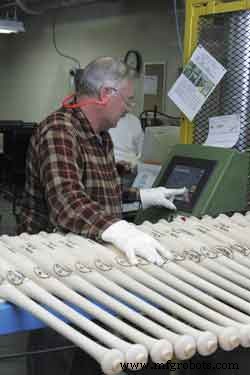
Computers and automation now play a vital role at the Louisville plant.
When the aluminum bat market emerged in the late 1970s, Hillerich & Bradsby expanded into California to stay competitive. That expansion, coupled with a commitment to Total Productive Maintenance (TPM) and just‑in‑time manufacturing, helped the company preserve its leadership in wooden bat production.
Jack Hillerich’s participation in W. Edwards Deming’s seminars in 1984 spurred a company‑wide shift toward quality of management, not just product quality. The plant adopted Deming’s 14 Points, integrating them into daily operations and training programs.
14 Points: Following Deming’s Direction
1) Create constancy of purpose toward improvement. 2) Adopt a new philosophy for business. 3) Cease dependence on inspection; build quality in. 4) End price‑based supplier selection; focus on total cost. 5) Continuously improve production and service. 6) Institute on‑the‑job training. 7) Institute leadership that helps people and machines. 8) Drive out fear. 9) Break down departmental barriers. 10) Eliminate slogans and arbitrary targets. 11) Eliminate quotas and numeric goals in favor of leadership. 12) Remove barriers to worker pride. 13) Institute vigorous education and self‑improvement. 14) Engage all employees in transformation.
Maintenance teams routinely innovate: they collaborated with manufacturers to develop automatic lubrication systems, installed air nozzles to prevent wood‑chip buildup, and fabricated critical parts on‑site, reducing downtime from weeks to hours.
Frank Stewart, plant general manager and former U.S. Navy submarine commander, emphasizes the need for lean, efficient production. “In manufacturing today, competition hinges on process automation and optimal use of human talent,” he says. “We continuously assess opportunities to automate while preserving reliability.”
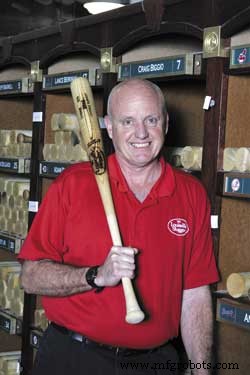
Frank Stewart, former Navy submarine commander, now leads the Louisville plant.
Key customer interactions highlight the company’s commitment to precision. Ted Williams once returned a bat because the grip was 0.005 inches off the model. Hillerich & Bradsby’s quality checks detected the discrepancy, reinforcing the company’s dedication to exactness.
Despite a historic workforce, the plant faces generational change. Since 2006, Hillerich & Bradsby has hired 26 new employees to replace those who left the eliminated New York plant. The new hires, many with no prior manufacturing experience, receive comprehensive training, 5‑S cleanliness instruction, and TPM education.
To capture institutional knowledge, the company offers a two‑year millwright apprenticeship that combines on‑the‑job learning with coursework in electrical systems, welding, plumbing, HVAC, and PLC programming.
Automation is expanding, but the company remains vigilant about reliability. The new CMMS provides predictive analytics, parts inventory visibility, and real‑time maintenance scheduling to mitigate downtime during high‑volume production and public tours.
Public engagement remains a core value. Approximately 200,000 visitors tour the plant annually, gaining insight into bat manufacturing. The company balances customer experience with operational safety, scheduling maintenance outside of peak tour times.
As a fourth‑generation family business, Hillerich & Bradsby continues to embody the values that have sustained its legacy: integrity, commitment to excellence, and a dedication to the baseball community. The company’s continued investment in people, process, and technology ensures that the Louisville Slugger remains the gold standard for bat makers worldwide.
From Commander of a Nuclear Submarine to General Manager of a Baseball Bat Plant
Frank Stewart, who commanded the USS Louisville during Operation Desert Storm, leveraged his project‑management experience and leadership of a 180‑person crew to guide the plant’s transition to a manufacturing environment. Stewart’s credo—act with integrity, tell the truth, keep commitments, treat people with dignity—mirrors the company’s core values.
A Plant Built for the People
Players such as Alex Rodriguez, Lance Berkman, and Todd Helton have toured the facility, observing bat production firsthand. These visits reinforce the personal connection between athletes and the Slugger. The plant’s open‑door policy, with nearly 200,000 annual visitors, strengthens the community bond while demanding meticulous safety and maintenance protocols.
Equipment Maintenance and Repair
- Why Facility Management Drives Industrial Success
- How Additive Manufacturing Helped Van Damme Produce Custom Marshmallow Nozzles at a Fraction of the Cost
- Preventing Machine Failures: Overcoming the “Tomorrow” Mentality in Lubrication Maintenance
- The Value of Point P: A Strategic Focus for Reliability & Maintenance
- Key Factors for Choosing the Best Spot Welder
- Choosing the Right Resistance Spot Welding Electrodes: Key Factors & Best Practices
- Resistance Welding: The Reliable Choice for High-Quality Robotic Metal Joining
- Why Motoman Spot Welding Robots Boost Efficiency and Safety
- Motoman MS165 Spot Welding Robot – Advanced Automation for Superior Quality
- Enhance Production Efficiency with Motoman VS50 Flexible Spot Welding Robot