



Building a High‑Performance Reliability Team: A Practical Guide
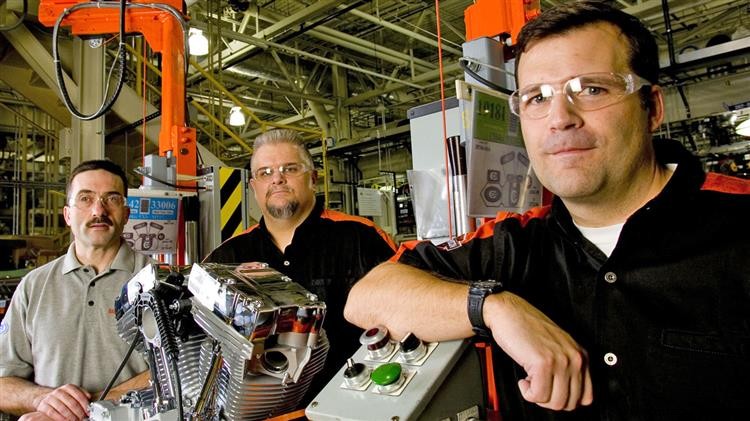
Phil McKinney, Vice President and Chief Technical Officer at Hewlett‑Packard, recently shared his framework for creating high‑performance innovation teams in a podcast. Reliability experts can apply these same principles to revamp plant reliability management practices.
Innovation is often tied to product development, but the core management tenets are equally valid for process improvements, such as redefining how an organization manages equipment reliability.
Below is a concise synthesis of McKinney’s framework, coupled with my own experience in driving reliability business‑process change. The approach begins with the “rules of engagement” for innovation, followed by the composition of a high‑performance reliability team.
Rules of Innovation Engagement
- Set a Bold, Out‑of‑This‑World Goal (BOG): Every initiative must aim for a striking, financially framed objective that signals a “home run” to senior leaders. Demonstrating how a boost in Overall Equipment Effectiveness (OEE) translates into profit, Economic Value Added (EVA), or share‑price uplift is essential to overcome inertia.
- Identify an Enemy: A compelling urgency arises from a clear adversary—external competitors or internal pressures such as plant closures. Fear of the “dragon” is often a stronger motivator than pure aspiration.
- Break Free from the Corporate Hairball: Legacy practices—like legacy preventive maintenance schedules that lack root‑cause justification—act as barriers. Removing or modernizing these “hairballs” paves the way for a more profitable business‑as‑usual.
- Allocate the Right Resources: Balance is key. Under‑resourcing stalls progress; over‑resourcing dilutes focus. A lean, purposeful team is most effective.
- Craft the Right Team Mix: Diversity in skills and behaviors prevents groupthink while aligning everyone toward the vision. Avoid repeatedly hiring people who duplicate existing roles.
The Ideal Reliability Innovation Team
- Visionary Leader: The person who sees the long‑term benefits, distills the initiative into a clear elevator pitch, and secures early adopters. They champion the team’s success and shield the initiative from corporate sabotage.
- Radar O’Reilly: A deeply knowledgeable insider who can navigate and expedite processes across the organization.
- Mavericks (1–2): Creative thinkers who generate breakthrough ideas. Their proposals may seem radical initially but often prove transformative over time.
- Parent: A senior stakeholder who knows when to step back, allowing the team to recharge and maintain perspective.
- Execution Demons: Individuals who thrive on implementation. Once a plan is approved, they drive execution and provide real‑time feedback.
- Translators: Trusted, informal leaders who communicate the change narrative to the wider organization, alleviating fears and building buy‑in.
Successfully translating a blank sheet into a robust reliability‑improving business‑process plan—and then executing it—requires a team that balances vision, knowledge, creativity, execution, and communication.
No single personality can deliver all the necessary capabilities. By combining McKinney’s insights with proven reliability practices, you can assemble a team that accelerates innovation while maintaining operational excellence.
McKinney, P. (2006) “High‑Performance Innovation Teams podcast,” www.techtrend.com/blog/2006/10/podcast_high_performance_innov.html
Equipment Maintenance and Repair
- What Defines a Skyscraper? Insight from Architect T.J. Gottesdiener
- Designing High‑Performance Interconnects Across PCIe Generations
- Reliability: The Comprehensive Guide to Asset Management
- From Maintenance to Reliability: Building a Culture of Predictive Excellence
- Building a Reliability Culture: Ownership, Collaboration, and KPI Success
- Cutting Waste to Boost Equipment Reliability
- 9 Proven Steps to Build a High‑Performance Maintenance Team
- Whirlpool’s Reliability Revolution: Elevating Uptime, Productivity, and Profitability
- Building the Automation Team: Part 2 of the Operating Model Series
- Build Strong Teamwork: Proven Strategies for Business Success