



Five Levels of Condition‑Based Maintenance Programs – A Practical Guide (Part I)
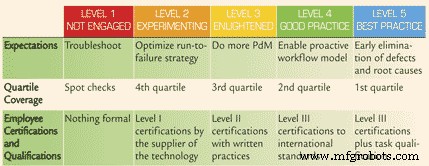
Many organizations underestimate the full value of condition‑based maintenance (CBM). In practice, CBM initiatives typically fall into one of five distinct maturity levels:
Not Engaged: Companies that perform little to no CBM activities.
Experimenting: Firms testing a variety of CBM inspections, tools, and technologies.
Enlightened: Teams that have witnessed tangible benefits and are planning to invest further.
Good Practice: Organizations with all core elements in place that consistently deliver measurable results.
Best Practice: Industry leaders boasting world‑class CBM programs.
While many operations sit in the middle of this spectrum, progress is always possible—even when resources are limited. The key is to focus on fundamentals that drive incremental improvements and, over time, significant gains.
Start With a Clear Vision
Success begins with the right mindset. Ask yourself: What do I expect from my CBM program? What specific outcomes do I want to achieve? Level 5 programs are laser‑focused on early defect detection and root‑cause elimination, whereas Level 1 efforts often treat CBM as a troubleshooting tool. A clear goal aligns expectations with strategy and drives results.
Expand Your Coverage
Payback on CBM hinges on monitoring enough equipment. A broader coverage base translates directly into lower total maintenance costs because planned work is faster, safer, and cheaper. Benchmark your current coverage against industry best practices and identify quick wins to elevate to the next maturity level.
Invest in Knowledge – Not Just Equipment
CBM is a knowledge‑centric discipline. The difference between a Level I vibration technician—capable of basic data collection—and a Level III specialist—who sets alarm thresholds, builds databases, and integrates multiple software platforms—lies in training, education, and experience. Continuous learning and mentorship keep the program alive and evolving.
Remember: stagnation equals decline. Keep pushing the envelope, investing in people, and embracing new tools to maintain program vitality.
Where does your CBM program fall on this spectrum?
Equipment Maintenance and Repair
- Five Stages of CBM Maturity – Part II: From Basics to World‑Class Performance
- Five Types of CBM Programs, Part III: Aligning CBM with Reliability Engineering
- C++ Operators Explained: Types, Examples, and Sample Programs
- Understanding Variables in C#: Types, Storage, and Usage
- Sustainability in Manufacturing: Final Episode – Insights from Senseye's Leadership
- Enhancing Aluminum Die-Casting Quality: 5 Proven Strategies
- CMMS Expert Series Part 3: Mastering the Three Setup Models for Seamless Integration
- 3D Printing Explained: Part 1 – From Raw Materials to Modern Innovations
- Effective Deburring Techniques: Applications & Process Types
- Choosing the Right Drill Bit for Precision Part Manufacturing