



Essential Tools & Proven Techniques for Quick, Reliable Conveyor Belt Repairs
Time is money in any manufacturing operation. Unexpected conveyor belt failures can halt production, erode margins, and ripple across the supply chain. By equipping maintenance teams with the latest tools and adhering to proven safety protocols, you can cut downtime, preserve belt integrity, and protect profitability.
Recent innovations—from precision belt cutters to air‑powered rivet drivers—offer technicians a faster, safer way to repair belts without compromising strength or longevity. The right equipment, combined with a solid safety foundation, ensures that repairs are both quick and reliable.
Below is a concise guide to the must‑have tools and procedures that every maintenance crew should keep in stock for efficient, high‑quality belt repairs.
Safety First
While safety isn’t a product feature, it is the cornerstone of every successful repair. Proper lockout/tagout, correct belt squaring, controlled skiving and cutting, and accurate fastener placement are non‑negotiable. Ongoing training and clear reminders keep teams vigilant and reduce the risk of injury or costly mistakes.
Straight, Square Cuts
Accurate, square cuts are the bedrock of a durable splice. Manual knife cuts often lack precision and pose safety hazards, especially on wide belts. Portable belt cutters—rated for up to 1‑inch thickness and 84‑inch width—enable technicians to make clean, consistent cuts in a single pass. This reduces the need for re‑cuts, eliminates tension irregularities, and extends splice life.
Successful Skiving
Compact, battery‑free belt skivers are indispensable for preparing a belt for countersunk fasteners. They remove the top cover in a single, continuous strip, eliminating the jagged edges and debris that arise from hand‑knife methods or routers. A properly skived belt aligns fasteners flush with the surface, improving cleaner‑blade contact, reducing wear, and lowering maintenance frequency.
Faster Installation
Speedy, accurate fastener placement is critical for a lasting repair. Portable, air‑driven rivet drivers—operated with one hand—eliminate the fatigue and danger of manual hammering and allow work in tight spaces. Collated rivet sets, pre‑loaded with up to 40 rivets, can be ready in five seconds, whereas individual loading takes nearly 35 seconds. These tools translate to fewer repairs, shorter downtime, and long‑term savings.
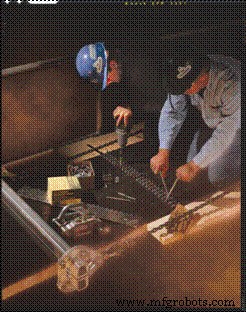
Portable tools result in faster on‑site repairs and reduce wear on maintenance personnel.
Training Tools Boost Safety
Flexco’s Safety Task Training Programs provide downloadable modules covering lockout/tagout, clamping, cutting, and skiving. Each module ends with a proficiency test, making it ideal for group sessions or individual learning. The materials can be printed for quick reference or used to satisfy annual training requirements.
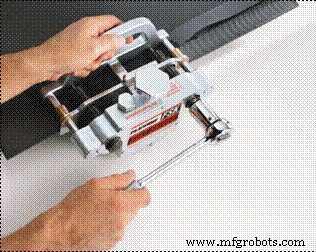
Belt skivers promote accurate fastener placement, extending cleaner blade and fastener life.
About the author: Kevin Finnegan is the Market Manager for Heavy‑Duty Products at Flexible Steel Lacing Company. Call 630‑971‑0150 or visit www.flexco.com for more information.
Equipment Maintenance and Repair
- Mastering Kubernetes on Azure: Proven Tools, Tips, and Best Practices
- Expert Insights on Common Mistakes in Selecting Power Transmission Belts
- Cut Costs and Avoid Warranty Pitfalls: 5 Expert Tips for Manufacturing Repairs
- How Maintenance Teams Can Cut Audit Costs and Pass with Confidence
- Best Practices for Storing and Handling Power Transmission Belts
- 8 Essential Conveyor Belt Types & Their Ideal Applications
- Expert Guide: Servo Motor Repair & Troubleshooting Tips
- Top 6 Encoder Repair Tips to Minimize Downtime
- Top 4 Considerations for Reliable Conveyor Belt Repairs
- Professional Guide to Fixing Hydraulic Fitting Leaks Safely