



Building a Lean, High‑Impact Oil Analysis Program
Whether budget constraints, limited personnel, or a small‑scale operation are the challenge, it’s possible to launch a cost‑effective oil analysis program that delivers measurable reliability gains and cost savings.
This article presents real‑world case studies that illustrate how to replace expensive in‑house test equipment with economical alternatives, leverage external laboratories, implement efficient oil storage, craft actionable reports, secure executive support, and rebuild the program after a facility transition.
Below is a step‑by‑step overview of the process I followed to establish our lean oil analysis program:
- Defining the purpose of an oil analysis program
- Initial attempts to create a state‑of‑the‑art program
- Pivoting after management rejected the original plan
- Selecting equipment for a lean oil analysis strategy
- Current program overview
What Is the Purpose of an Oil Analysis Program?
Reliability is the cornerstone of predictive maintenance. In a highly competitive market, uptime is the most valuable asset. By detecting problems early, you can schedule repairs or replacements before costly downtime or equipment damage occurs. The ultimate goal is to operate each component for as long as possible while accurately predicting when it will need replacement—this principle applies equally to oil.
Oil is increasingly a significant cost driver. Maximizing its service life is as critical as extending the life of bearings or gears. Predictive maintenance programs are scrutinized because they do not directly contribute to production output. Unlike vibration or thermography, oil analysis typically requires external laboratory analysis, adding another layer of cost that must be justified with clear ROI.
Early success and transparent communication with both management and frontline teams are essential. When production and maintenance see tangible benefits, they become powerful advocates for continued investment.
Even small companies, large corporations focused on cost control, or organizations lacking management support can achieve success with determination and creative thinking.
Our Initial Attempt at a World‑Class Program
During our company’s early years, we adopted a cross‑craft maintenance model: every technician received basic training in vibration, alignment, and oil analysis. However, this “jack‑of‑all‑trades” approach led to inconsistent data collection and misdiagnoses, eroding reliability and wasting resources.
Management’s insistence on a fully cross‑trained team left no room for dedicated predictive maintenance specialists. Despite two technicians who excelled in oil analysis and vibration training, the lack of focused expertise meant that alarm conditions were often met with generic responses—“change the oil,” “replace the motor,” or “run it and monitor.”
When two passionate technicians took the initiative to manage the program independently, they discovered that management’s resistance stemmed from a lack of investment in equipment and full‑time staff. Even after presenting a detailed benefits and payback analysis, the cross‑craft philosophy persisted.
Strategic Pivot: Convince Management Through Results
We adopted a low‑risk, incremental approach that leveraged the self‑directed workforce policy. All technicians worked 12‑hour rotating shifts, providing a window to develop the program during off‑hours without disrupting production.
I volunteered to perform preventive maintenance tasks on downtime days, which allowed me to design and install oil sampling ports on every piece of equipment. This initiative caught the attention of corporate training and supervision, who began tracking the number of sampling points and ports installed.
Corporate pressure ultimately forced the plant management to allocate a three‑person, three‑month team to launch the predictive maintenance program. The team worked day shifts for the first three months, followed by a staggered rollout to the remaining staff. The only stipulation was that no additional budget be allocated; we had to use existing tools and resources.
Working closely with our oil supplier—who provided complimentary testing that matched the value of paid services—I refined the sample collection process. Consolidating data collection into a single person improved trend stability, revealing actionable insights for most equipment, aside from occasional lab deviations.
I developed concise, data‑rich reports highlighting cost savings and downtime avoidance. These reports were shared with management, maintenance, and the corporate training center, securing ongoing support and preventing program shutdown.
One of the quickest ROI indicators was the widespread installation of sampling ports. Every reducer, hydraulic system, and lubrication system now has a port that allows in‑process sampling. By shifting to condition‑based oil changes, we reduced oil consumption by roughly 70% in the first year, saving over 900 gallons of oil—a substantial cost and environmental benefit.
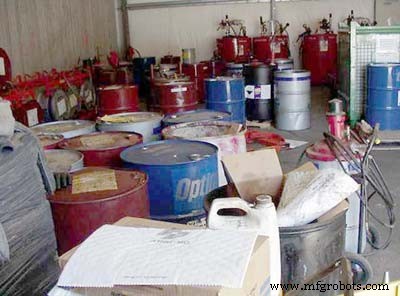
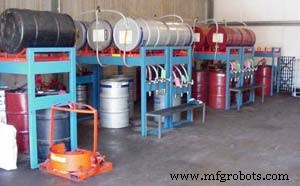
The oil storage room required a complete redesign. Using a simple drum rack system augmented with legs, I created a clean, organized storage area that served as a standard across the company and sister mills. This proactive approach ensured consistent oil quality and streamlined sampling.
Enhancing Sampling, Testing, and Analysis
We anticipated receiving free lab services for the first 500 samples, after which additional charges would apply. To assess the reliability of the lab’s results, I conducted a blind test by sending multiple samples from a single oil batch to both the supplier’s lab and an independent laboratory. Significant discrepancies highlighted the need for in‑house testing for core parameters.
Lean In‑House Equipment
Our criteria for in‑house test equipment were repeatability, simplicity, and speed. We focused on three essential tests: viscosity, particle count, and moisture detection.
Viscosity
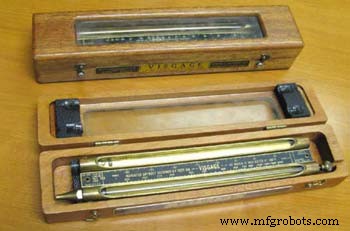
A handheld visgage—an inexpensive two‑tube gauge—measures viscosity quickly. The reference tube contains a standard fluid; the test tube holds the sample. By tipping the gauge and reading the ball positions, we obtain accurate viscosity values with minimal effort.
Patch Test
The patch test identifies wear debris and contamination. Using a microscope equipped with a digital camera, I capture high‑resolution images of the patch for trend analysis. A small handheld magnet helps distinguish ferrous particles.
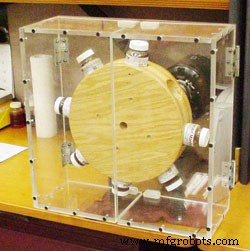
To prepare the sample, I built an in‑house agitator from a discarded reducer and motor. This device gently rotates sample bottles, ensuring uniform suspension before testing.
The two‑way check valve syringe system replaced the traditional funnel method, reducing exposure, cleaning time, and contamination risk. It allows precise sample volumes and quick rinsing, making patch preparation efficient.
Moisture Test (Crackle Test)
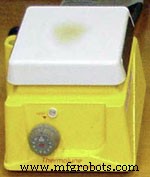
A simple crackle test detects water in oil. A drop of oil is placed on a hot plate, and the presence of water is indicated by visible vapor. A magnifying light enhances visibility and safety. This test is adequate for routine checks, while critical equipment may require lab confirmation.
Standard In‑House Test Procedure
- Visual Inspection: Assess color and clarity against a reference sample.
- Smell Test: Identify oxidation or varnish through olfactory cues.
- Viscosity: Measure with visgage and record results.
- Crackle Test: Confirm moisture content.
- Patch Test: Capture images, count particles, and log findings.
- Reporting: Compile concise one‑page summaries highlighting key findings and ROI for management.
Rebuilding After a Facility Transition
Following an 18‑month shutdown and subsequent sale, half of the maintenance staff left. Restarting the program required re‑selling its value to new management and rebuilding the team. Identifying a dedicated, motivated individual to lead the oil analysis effort remains critical.
About the Author
Dave Lander is the Mechanical Maintenance Supervisor at Clarion Boards Inc., a leading medium‑density fiberboard manufacturer in Lucinda, PA. With 22 years of sawmill experience and 12 years in panel products, Dave holds a Machine Lubricant Analyst Level II certification from the International Council for Machinery Lubrication (ICML). He actively contributes to ICML’s test‑writing committee, underscoring his expertise and commitment to industry best practices.
Equipment Maintenance and Repair
- 5 Essential Steps to Launching a High‑Performance Preventive Maintenance Program
- Building a Successful Preventive Maintenance Program on a Solid Foundation
- Launching a Successful Lubrication Program: Expert Guidance for Reliability
- Enhance Your Lubricant Analysis Program for Peak Asset Reliability
- 50 Proven Strategies to Build a High‑Performance Maintenance Program
- Build a High-Impact Maintenance Training Program: A Practical Guide
- How to Build a Robust Equipment Maintenance Program to Cut Downtime
- 8 Essential Tips for a Successful Preventive Maintenance Program
- Why Oil Analysis Is Essential for Commercial Trucking Success
- How Fluid Analysis Boosts Equipment Reliability and Reduces Downtime