



A Six‑Step Plan to Eliminate Work Order Backlog
Read the full work order academy series, including toolkits for better work orders, optimizing maintenance schedules, using work order data, and more
When Maintenance Backlog Spirals Out of Control
The National Parks Service is facing a critical maintenance backlog that is draining resources and jeopardizing visitor safety.
The cost of maintenance backlog across more than 400 national parks was recently estimated at $12 billion—five times the department’s operating budget. Although $6.5 billion has been earmarked to tackle the issue, it covers only about half of the required investment.
Deferred maintenance leaves parks with safety hazards, unusable equipment, and infrastructure that must be upgraded years earlier than planned.
In most industries, backlogs are a red flag. That’s why this article offers practical steps to prevent and reduce work order backlogs.
What Is Maintenance Backlog?
Maintenance backlog refers to all scheduled, approved work that has not yet been completed, regardless of whether it is past due. Think of it as a household to‑do list that never gets finished.
How Is Maintenance Backlog Measured?
Backlogs are usually quantified in the number of labor hours or weeks required to finish the pending work using current resources. The calculation includes both emergency and planned orders.
When Is Backlog Too High?
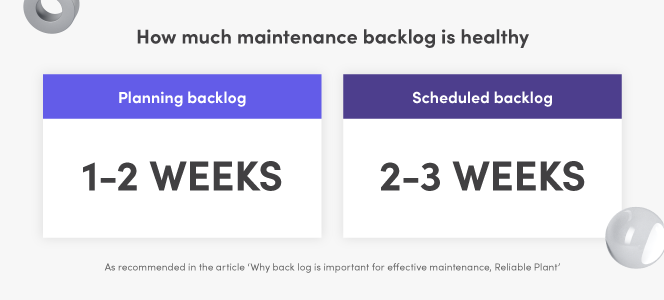
Zero backlog is actually unhealthy; it can keep technicians from focusing on priority tasks and lead to more unplanned work. Industry experts recommend maintaining a backlog that equates to about four weeks of labor: two to three weeks of planning backlog (tasks scheduled but not yet ready) and one to two weeks of active backlog (tasks that can start immediately).
Six Steps to Reduce Maintenance Backlog
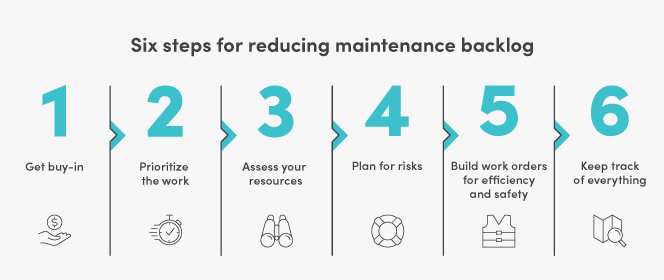
While a towering backlog can feel overwhelming, the cost of leaving it unchecked is far greater. Here are six proven strategies to systematically shrink your backlog:
#1: Secure Executive Buy‑In
Shifting resources toward maintenance often faces resistance. Convince stakeholders that addressing backlog is a strategic investment, not a short‑term expense. Back up your arguments with data—show how reducing backlog improves asset reliability, cuts scrap, and ultimately boosts production targets.
Learn how to start establishing TPM at your organization
#2: Prioritize Tasks Effectively
Begin by ranking work orders based on asset criticality. Within critical assets, prioritize those with the longest missed intervals. Also consider the duration and complexity of each order; quick, low‑downtime tasks should be tackled first to build momentum.
Prioritize your backlog with this handy template
#3: Assess Available Resources
Evaluate personnel, skill sets, and certifications to determine who can handle each task. Verify that parts, tools, and PPE are on hand; if not, estimate procurement lead times. Understand the size of maintenance windows and ensure technicians have all necessary information to work safely and efficiently.
#4: Plan for High‑Risk Work
Identify three categories of high‑risk jobs—major rebuilds, lengthy complex projects, and unfamiliar tasks. Mitigate risks by providing extra training, allocating additional labor hours, and ensuring the proper PPE is available.
Learn how to create work orders that bolster health and safety
#5: Build Efficient & Safe Work Orders
High‑quality work orders reduce ambiguity and waste. Include:
- A concise, detailed task list.
- A bill of materials and PPE checklist with location notes.
- Relevant manuals, diagrams, and photos.
- A thorough problem description and completion criteria.
Learn how to build world‑class work orders
#6: Track Progress Continuously
Monitoring progress lets you adjust priorities in real time and provides evidence of ROI for leadership. Schedule regular check‑ins to confirm technicians have the resources they need, are comfortable with the tasks, and to refine processes.
Root Causes & Prevention Strategies
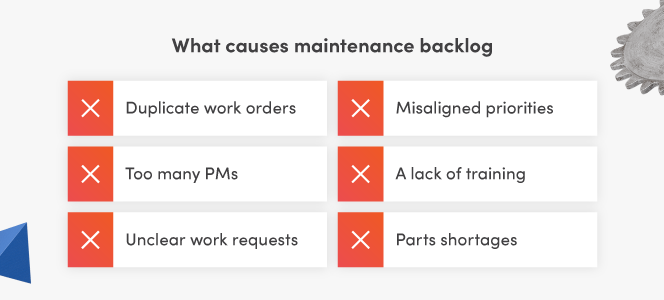
Once the backlog is manageable, the next challenge is to keep it that way. Consider these practices:
- Eliminate duplicate work orders and refine PM schedules: Remove redundant entries and adjust maintenance frequency based on fault data.
- Standardize work order templates: Require the same information for all requests and completions to speed review and highlight trends.
- Align goals and processes: Define what constitutes high‑priority work so that everyone uses the same criteria.
- Track parts and skills: Maintain a dashboard of high‑usage parts to avoid stockouts and identify skill gaps for targeted training.
Key Takeaways in Three Sentences
- Transforming a reactive maintenance culture requires framing backlog as a shared obstacle, securing consensus, and involving all stakeholders.
- Effective planning—prioritization, risk assessment, and robust work orders—maximizes productivity and reduces downtime.
- Optimizing preventive maintenance, monitoring trends, and standardizing processes prevent backlog from re‑emerging.
Read part VI: Crack the code on TPM with the help of work orders
Equipment Maintenance and Repair
- How Maintenance Planning Elevates Technicians, Supervisors, and Plant Productivity
- Constructing a Structured Backlog to Optimize Maintenance Scheduling
- Why Backlogs Matter: Key to Efficient Maintenance Planning
- Why Standing Work Orders Streamline Maintenance Management
- A Six‑Step Plan to Eliminate Work Order Backlog
- Creating Effective Maintenance Work Orders: A Complete Guide
- Strategic Blueprint for Digital Transformation Success
- Strategic Maintenance Planning: Optimize Work Orders for Safety & Cost Savings
- Streamline Work Order Execution with Proven Maintenance Checklists
- 10 Proven Strategies to Optimize Work Order Management for Business Success