



6 Proven Strategies to Correct Common Physical Asset Management Errors

Business owners and maintenance managers frequently focus on immediate results, but a short‑term mindset in physical asset management can lead to costly overspending and missed performance opportunities.
In this article we examine why many organizations unintentionally over‑invest or under‑perform when managing assets. We outline the most common pitfalls and present evidence‑based solutions that align with industry best practices.
What Is Physical Asset Management?
Physical asset management is both a mindset and a set of tactical processes. It provides a systematic framework for overseeing assets throughout their life cycle—emphasizing sustained performance over routine cost and uptime metrics.
In practice, a robust asset‑management strategy guides every decision from acquisition to decommissioning, ensuring the lowest total cost of ownership, informed long‑term funding, and maximized ROI.
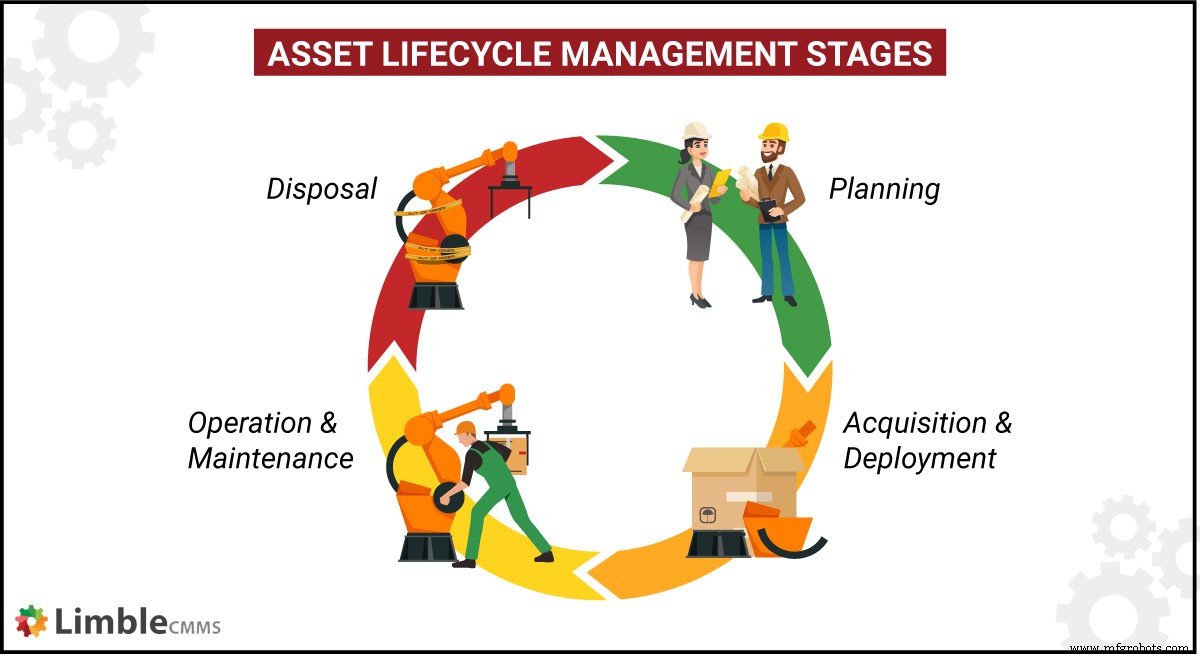
Key outcomes: Lowest total cost of ownership, Long‑term funding plans, Reduced whole‑life capital spend, and Optimized asset efficiency and ROI.
6 Common Physical Asset Management Mistakes
Operational pressures often pull attention toward today’s problems, yet solutions that ignore long‑term implications can erode business value. Below are six frequent mistakes, each paired with practical corrective actions.
Mistake #1: Confusing Maintenance with Asset Management
Many teams begin asset management only when equipment is installed and stop when it is replaced. They view OEM maintenance schedules as the sole lever for value, or worse, trim costs by skipping required tasks.
Solution: Treat maintenance as a subset of a broader asset‑management system
Before purchasing, conduct a comprehensive analysis that covers:
- Asset lifecycle and expected replacement costs
- Target service levels and associated risks
- Anticipated performance and failure modes
- Maintainability assessment
- Funding strategy
Only after this foundation is set should maintenance tactics be applied. A well‑designed maintenance program delivers the planned service levels and keeps total cost of ownership within budget.
Mistake #2: Using Insufficient Data for Scheduling
After installation, many rely on generic maintenance plans that never evolve. A static schedule, even with minor tweaks, fails to reflect actual operating conditions.
Solution: Deploy a digital information system
Integrate a CMMS, predictive analytics, sensors, and real‑time data capture into your workflow. This allows you to baseline actual performance against theoretical specifications and adjust operations, maintenance, or equipment configuration as needed.
Modern CMMS solutions are essential for dynamic asset management, enabling predictive insights and data‑driven decisions.
Mistake #3: Ignoring Staff Alignment
When operators and technicians follow checklists without understanding the bigger picture, or worse, “tick‑and‑flick” maintenance, they undermine asset performance and organizational efficiency.
Solution: Make every employee an asset manager
Engage machine operators—who first notice deviations—in planning and decision‑making. Provide clear maintenance policies, foster ownership, and give technicians access to broader information. When staff see how their actions affect overall performance, compliance improves and asset reliability rises.
Mistake #4: Prioritizing Purchase Price Over Maintainability
Focusing solely on acquisition cost often ignores the hidden lifetime costs—spares, downtime, and support—leading to rapid erosion of initial savings.
Solution: Evaluate life‑cycle cost
Include operators and maintenance personnel in the pre‑purchase review to assess training, tooling, disposal, and support requirements. By comparing total ownership costs, decisions are based on value, not price.
Mistake #5: Outsourcing Maintenance Based Only on Contract Cost
Choosing a contractor solely on the lowest bid can compromise asset performance and long‑term value.
Solution: Partner on value and accountability
Select providers that understand total cost of ownership, embrace continuous improvement, and share responsibility. Define clear SLAs, improvement targets, and KPIs that reward performance and penalize shortfalls, turning outsourcing into a strategic partnership.
Mistake #6: Relying on Outdated Information
Paper‑based records or infrequent data capture leave managers with incomplete, stale information, forcing sub‑optimal decisions.
Solution: Adopt a dedicated asset‑management platform
A modern CMMS consolidates maintenance schedules, sensor data, and inventory levels, enabling real‑time analytics, predictive maintenance, and AI‑driven inventory control. Accurate, up‑to‑date data allows timely interventions, informed purchasing, and optimal resource allocation.
Adopting a Strategic Asset‑Management Mindset
Physical asset management is more than a set of procedures; it is a strategic lens that evaluates every decision by its long‑term impact. By auditing maintenance practices, embracing data, and avoiding the six pitfalls above, you can lower ownership costs, secure funding, and maximize ROI.
To see how Limble CMMS can elevate your asset performance, schedule a demo or start a 30‑day free trial today.
Equipment Maintenance and Repair
- Mastering Digital Asset Management: A Comprehensive Strategy for Data‑Driven Asset Excellence
- Integrating Asset Management Into Facility Design, Construction, and Startup: A Blueprint for Reliability and Profitability
- 7 Essential Tips for Choosing the Right Asset Management Software
- GFMAM’s Bahrain Conference Strengthens Global Asset Management Collaboration
- Maximize Asset Performance: Expert Guide to Equipment Commissioning
- 6 Proven Strategies for World-Class Equipment Asset Management
- 4 Key Objectives for Effective Asset Management
- The Ultimate Guide to Choosing Asset Management Software
- Prescriptive Maintenance: The Proactive Solution for Superior Asset Management
- Optimizing Asset Reliability: Benefits of a Maintenance Management System for Government Agencies