



Which Maintenance Strategy Is Best? A Practical Comparison of Five Proven Approaches

When choosing a maintenance strategy, the principle is simple: a proactive approach always beats a reactive one. Yet, the choice is far from trivial. A range of proactive strategies exists, each with its own level of complexity, effectiveness, and cost. Understanding these nuances is essential before making a decision.
Is there a single “best” strategy? The answer is no—there isn’t a one‑size‑fits‑all solution. What matters is matching the right strategy to your specific assets, budget, and workforce. Below, we compare five key maintenance approaches, highlighting their strengths, limitations, and ideal use cases.
Use the table of contents on the left to jump to sections that interest you.
Assessing Your Current Maintenance Position
Looking at strategies in isolation, prescriptive maintenance often appears the gold standard: it delivers precise actions, requires minimal staff, and maximizes equipment uptime. In practice, however, organizations vary widely in budget, asset types, skill levels, and starting conditions. These realities must shape the strategy choice.
Advances in sensor technology and IIoT have driven a natural evolution from reactive to more sophisticated proactive methods. Skipping steps—such as moving directly from reactive to predictive maintenance—is risky. A staged approach, possibly starting with a pilot project, yields smoother transitions.
Criteria for Selecting the Optimal Strategy
We advocate a blended approach: apply the most appropriate strategy to each asset based on its criticality. A single strategy rarely fits all assets.
Key factors to evaluate include:
- Asset profile: failure modes, maintenance needs, and criticality.
- Organizational capability: budget, skills, technology, and culture.
- Strategy characteristics: effectiveness, cost, complexity, and implementation requirements.
Below we detail each strategy and rate them on relevant criteria such as reliability, automation, cost control, asset utilization, resource optimization, and applicability.
Comparing Five Core Maintenance Strategies
We exclude Total Productive Maintenance, Autonomous Maintenance, and corrective maintenance from this comparison, as these are overlays that can be applied atop any core strategy.
1. Run‑to‑Failure (Reactive) Maintenance
Run‑to‑failure—often a symptom of lacking a strategy—entails waiting for a breakdown before deploying a repair crew. While it incurs no upfront costs, it can cripple operations, accumulate backlogs, and erode reliability.
In specific contexts, such as low‑cost, non‑repairable items (e.g., light bulbs), a run‑to‑failure approach remains practical. When budgets are tight, it can serve as a last resort, but careful asset selection is critical.
- Implementation cost: negligible.
- Requirements: none beyond basic ticketing; a CMMS can improve efficiency.
- Best suited for: inexpensive, non‑repairable, or low‑criticality assets.
2. Preventive Maintenance
Preventive maintenance is the most widely adopted strategy, as confirmed by our 2021 maintenance report. It schedules routine interventions—either calendar‑based or usage‑based—to avert failures before they occur.
While simple and cost‑effective, it can lead to unnecessary work if schedules aren’t data‑driven. Leveraging CMMS history and analytics helps fine‑tune interventions.
- Implementation cost: low to medium.
- Requirements: CMMS, trained personnel, spare parts inventory.
- Best suited for: assets where early intervention prevents costly downtime.
For a deeper dive, read our preventive maintenance guide or explore how to craft a preventive plan from scratch.
3. Condition‑Based Maintenance (CBM)
CBM introduces real‑time monitoring—vibration, ultrasonic, infrared, and more—to assess asset health and schedule work based on actual condition rather than a fixed timetable.
This flexibility accommodates variable wear patterns influenced by operating conditions, operator behavior, and environment.
- Implementation cost: medium, depending on sensor types.
- Requirements: condition monitoring hardware, CMMS integration, skilled technicians.
- Best suited for: medium to high‑priority assets with measurable degradation signals.
See our condition‑based maintenance guide for detailed implementation steps.
4. Predictive Maintenance (PdM)
Predictive maintenance builds on CBM by applying predictive analytics and machine learning to forecast failures. With continuous data feeds, algorithms predict failure windows, enabling proactive scheduling that balances maintenance costs against downtime risk.
- Implementation cost: high initial investment but strong ROI over time.
- Requirements: advanced sensors, analytics platforms, data science expertise.
- Best suited for: critical assets where downtime is costly.
Learn more in our predictive maintenance guide.
5. Prescriptive Maintenance (RxM)
RxM represents the pinnacle of maintenance intelligence. Beyond predicting failures, it recommends specific corrective actions—adjusting operational parameters or scheduling interventions—to extend asset life.
As Dan Miklovic from LNS Research explains: if a bearing’s temperature rises, predictive analytics might forecast failure in X days, while prescriptive analytics suggests reducing speed by Y% to double that timeframe.
- Implementation cost: very high upfront, but potentially the highest ROI.
- Requirements: all PdM prerequisites plus AI-driven decision engines.
- Best suited for: highly automated, data‑rich environments with critical assets.
Explore our prescriptive maintenance guide for actionable insights.
Side‑by‑Side Summary
The infographic below illustrates each strategy’s relative performance across key metrics such as resource optimization, cost control, and applicability. Note that implementation cost and complexity are discussed separately.

Use this visual aid to quickly assess which strategy aligns best with your operational priorities.
Applying the Right Strategy to Each Asset
Rather than asking which strategy is best overall, ask: “How can we address the specific failure modes of Asset X?” Every component can fail in multiple ways; each failure mode carries a different impact, repair cost, and likelihood.
Reliability‑Centered Maintenance (RCM)
RCM is a systematic process that identifies critical failures, analyzes root causes, and recommends the most effective preventive or corrective actions—essentially an advanced FMEA tailored to maintenance planning.
RCM feeds into strategy selection: data from RCM informs whether a simple preventive fix suffices or a predictive model is warranted.
Note: RCM requires reliable maintenance data. Without a CMMS or accurate logs, its effectiveness diminishes. Start with preventive maintenance to build data quality.
Risk‑Based Maintenance (RbM)
RbM prioritizes assets using a criticality matrix that maps Probability of Failure (PoF) against Consequence of Failure (CoF). High‑risk assets then receive the most intensive monitoring and preventive effort.
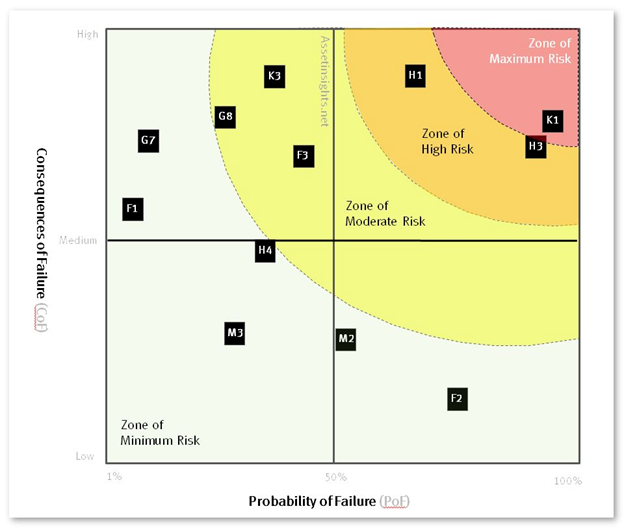
Integrate RbM with RCM to refine maintenance schedules and justify investments in advanced monitoring.
Practical Considerations
Real‑world constraints—budget limits, skill gaps, legacy assets, and organizational culture—must inform strategy selection. A pragmatic path often starts with preventive maintenance and gradually incorporates CBM, PdM, and RxM as data maturity grows.
Remember: the most effective strategy is the one you can actually implement and sustain.
Using Limble CMMS to Consolidate Your Maintenance Calendar
Regardless of strategy, a clean, unified maintenance calendar is essential. Limble CMMS enables you to schedule preventive tasks, manage work orders, and monitor resource usage across all assets.
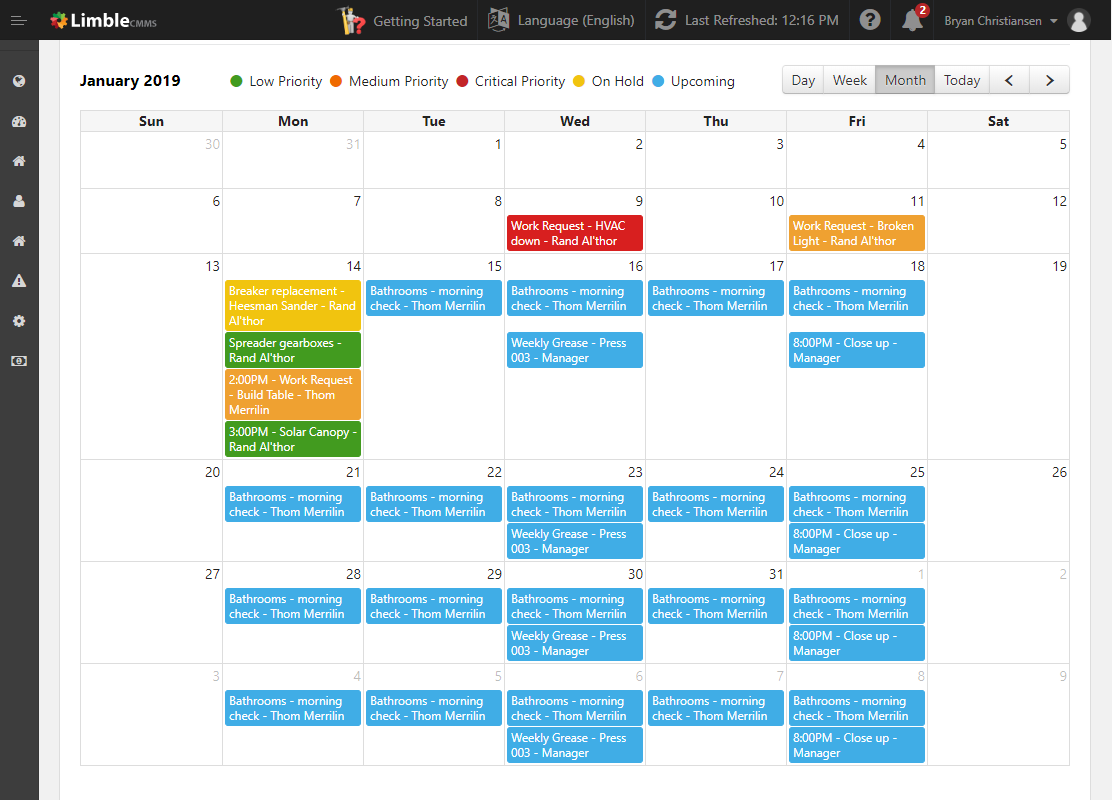
Key steps to set up:
- Enter all assets into the CMMS database.
- Verify asset details (installation date, location, manuals).
- Create preventive schedules based on history and RCM findings.
- Integrate CBM or predictive data streams for automated alerts.
- Periodically review and refine schedules.
When vendors are involved, grant them limited CMMS access to coordinate work orders and track costs.
Explore Limble’s pricing plans and start a trial today.
Progress Incrementally, Not Overnight
Fear of failure should not stall progress. Most maintenance strategies can be phased in, allowing budgets to stretch over time while continuously improving reliability.
Commit to a proactive culture, embrace incremental change, and gradually evolve from reactive to prescriptive maintenance—eventually achieving world‑class reliability.
Equipment Maintenance and Repair
- How Mobile Plant Maintenance Drives Efficiency, Productivity, and Profitability
- Four Proven Strategies to Cut Maintenance Turnover and Preserve Critical Knowledge
- Is Reactive Maintenance Right for Your Facility? Balancing Cost, Safety, and Reliability
- How Face‑Time Coaching Transforms Maintenance Supervision
- Top Performance in Maintenance & Reliability: Proven Strategies for Long‑Term Success
- UPM‑Kymmene’s Best‑Practice Audit: Elevating Reliability at Caledonian & Shotton Mills
- Proven Strategies to Cut Maintenance Costs Without Cutting Staff
- Unlock Predictive Maintenance Excellence: Expert Best Practices for Manufacturers
- Modernize Your Maintenance Strategy with Proven CMMS Best Practices
- Deferred Maintenance: Why It Can Harm Your Organization