Industrial manufacturing
Equipment Maintenance and Repair


Mean Time to Repair (MTTR): MTTR, also known as Mean Time to Recovery, Mean Time to Resolve, and Mean Time to Resolution, is a key performance indicator (KPI) that measures the average time required to repair a failed system or equipment. This metric starts the moment a failure occurs and continues
What is the History of 21 CFR Part 11? As digital recordkeeping became more commonplace in the 1980s and 1990s, recordkeeping technologies came with both benefits and risks. Electronic records enabled fast information exchange, made it possible to quickly search for and retrieve data, and reduced er
Routine maintenance refers to the performance of consistently scheduled tasks to ensure the optimal functioning and longevity of equipment and facilities. These tasks, done at regular intervals, help identify and address potential issues before they lead to costly failures. Just a few examples of r
Wrench time is the time maintenance employees spend working with a tool in their hands. It’s one of many metrics that help teams improve operational efficiency in maintenance. Also known as “tool time,” wrench time refers to the time a maintenance technician actually spends performing a task. It d
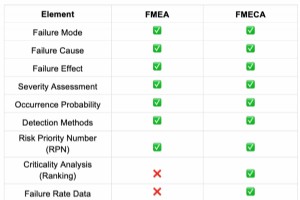
Failure mode, effects, & criticality analysis (FMECA) is a structured work priority system that helps teams make the best possible use of maintenance resources. Today, most manufacturing operations face time, budget, and expertise constraints. Every part of a system plays a role in the manufactu
Asset utilization is one of the most important maintenance metrics for productivity and asset lifecycle management. Understanding the asset utilization ratio can help you improve operational efficiency and drive greater productivity. In this article, we’ll talk about how to calculate and improve as
Key Benefits of Proactive Maintenance Shifting from a reactive maintenance to a proactive maintenance approach brings both short-term and long-term advantages. Some of the most important benefits include: Reduced unplanned downtime Proactive maintenance minimizes surprise breakdowns by identifyin
Repair and maintenance are both essential to keeping equipment functioning efficiently with minimal downtime. While people often use the two words interchangeably, repairs and maintenance are very different activities. Understanding the differences between repair and maintenance can help you devel
FMEA is an acronym of Failure Mode and Effects Analysis, a process where all possible equipment failures are identified and recorded to predict their corresponding impact on productivity as a whole. It develops an action plan from the bottom up by observing what components are most susceptible to b

By Michael Mills, Technical Solutions Manager at Fluke Reliability Updated: July 16, 2025 • Originally Posted: 2021 • 10 min read A computerized maintenance management system (CMMS) provides comprehensive oversight of what matters most to maintenance teams. The best CMMS software includes features
What Is a Failure Mode? A failure mode is anything that causes the product or process to perform outside of the expected parameters. It can range from a very minor error that is barely noticeable and doesn’t impact performance in any way, all the way to a major failure resulting in product recalls a
Pencil whipping means hastily signing off on work orders or other tasks that have not been properly completed. This can increase the risk of equipment breakdowns, inventory issues, safety hazards, and more for your organization. Some common tasks that suffer from pencil whip include Preventive Main
Home » eMaint Product News & Updates: October 2025 eMaint X5 Desktop: Smarter, Faster, More Customizable This eMaint X5 release introduces exciting functionalities and system updates designed to empower your team. Email Template IntelliSense: Crafting emails just got smarter! Easi

Mean Time to Failure (MTTF) is a maintenance key performance indicator (KPI) used to track the lifespan of assets that cannot be repaired and therefore must be replaced. Knowing the lifespan of these assets allows your business to make strategic decisions regarding inventory, production, and mainte
Equipment failure is expensive, time-consuming, and dangerous. So, let’s define it, learn the most prevalent causes of equipment breakdown, and find out how to prevent them. What Is an Equipment Failure? An equipment failure is a state where an asset doesn’t function as intended, resulting in unp
Maybe you’ve run out of space in your warehouse. Or perhaps you don’t have enough sales inventory to meet demand. For many inventory problems, calculating your stock turnover ratio could be the first step toward a solution. In this article, we’ll define stock turnover ratios, provide inventory tur
Many facilities leverage systems like SCADAs, PLCs, and BASs to collect critical asset data. Operators rely on data like temperature, runtime, and pressure to manage and monitor their machines and keep production on track. Unfortunately, that information often stays locked in the system. This make
Maintenance management refers to the coordinated activities of preserving and restoring equipment, infrastructure, and systems to ensure optimal performance and reliability. This discipline focuses on extending asset life, minimizing downtime, and managing maintenance costs efficiently, contributin
#1 Parts & Inventory Management Software2026-01-09T12:06:35-05:00 Manage Spare Parts Quickly & Optimize Your Parts Inventory Manage your spare parts, monitor your inventory levels, and reduce your mean time to repair (MTTR) with the top-rated software from Fluke. 150,000+ USERS 116 COUN
Maintenance software helps teams manage their maintenance activities, from tracking work to centralizing data and boosting uptime. What is Maintenance Management Software?2026-01-09T12:21:50-05:00By Michael Mills, Technical Solutions Manager at Fluke Reliability Updated: January 2, 20
Equipment Maintenance and Repair