


Industrial manufacturing
Equipment Maintenance and Repair

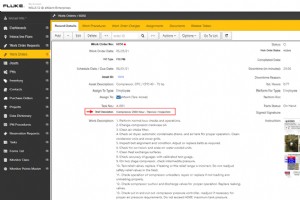
Today’s plants and facilities often have critical machines that bear the brunt of production activity while other equipment sits idle or is hardly used. Yet, the lightly used machinery is still scheduled for routine/calendar-based maintenance no matter how much or how little it operates. A research

Understanding the Work Order A work order system should clearly lay down a solution that allocates the least amount of time and energy to problems in asset maintenance. Individual work orders can be differentiated into on-demand or preventive types. An example of on-demand is having a fan for air c
In today’s fast-paced manufacturing industry, every minute counts. Delays in identifying and resolving production issues can quickly result in significant losses. That’s why Mean Time to Detect (MTTD) is an essential key performance indicator (KPI) for monitoring the effectiveness of any maintenance

Root cause analysis (RCA) is a systematic approach to identifying and understanding the underlying problem that led to an undesirable result. The goal of the process is to pinpoint how and why a given failure happened so you can eliminate the root cause and prevent the same problem from recurring

Vibration analysis is the process of measuring and analyzing your assets’ vibration patterns. It’s one of the most effective ways to keep your equipment up and running for longer while lowering your overall maintenance spend. Changes in vibration patterns can indicate that an asset is unbalanced, m
Every company in the food and beverage industry must be vigilant about controlling food safety risks. And one of the most widely accepted food safety certifications that prove an organization is safety conscious is the BRC (British Retail Consortium) certification, now known as Brand Recognition th
Choosing the best enterprise asset management (EAM) software for your company’s needs can feel overwhelming. A powerful EAM helps maximize uptime, enhance asset lifespan, and reduce costs across enterprise-level businesses – but how can you determine if one provider is better than another? And
Predictive maintenance is a data-driven maintenance strategy that relies on cutting-edge technology and carefully chosen tools to proactively maintain your equipment. The strategy uses condition monitoring and data analytics to spot potential defects in your machinery before they become serious pro

Inventory management is a vital process for any type of business. After all, without inventory, production comes grinding to a halt and your business can’t provide the products or services your customers depend on. Inventory for maintenance, repairs, and operating materials, or MRO inventory, is eq

Machine maintenance encompasses all the work required to keep machines running successfully. This includes everything from minor maintenance for small machines all the way to major maintenance tasks on heavy-duty machinery. The goal of machine maintenance is to prevent breakdowns and minimize dow

Uptime is a critical component in all types of manufacturing. Preventive maintenance can help maximize uptime, but even necessary maintenance can be wasteful when it’s performed inefficiently. A lean maintenance approach reduces waste and inefficiencies in equipment maintenance, resulting in more

In this interview, we speak to Ankush Malhotra, President of Fluke Reliability, as he reveals what he’s most excited about ahead of Xcelerate24 in March. Ankush says he’s more enthusiastic than ever about the future of maintenance and reliability, and this year’s Xcelerate conference is a showcase

Equipment maintenance is the process of ensuring that machinery, tools, and other equipment operate efficiently and safely. It involves regular inspection, testing, servicing, and repair of equipment to prevent unexpected failures and extend operational life. The maintenance can be both routine a
FacebookXLinkedInInstagramYouTube MENU - MENU - CMMS Software Overview eMaint CMMSeMaint EAMeMaint Condition MonitoringSubmit an RFPTAKE THE TOUR FeaturesPreventive MaintenancePredictive MaintenanceWork Order ManagementMobile CMMSIntegrationsRegulatory Compliance
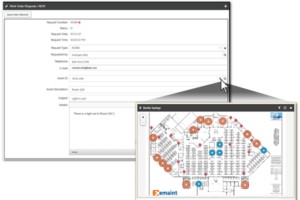
You’ve likely seen first-hand how a disorganized database can cause issues on the shop floor. When work orders are incomplete or scattered across different systems, technicians may lack the asset information they need, leading to frustrating delays, duplicated work, or costly errors. Without clear v
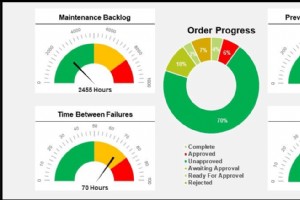
Integrating a computerized maintenance management system (CMMS) is a game-changer for modern businesses, especially those reliant on efficient maintenance operations. However, true CMMS success requires a combination of strategic planning, structured processes, and a commitment to change management.

Scheduled maintenance is any planned repair or service task performed within a specified timeframe. This includes routine inspections, adjustments, and regular service, as well as planned shutdowns. Scheduled maintenance can be recurring, performed at regular intervals, or triggered by a specific w
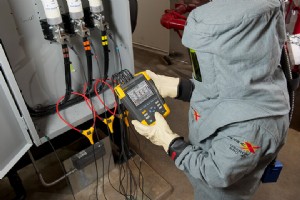
Day in and day out, the pressure is on for facility managers to keep operations running smoothly and efficiently. But it’s hard to get ahead when you’re stuck in reactive mode, tackling problems as they arise without a clear system in place. That’s where structured assessments come in. By providing

Maintenance management software is at the core of any successful maintenance operation. But choosing the right software can be overwhelming. Which is better for your organization – an Enterprise Resource Planning (ERP) solution, or a Computerized Maintenance Management Solution (CMMS)? Corporations
Work order management is a process for executing, documenting, and reviewing work orders promptly. It involves systematically handling requests for work, scheduling tasks, assigning resources, and monitoring the progress and completion of these tasks. This process is essential for efficient work or
Equipment Maintenance and Repair

Robotics: Driving the Next Wave of Industrial Automation

Infrared Electromagnetic Field Redistribution on Graphene by Silver Nanoparticle Dimers

DPDT Relays Explained: Complete Wiring & Applications Guide
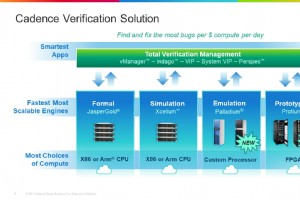
Cadence Unveils Rapid-Performance Emulation & Prototyping Solutions for Billion‑Gate SoC Verification
