



Planers Explained: Types, Uses, and Benefits in Woodworking
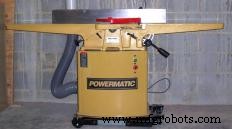
There are different kinds of planers, but the term usually refers to a carpentry tool or a woodworking machine. Hand planers, or wood planers, are carpentry hand tools used to shave down wood surfaces to reduce their thickness and make them smooth and even. A jointer, called a planer in British English, is a type of planer used to make straight edges and flat surfaces along the entire length of a wooden board. While there are hand-held jointers available, the term usually refers to a woodworking machine. A thickness planer, called a thicknesser in British English, is a similar woodworking machine used to make boards an even thickness.
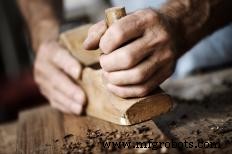
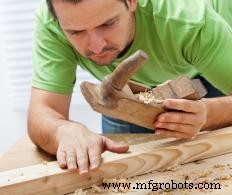
A hand planer consists of a sharp cutting blade or sharpened metal plate attached to a solid body with a hand grip on top. The blade extends below the body, and as the tool is passed over a wooden surface, it removes thin shavings of wood, smoothing the surface and reducing the thickness of the material. Usually, a planer is pushed away from the body, though Japanese planers are pulled toward the body instead. The blade is often adjustable to control how much material is removed with each pass. Electrically powered wood planers, sometimes called power planers, are also available.
Jointers are so named because they are commonly used to make the edges of wooden boards flat and smooth, before joining them together to make wider boards. As a piece of wood or lumber is fed into this woodworking machine, it passes over a cutter consisting of two or three sharp planer blades that spin very fast, removing a small amount of material. The machine is adjustable to control exactly how much material the cutter removes with each pass. Jointers are also available as hand tools, and are then called jointer planers.
Thickness planers are similar to jointers, but in a thickness planer the cutter is positioned above the wood instead of below it. A board needs to be already flat on one side and has to be placed with that flat side down, in order for this machine to be able to produce an even surface on top of the wood. Some woodworking machines are combined thickness planers and jointers. The wood is first fed through the machine on top of the cutter to make one flat surface. Then the wood is flipped over and passed through the machine again, this time below the cutter, making the material even on both sides along its entire length.
Industrial equipment
- Wood Screws Explained: Types, Features, and Selection Tips
- Understanding Pressed Wood: Composition, Uses, and Benefits
- Try Square Explained: A Precise 90° Angle Tool for Construction
- Sanding Sealer Explained: The Key to a Smooth Wood Finish
- Pear Wood: Properties, Uses, and Benefits
- Liquid Wood: A Sustainable, Biodegradable Thermoplastic Alternative
- Understanding OSB Panels: Composition, Uses, and Benefits
- Understanding Fiberboard: Composition, Uses, and Advantages
- What Is Timber? A Comprehensive Guide to Wood and Lumber
- Understanding Wood Beams: Definition, Uses, and Advantages