



Understanding Glides: Enhancing Mobility with Leveling Feet
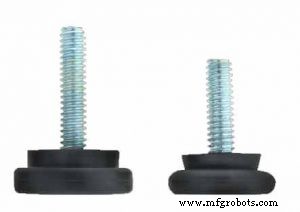
While many leveling feet share the same core function—adjusting height to level a surface—there are variations that make them more user‑friendly. Some models feature a small, circular elastic pad at the base, commonly referred to as a “glide.” These glides let the entire assembly slide smoothly across the floor, turning a simple height adjustment into a hassle‑free relocation tool.
What Is a Glide?
A glide is a thin, elastic disc—most often made from polyvinyl chloride (PVC)—affixed to the bottom of a leveling foot. The material provides a low‑friction interface between the metal foot and the floor, preventing scratches and allowing the foot to glide with minimal effort.
How Glides Improve Functionality
Standard leveling feet allow you to level furniture or equipment that is tilted. When a glide is added, the same adjustment capability is retained, but you also gain the ability to move the item easily. This is especially useful when you need to shift a piece of furniture for cleaning or reconfiguration.
Most leveling feet are constructed from metal—stainless steel or carbon steel being the most common. Metal on metal is a rough interaction that can damage hardwood, laminate, or concrete. Glides eliminate that contact, preserving the floor while offering smooth motion.
Glides are compatible with a wide range of flooring types, including hardwood, laminate, and concrete. However, they are best suited for lightweight or moderate‑weight loads. Heavier furniture may exceed the glide’s capacity, leading to premature wear.
See Monroe’s Leveling Feet.
Industrial equipment
- Adjustable Glides: Enhancing Furniture Stability and Mobility
- Tapped vs. Stud Leveling Feet: Which Stabilization System Is Best for Your Equipment?
- Technopolymers: Definition, Properties, and Industrial Applications
- Adjustable Glides: What They Are, How They Work, and Their Benefits
- How Dowel Pins Keep Your Projects Precise: Uses in Furniture, Shelves, and Machinery
- How CNC Machines Revolutionize Manufacturing: Uses & Benefits
- Understanding Particulate Filters for Air Compressors: Why They Matter
- The Ultimate Guide to Waterproofing Wood: Safe & Reliable Methods
- Understanding Leveling Rods: Purpose, Types, and Uses
- Applications and Advantages of Double-Acting Cylinders