



Choosing the Right Industrial Air Compressor HP (5‑100 HP) for Optimal Performance
Industrial air compressors are the backbone of manufacturing, processing, packaging, automotive, mining, refrigeration, and heavy‑industrial operations. They power pneumatic tools, automation systems, conveyors, packaging machinery, process equipment, and production lines across a wide spectrum of industries.
Accurate sizing of an industrial air compressor is critical for maintaining stable airflow, reducing downtime, boosting energy efficiency, and controlling long‑term operating costs. An undersized unit struggles to meet production demand, while an oversized system wastes electricity and increases maintenance expenses.
Typical commercial facilities use compressors ranging from 5 HP for workshops and maintenance to 100 HP for large‑scale manufacturing and process plants. However, selecting the right compressor requires more than simply choosing a horsepower rating.
Below is a comprehensive guide to determining the appropriate HP for your facility, the key sizing factors to consider, and common applications for each capacity range.
What Does HP Mean in an Air Compressor?
Horsepower (HP) is the motor power that drives the compressor pump. Higher HP generally means higher airflow capability and the ability to support larger industrial operations.
HP alone does not define performance. A properly sized compressor must also account for:
- Airflow demand (CFM)
- Operating pressure (PSI)
- Duty cycle
- Production load fluctuations
- Number of connected machines
- Continuous vs. intermittent operation
- Future expansion needs
Many buyers focus only on horsepower, overlooking actual airflow requirements. That oversight often leads to inefficient selections.
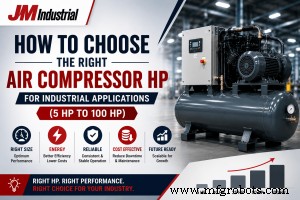
Air Compressor HP Comparison Table
| Compressor HP | Typical CFM Range | Common Industrial Applications |
|---|---|---|
| 5 HP | 15–20 CFM | Workshops, garages, maintenance operations |
| 10 HP | 35–40 CFM | Medium manufacturing, machine shops |
| 25 HP | 90–100 CFM | Production facilities, packaging lines |
| 50 HP | 180–220 CFM | Heavy manufacturing, chemical plants |
| 100 HP | 350+ CFM | Mining, petrochemical, large process industries |
This table offers a general sizing overview. Actual airflow depends on compressor type, operating pressure, and system configuration.
Key Factors That Affect Air Compressor Sizing
Airflow Requirements (CFM)
CFM, or Cubic Feet per Minute, measures the volume of compressed air delivered. Every machine and pneumatic tool has a specific airflow need.
Facilities running multiple production lines or pneumatic systems simultaneously require higher CFM output and larger compressors.
Typical ranges:
- Small workshops – 15–20 CFM
- Medium manufacturing – 40–100 CFM
- Large plants – several hundred CFM
Accurate airflow calculation is the cornerstone of effective sizing.
Operating Pressure (PSI)
PSI, or Pounds per Square Inch, indicates the pressure delivered by the compressor. Most industrial systems operate between 90 PSI and 175 PSI, depending on the application.
High‑pressure equipment, refrigeration, or process operations may demand higher PSI and larger capacity.
Duty Cycle and Operating Hours
Continuous‑duty facilities require compressors built for long cycles. Reciprocating units excel in intermittent duty, while rotary screw compressors are preferred for 24/7 operations due to stable airflow and better energy efficiency.
Evaluate the duty cycle carefully when selecting equipment for continuous production.
Number of Connected Machines
Demand rises sharply when multiple machines run concurrently. Undersized compressors cause pressure drops that degrade tool performance and overall productivity.
Calculate simultaneous machine usage, not just average demand.
Future Production Expansion
Plan for growth. Slightly larger systems can accommodate future needs and avoid costly upgrades.
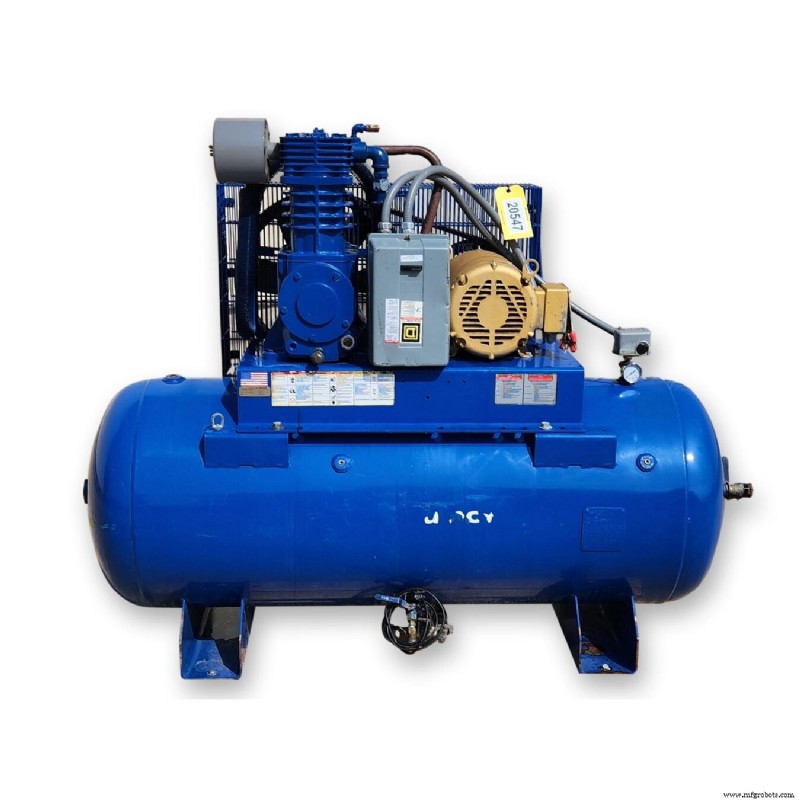
Used 10HP Quincy QT10 Two‑Stage Air Compressor – 120 gal tank
Model: QT10 – HP: 10 – CFM: 36
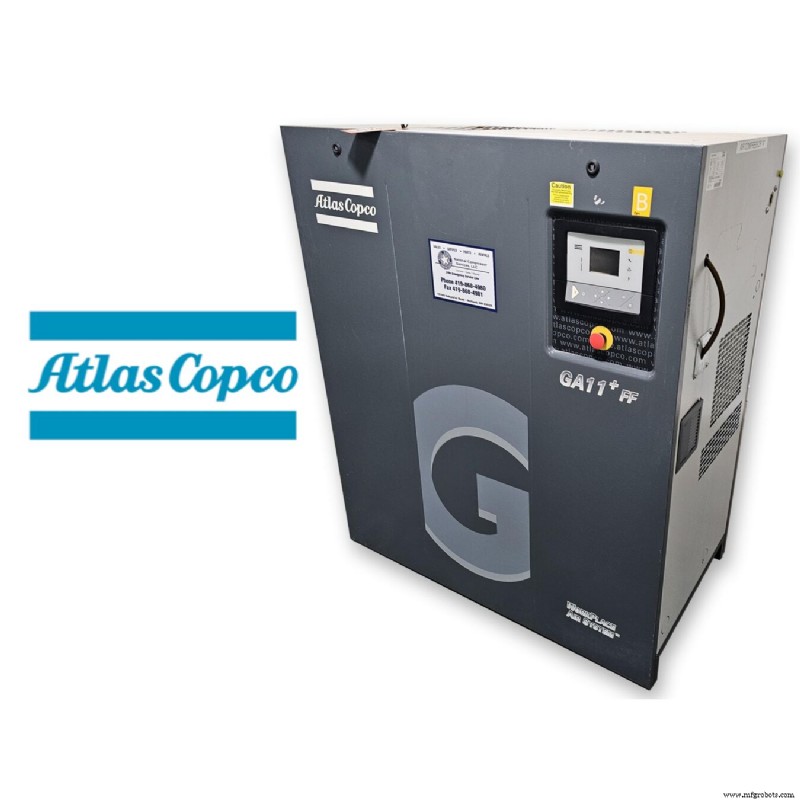
Used 15HP Atlas Copco Rotary Screw – Model: GA11+FF – HP: 15 – CFM: 67.8
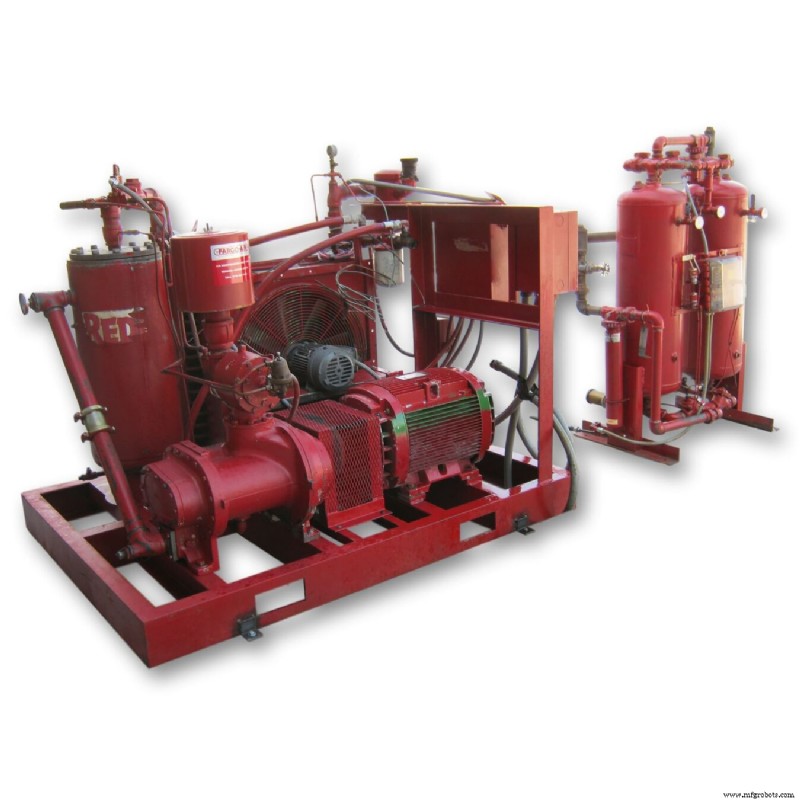
Used 50HP RedMax Rotary Screw – Model: RMA 50 – HP: 50 – CFM: 211
5 HP Air Compressors
Ideal for small operations with moderate, intermittent demand.
Common Applications
- Automotive workshops
- Small fabrication facilities
- Maintenance departments
- Pneumatic hand tools
- Light manufacturing
Typical Output
- 15–20 CFM
- 90–125 PSI
Best suited for applications that do not require continuous airflow.
10 HP Air Compressors
Common in medium‑size operations needing reliable airflow and pressure.
Applications
- Packaging
- Machine shops
- Medium‑scale manufacturing
- Industrial repair
- Production workshops
Typical Output
- 35–40 CFM
- 125–175 PSI
Two‑stage reciprocating units are popular for their durability and higher pressure capability.
25 HP to 50 HP Industrial Compressors
Used where continuous airflow is essential.
Applications
- Chemical processing plants
- Food manufacturing
- Plastic processing
- Textile manufacturing
- Industrial production lines
Typical Output
- 90–220 CFM (varies by configuration)
Many facilities transition from reciprocating to rotary screw units for continuous duty and energy savings.
100 HP Industrial Air Compressors
Designed for large‑scale operations with high demand.
Applications
- Mining
- Petrochemical facilities
- Industrial refrigeration
- Heavy manufacturing plants
- Large process industries
Typical Output
- 350+ CFM
These units often serve as central hubs in compressed‑air networks, supporting multiple departments simultaneously.
Reciprocating vs. Rotary Screw Compressors
| Feature | Reciprocating | Rotary Screw |
|---|---|---|
| Best For | Intermittent duty | Continuous duty |
| Initial Cost | Lower | Higher |
| Noise Level | Higher | Lower |
| Pressure Capability | High | Moderate‑to‑High |
| Maintenance | Moderate | Lower continuous maintenance |
| Energy Efficiency | Moderate | Higher for continuous operation |
Reciprocating units are cost‑effective for smaller setups; rotary screw systems are preferred for large facilities demanding steady airflow.
Signs Your Facility May Need a Higher‑HP Compressor
Common warning signs of an undersized system include:
- Frequent pressure drops
- Tools losing performance
- Compressors running continuously
- Production bottlenecks
- Overheating units
- Increased downtime
- Unstable airflow during peak production
If any of these occur, reassess airflow demand and sizing.
How to Reduce Air Compressor Operating Costs
Compressed‑air systems are among the largest energy users in many plants. Proper selection and maintenance can dramatically cut expenses.
Typical cost‑saving measures:
- Size the compressor correctly
- Repair air leaks
- Maintain filters and separators
- Manage duty cycles properly
- Use efficient piping
- Set appropriate pressure levels
- Perform preventative maintenance regularly
Energy‑efficient systems lower long‑term utility bills.
Common Industrial Applications for Air Compressors
Key sectors include:
- Manufacturing
- Food processing
- Chemical processing
- Automotive production
- Pharmaceutical manufacturing
- Packaging operations
- Mining
- Construction
- Industrial refrigeration
Compressed air powers automation, conveyors, tools, packaging machinery, process equipment, and production lines.
Common Mistakes When Choosing Air Compressor HP
1. Relying Only on Horsepower
Neglecting airflow and pressure needs leads to poor performance.
2. Oversizing the Unit
Wastes electricity and raises operating costs.
3. Ignoring Duty Cycle
Using intermittent‑design compressors in continuous settings causes premature failure.
4. Underestimating Future Demand
Rapid expansion can outgrow an undersized system.
What to Inspect Before Buying a Used Industrial Air Compressor
Used compressors can be a cost‑effective choice if inspected carefully. Check:
- Motor condition and age
- Operating hours
- Air tank integrity
- Pressure stability
- Oil leaks
- Noise and vibration levels
- Maintenance records
- Controls and safety systems
Reliable suppliers provide well‑documented used and surplus units that deliver long‑term value.
Used vs. New Industrial Air Compressors
Used units offer lower capital costs, quicker availability, and access to premium brands.
Benefits
- Reduced upfront investment
- Faster deployment
- Access to high‑quality brands
- Lower project costs
- Cost‑effective plant expansion
Many operations successfully integrate used, unused, and surplus compressors into their existing systems.
Explore Used Industrial Air Compressors at JM Industrial
JM Industrial offers a full range of used, unused, and surplus compressors—reciprocating, rotary screw, and large industrial systems—across airflow and pressure configurations.
Browse our inventory for solutions that fit workshops, manufacturing plants, chemical facilities, and continuous‑duty environments.
Frequently Asked Questions (FAQs)
What size industrial air compressor do I need?
Determine your required CFM, PSI, machine count, and duty cycle. Those variables dictate the HP range.
Is a 5 HP air compressor suitable for industrial use?
Yes—ideal for workshops, maintenance facilities, and small‑scale manufacturing with moderate demand.
What industries use 100 HP air compressors?
Mining, petrochemical, industrial refrigeration, heavy manufacturing, and large process plants commonly use 100 HP units.
What is more important: HP or CFM?
CFM is more critical because it reflects the actual airflow delivered to equipment.
Are reciprocating compressors suitable for continuous industrial operation?
Reciprocating units are best for intermittent duty; rotary screw compressors are preferred for continuous industrial use.
Industrial equipment
- Manufacturing vs Production: Key Differences Explained
- Choosing Flexible Low‑Friction Materials: Green Gripper Woven & Alternatives
- Cerades™: The World's First Structured Desiccant – Revolutionizing Drying Technology
- How Robots Boost Workplace Safety: Proven Benefits for Workers
- Choosing the Right Redriver or Retimer to Extend PCIe Signal Range
- Key Steps in a Mass Production System
- Understanding Mechanical Refrigeration: How It Keeps Us Cool
- Why FANUC Robots Are the Ideal Choice for DIY Automation Projects
- PostWorks 17.2: Universal Postprocessor for Heidenhain, Siemens, and FANUC Machines
- Why Gas Springs Are the Smart Choice for Modern Applications