



Galvanized vs Zinc‑Plated Screws: Choosing the Best Corrosion Protection
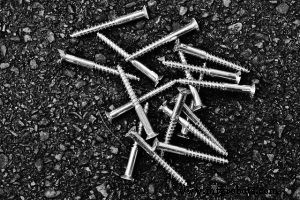
When selecting fasteners for outdoor or high‑humidity applications, the type of zinc coating can make a significant difference. Although the phrases “galvanized” and “zinc‑plated” are often used interchangeably, they describe distinct processes that affect thickness, durability, and cost.
Galvanized Screws
Galvanized fasteners receive their protective shell through a process known as hot‑dip galvanizing. The screws are submerged in a bath of molten zinc (typically at about 450 °C). After a carefully controlled soak, the zinc solidifies on the surface, forming a continuous, thick coating that adheres directly to the metal. Because the zinc is applied in a molten state, the coating is usually thicker and more uniform than electroplated finishes.
Zinc‑Plated Screws
In contrast, zinc‑plated screws are produced by electrolytic deposition. The screw is immersed in an electrolyte solution containing zinc ions, and an electric current is passed through the bath. This causes zinc to plate onto the surface in a thin, even layer. The process is well suited for complex shapes and for producing a consistent finish on a large volume of fasteners.
Corrosion Protection
Both methods rely on zinc’s sacrificial nature. Zinc corrodes at a much slower rate than steel—roughly 30 times slower—so it serves as a protective barrier that shields the underlying metal from moisture and oxygen. When zinc is exposed to the elements, it forms a passive oxide layer that prevents further oxidation of the substrate.
Key differences that can influence your choice:
- Thickness – Hot‑dip galvanizing typically produces a coating 5–10 µm thick, while electroplating yields 0.5–2 µm.
- Durability – The thicker, metallurgical bond of hot‑dip coating offers better resistance to impact and abrasion.
- Cost – Zinc‑plating is generally less expensive for small or complex parts, whereas galvanizing is cost‑effective for high‑volume, flat‑surface screws.
- Appearance – Electroplated screws often have a smoother, more uniform look, which can be important for aesthetic applications.
Choosing the right finish depends on the environment and the required service life. For heavy‑use, exposed outdoor projects, galvanized screws are typically the safer bet. For interior use or budget‑constrained jobs, zinc‑plated screws can provide adequate protection while keeping costs down.
See Monroe’s Screws
Industrial equipment
- Zinc-Plated vs. Galvanized Steel: Understanding the Key Differences
- Nitrite vs. Silicone Seals: Choosing the Right Material for Your Application
- LED vs. Incandescent Industrial Lighting: The Definitive Guide to Efficiency and ROI
- Copper vs. Aluminum Wiring: Which Is the Better Choice?
- Powder Coating vs. Painting: Choosing the Right Finishing Process
- Galvanized Sheet Metal: Essential Facts & Best Practices for Durability and Corrosion Protection
- Choosing the Right Void Fill: A Guide to the Best Packaging Solutions
- Hydraulic vs Pneumatic Actuators: Choosing the Right Power Solution for Your Operations
- Galvanized Steel Explained: Why It Stands Out Against Rust
- Choosing the Right Hydraulic Pump: A Comprehensive Guide to Types and Performance