



Cold‑Forming Metalworking: Advantages, Drawbacks, and Key Insights
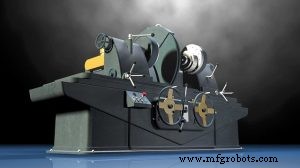
Cold‑forming—also known as cold‑working—is a suite of metal fabrication techniques that shape metal at temperatures below its recrystallization point. Unlike high‑temperature processes such as welding or hot forging, cold‑forming includes rolling, angle bending, roll forming, straightening, blanking, piercing, trimming, and drawing, all carried out at room temperature or slightly above.
Why Cold‑Forming Matters
Because it eliminates the need for substantial heating, cold‑forming offers manufacturers a more economical and energy‑efficient alternative. The process delivers fine dimensional control and superior surface finishes, making it ideal for components that demand tight tolerances and aesthetic quality.
Pros of Cold‑Forming Metalworking
- Cost Efficiency – The absence of heating equipment and the reduced energy consumption lower production costs.
- Dimensional Accuracy – Working below the recrystallization temperature keeps the metal in a solid state, allowing precise control over shape and size.
- Improved Surface Finish – Cold‑working suppresses surface defects, yielding smoother, cleaner parts suitable for critical applications.
- Versatility – A wide range of processes (rolling, bending, trimming, etc.) can be combined to create complex geometries.
Cons of Cold‑Forming Metalworking
- Higher Forming Forces – Without heat, the metal remains hard and requires greater mechanical force, increasing tooling wear and cycle times.
- Pre‑Processing Cleaning – Contaminants such as oils or dust can compromise dimensions and surface integrity, so workpieces must be thoroughly cleaned before forming.
- Springback – Elastic recovery can cause the part to partially return to its original shape, necessitating compensations in tooling design or post‑forming adjustments.
- Material Limitations – Very thick or highly alloyed steels may not be suitable for cold‑forming without specialized equipment or pre‑heat treatment.
Industry experts, including those from ASM International and the Journal of Materials Processing Technology, consistently cite cold‑forming as a cost‑effective method for high‑precision components—especially in aerospace, automotive, and consumer goods. However, understanding its force requirements and springback behavior is crucial for achieving the desired performance.
Industrial equipment
- Stainless Steel Handles: Advantages, Disadvantages, and Expert Insights
- Advantages and Drawbacks of Metal Pickling: A Comprehensive Overview
- Investment Casting: Benefits, Drawbacks, and Key Considerations
- Die Casting: Advantages, Challenges, and Key Insights for Manufacturers
- Lost‑Foam Casting: Benefits, Drawbacks, and When to Use It
- Benefits and Drawbacks of Single‑Pass Boring in Manufacturing
- Infrastructure as Code: Benefits, Challenges, and Best Practices
- Should You Coat Your Pump? Weighing the Benefits and Drawbacks
- CO2 Laser vs. Fiber Laser: Which Technology Delivers the Best Performance?
- Tower Cranes: Key Advantages, Limitations, and Best Practices