



Automated Adhesive Dispensing Systems: Types, Applications, and Efficiency Gains
Why read this: Robots can increase the precision and efficiency of your gluing and dispensing processes. However, not all tasks are suited for automation, and manual handling can sometimes provide greater flexibility and control of the quality. This article presents 3 typical gluing solutions and helps you identify potential for automating your gluing and dispensing processes.
What is automated gluing and dispensing?
Robotic gluing is a type of automated assembly of two or more parts by means of dispensing glue on one part and then bonding it with another.
The processes of gluing and dispensing can be automated through the following solutions:
- A machine
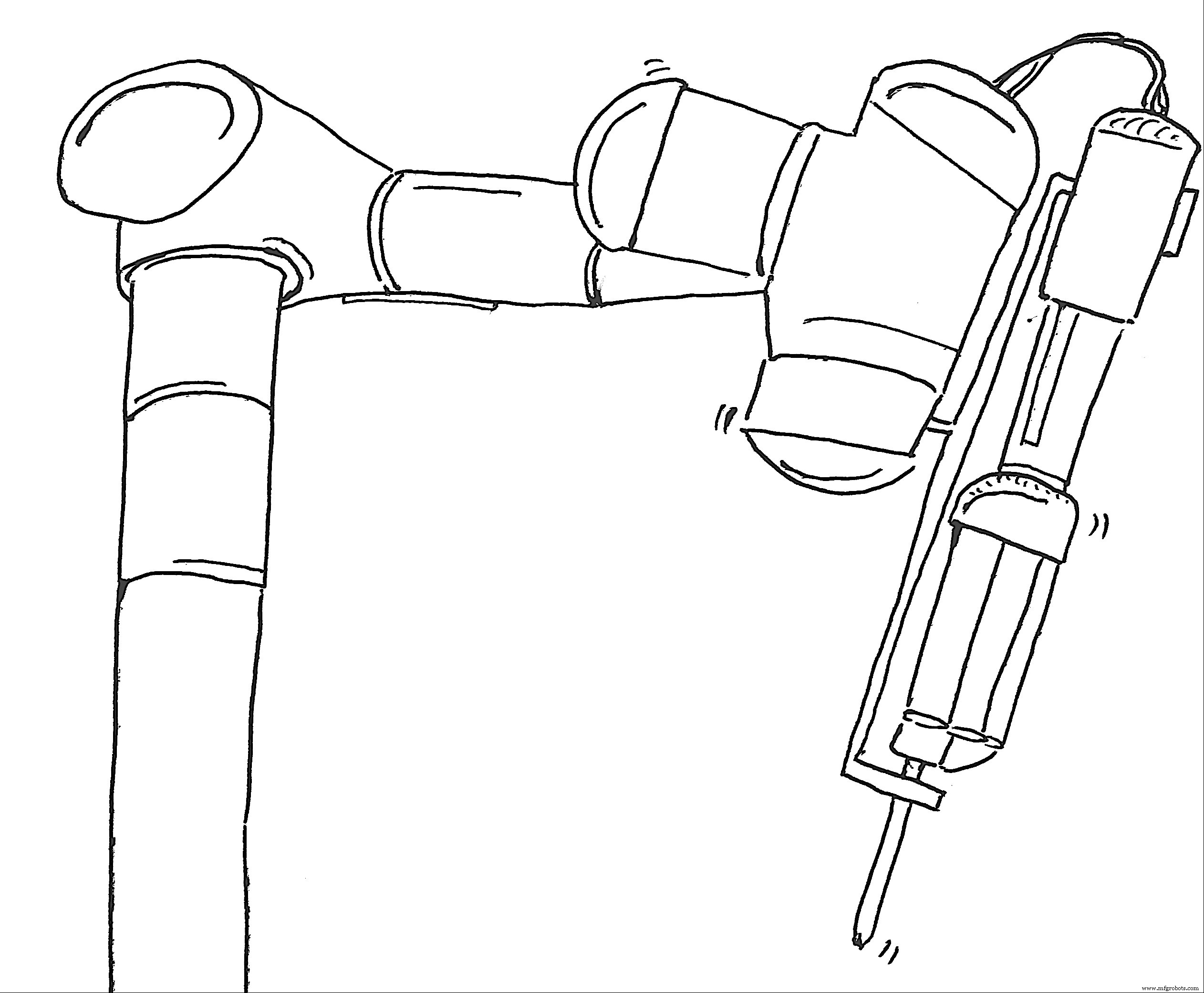
- A robotic arm with an attached glue dispenser
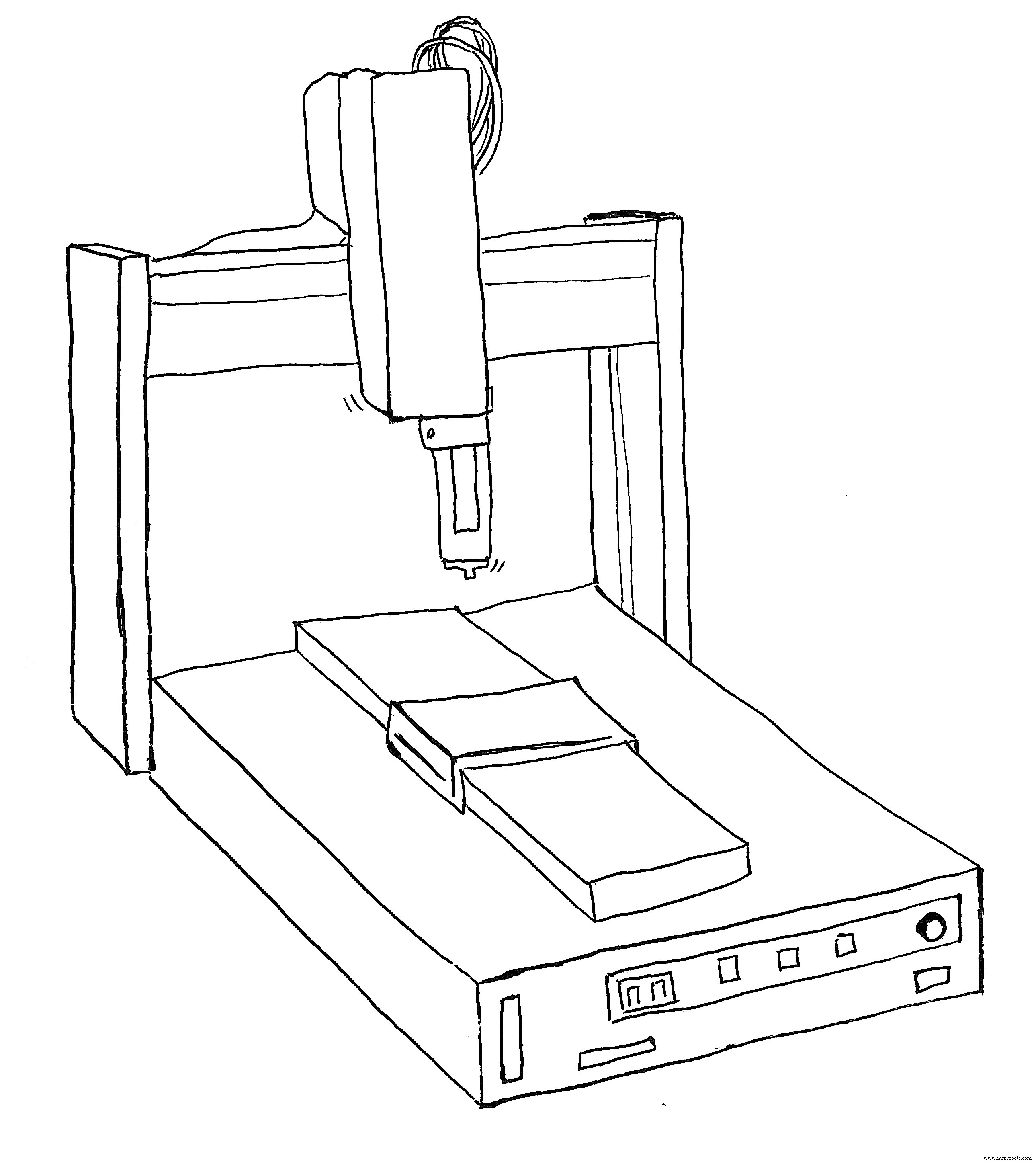
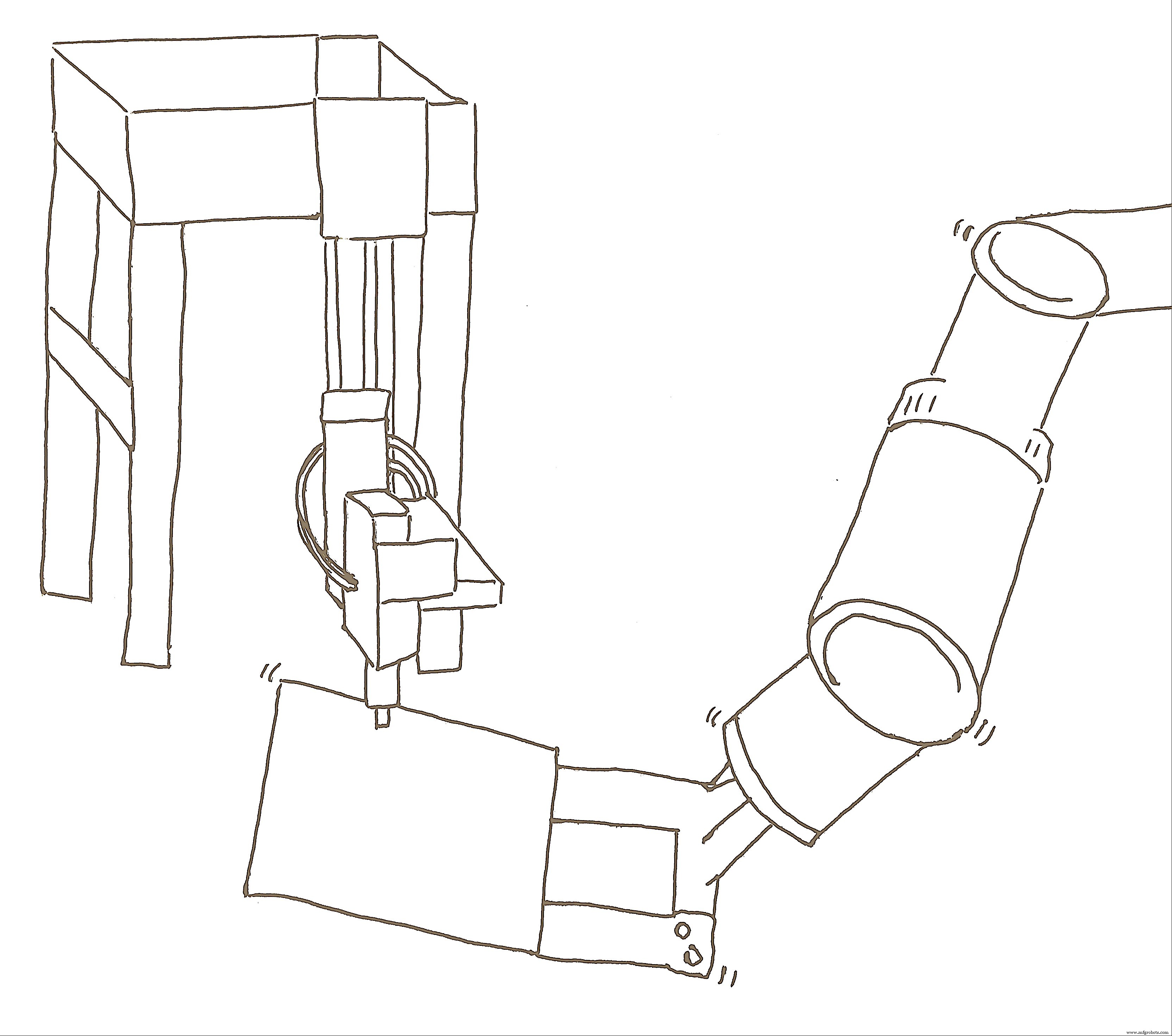
- A fixed glue dispenser around which a robot moves the part or item that needs glue (integrated dispensing)
Depending on the type of material and the industry, one solution can be a better fit than the rest. For example, a folding gluing machine is a perfect fit for the printing industry.
This machine turns a flat piece of carton or plastic into a box or an envelope by gluing the sides and then folding the part.
A robotic arm can be useful for electronic components. The glue dispenser will apply sealing to the component, thereby joining together metal and/or plastic parts to make the assembly waterproof.
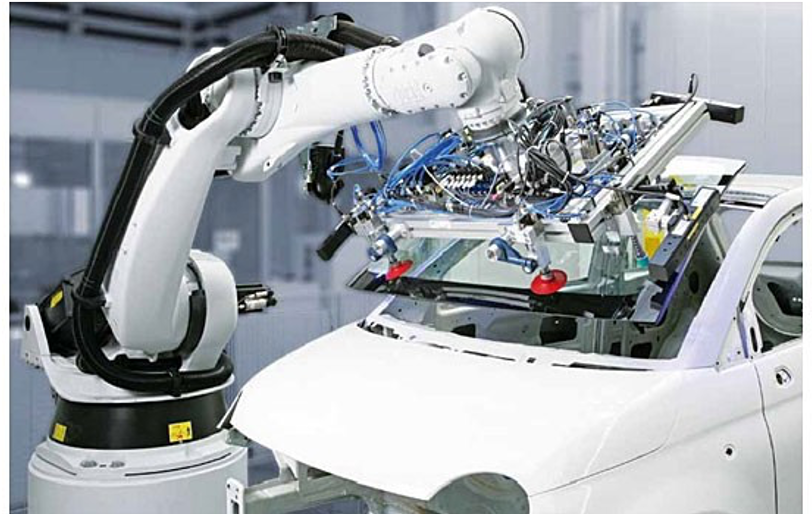
The solution of a glue dispenser attached to the robot is also a good fit for the automotive industry, where a six-axis robot has the flexibility to glue over the rough edges of an automotive part (e.g a car door).
After this, adhesive bonding (the process of joining two surfaces together smoothly) normally takes place, during which a robotic clamp (or an additional robot) attached with the other part, drives down the glued part and applies pressure to both.
As for the integrated dispensing systems, they could prove useful in gluing small and even surfaces such as electronic circuit boards (PCBs) or applying varnish to them.
The benefits of automated adhesive dispensing systems
Automated gluing and dispensing can help combat some of the issues with manual handling. For example, automated gluing is often much more precise and therefore increases the quality of the product.
Raising the product quality can also decrease the number of products that need to be discarded because of inaccurate gluing.
Another thing is the consumables costs. With automated solutions, a lowering of consumables costs is generally one of the benefits. This goes for automated gluing as well, because automatic systems use the right amount of glue every time – no more, no less.
When glue is dispensed manually by an operator, there is always some slight variation in the amount used. Dispensing an unnecessarily large amount of glue is obviously a cost that manufacturers would want to eliminate. This can often be achieved with a robot.
Challenges and downsides of automated adhesive dispensers
While automated gluing and dispensing typically increases precision and evens out the distribution of the glue or sealing, there are some challenges to the technology as well.
Robots alone cannot perform quality control
Without a vision system, robot solutions cannot detect inconsistencies in the gluing. The human eye can quickly identify e.g. air bubbles in the glue and then discard the item or correct the mistake.
Robots need a vision system to do such quality control, and these systems can be expensive. Introducing a vision system also increases the complexity of the solution, and employees then need to be trained to understand, handle, and maintain the vision system as well. This all adds to the investment cost.
If the product mix is high, manual gluing can be faster and more flexible
Flexibility can also be a challenge. If the production has a high product mix, i.e. if there are many different types of products that need to be glued, a manual operator can actually be more efficient.
This is because the robot would need to be readjusted and rearranged in order to handle new product types. Depending on the product mix, this changeover time between tasks can be very significant.
Manual operators are usually faster at adjusting to new products, and in many situations, their thinking makes them more flexible than robots in a high product mix setting.
Can your dispensing processes be automated?
If you consider automating processes in your company using one of the aforementioned gluing and dispensing solutions, you should take note of the following points:
- Assembly of metal or plastic components: Many assembly processes in the electronics industry can often be automated with the aforementioned solutions. This is because they require high precision and are typically carried out in high numbers in the production. Therefore, if you are in the electronics industry, there might be a higher potential for automated gluing.
- Repetition with high precision: If your application calls for high precision and repetition in short time intervals, a robotic gluing dispenser is the right choice for you. For example, an automatic gluing dispenser has the ability to accurately place glue in specific patterns, like beads, circles, dotted lines, and arcs.
- Improved working environment: Some types of glue can pose a health risk to employees. The handling of a glue dispenser can also be straining for the operator, and some glue processes require movements in awkward positions. If this is the case for your gluing tasks, automation could be a way to improve the working environment.
- One-sided gluing: It is generally easier to automate a task when no rotation of the parts is involved. If a part needs to be glued only on one side, automating that process is recommended, compared to manual operation which would be more useful in case both sides need to be glued.
Conclusion
Automated solutions can improve many aspects of gluing and dispensing processes, for example their quality, efficiency, and the working environment.
However, not every production will benefit from automating its gluing processes. In some cases, manual handling can provide greater flexibility and also allows employees to perform quality control on the go.
The potential for automation of course depends on the specific product types and processes at your company. If you can tick one or more of the previous points, however, you might have a reason to look further into automation.
Industrial robot
- Molybdenum Powder: Types, Properties, and Industrial Applications
- Arduino Sensors: Types, Applications, and Real‑World Projects
- Transform Your Warehouse: How AI-Driven Depalletizing Systems Boost Productivity and Employee Safety
- Automated Warehouse Storage Systems: Types, Benefits, and Drawbacks
- Essential Mining Tools: Four Key Equipment Types Every Operation Needs
- Explore 6 Proven Warehouse Storage System Solutions for Optimal Efficiency
- Ensuring Reliability: Marine Hydraulic Systems for Safety and Performance
- KUKA Motion Control Powers Precise 6‑Axis Gantry Dispensing Systems
- Exploring Three Core Types of Robotic Systems in Modern Manufacturing
- Two Essential Flow Regulation Systems for Optimal Compressed Air Efficiency