Industrial manufacturing
Industrial robot
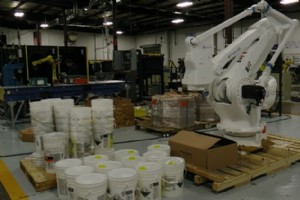
There are several palletizing robot manufacturers that manufacture palletizing robots – Fanuc, Motoman, and KUKA robotics companies, just to name a few.The models available from these robotic companies have several advantages when it comes to robotic palletizing: Increased speed, Ac
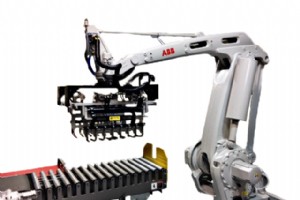
When planning to switch your “end-of-the-line” application from manual operation to an automated option, there are several things that you should consider to prepare your facility for the change. First, you should consider if you want your palletizing robotic system to perform one

Something that used to be an idea only in movies – robots interacting with humans in a service capacity – is becoming more prevalent in society. Though we may not realize it, we interact with service robots every day. When we go through the self-checkout lane at the grocery store, t
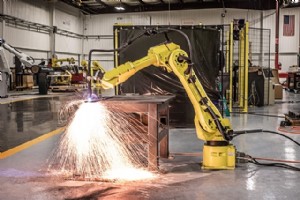
Plasma cutting has many benefits, which has made it an attractive application in many different industries. This cutting process uses a gas jet, charged at great speeds to cut metal up to six inches thick at very high temperatures.The advantages of robotic plasma cutting are numerou
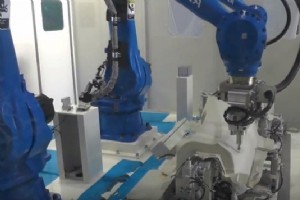
Waterjet cutting robots are a great way to cut production costs. These robots easily remove material with precision and can handle impeccable speeds. Using a high-pressure jet of water to cut through soft materials like rubber and food. Sometimes abrasives are added to the waterjet
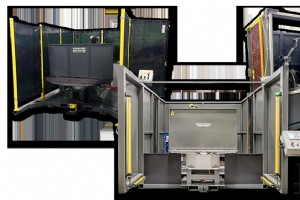
Lean manufacturing is a system of using production resources efficiently. While material handling robots have not traditionally been used to “trim the fat” on these systems – because they may help to increase waste instead of helping – companies are turning to robots because of thei
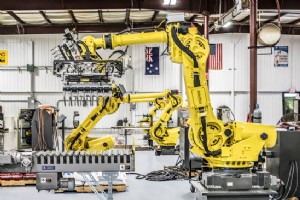
Due to regulations passed in 2011, material handling robotics now have the edge in the food and beverage industry.In January 2011, President Barack Obama signed The Food Safety Modernization Act. This act gave the Food and Drug Administration power to regulate how food is grown, har
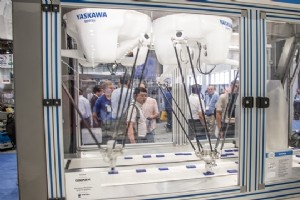
While material handling robots can be used to position and transfer parts from one place to another, many facilities use conveyor systems to transport items. These items are taken to robots that perform applications like pick and place, palletizing, and packaging. While grippers and
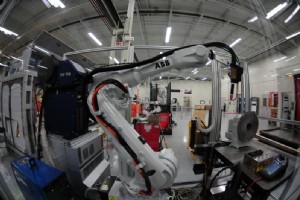
Robotic welding began in the 1980s and has steadily grown to become the dominant application for industrial robots. Of the many different welding processes, tungsten inert gas welding, or TIG welding, is the most common. TIG welding involves using an electric arc between a non-consu
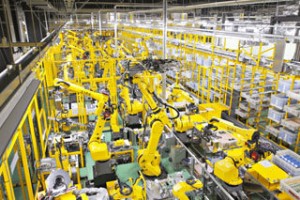
Industrial robots began appearing in the early 1970’s when companies like KUKA Robotics introduced the first simple industrial robots. Robot development has accelerated rapidly ever since, with applications expanding from basic grinding and polishing to highly precise welding, palle
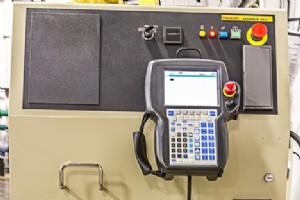
Fanuc Robotics has released many different controllers over the last 30+ years to act as the “brain” of their robots. As the technology became more advanced, Fanuc had to improve the functionality of their controllers so the robots could perform more fluidly. In 2006, Fanuc released
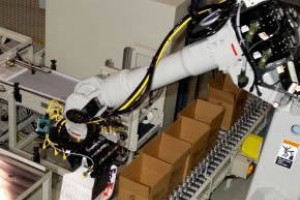
While it was once thought that fixturing should be integrated as a go-between for man and machine during automated robot processes, that line of thought has been eradicated with the new national robot safety standard by the American National Standards Institute.This is the first upd
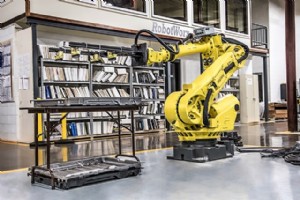
As the world population continues to grow, the demand for products increases as well. Manufacturers in every industry are starting to turn to material handling automation to handle part transfer, machine loading and unloading, and palletizing, as well as other types for material han
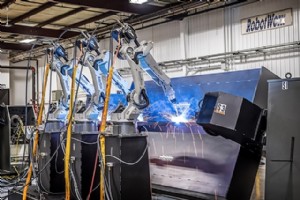
Similar to TIG welding processes, plasma arc welding (PAW) provides a high quality method to joining metal parts.Principles of PAWPlasma arc welding is basically an extension of gas metal tungsten welding (GMAW or TIG). Both welding processes generally use nonconsumable tungsten ele
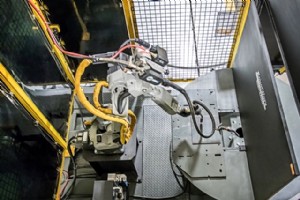
From the time primitive man began making tools, manufacturing has been an integral part of every human’s life. Look around. Everything you see that doesn’t exist naturally was manufactured somewhere in the world. From the cars we drive to the chairs we sit in, many of these things h
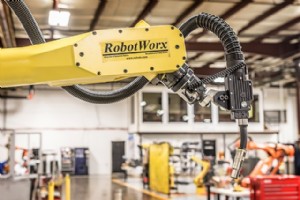
When incorporating a robotic welding cell to fit your manufacturing needs, there are some key requirements to consider. While most robotic weld cells have an industrial robot arm, a positioner and a safety package, it is your unique needs that will determine how these pieces come to
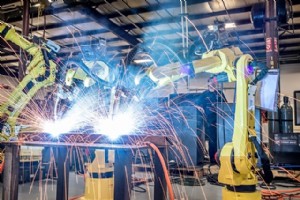
Train movements on railway tracks cause massive wear and tear over a short period of time. Reconditioning and replacing those crossing systems used to back up traffic and stretch out over weeks, using many manpower hours.Now, with the help of transportable robotic welding cells, the
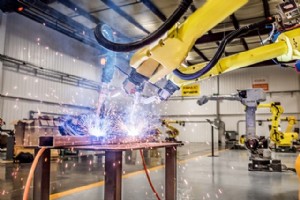
The addition of a robotic welding cell to a manufacturer’s facility can enhance productivity, but only if it is properly laid out to achieve maximum speed and accuracy.One of the areas that must be looked at in the layout is fixturing on the robotic welding positioner. Many producti
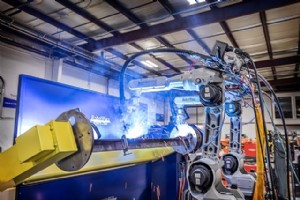
Robotic welding has many uses in industry, and it seems that the window frame manufacturing industry has started to take notice over the last few years.In 2006, Widney LTD. in the United Kingdom started manufacturing aluminum window frames for off-road vehicles in one of their facto
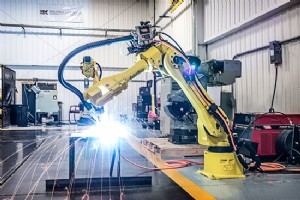
Every year, companies attempt to better their processes and equipment from robotic welding to cleanroom applications. Motoman, a leader in industrial robotics, released a cleanroom robot in April that specializes in biomedical applications.The MH3BM handles specimen processing, drug
Industrial robot