Industrial manufacturing
Industrial robot
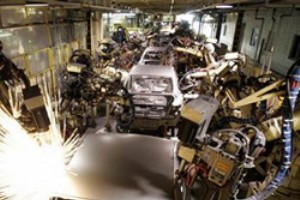
One of the most common industries to use assembly robots is the automotive industry. With all the parts, large and small, that go into the production of an automobile, assembly robots seem to be the perfect fit. Because the assembly of automobiles, as well as other vehicles, is a pr
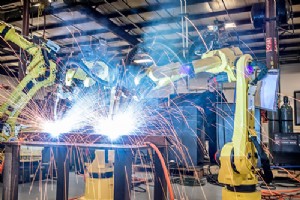
Industry 4.0, or what some may call the “fourth industrial revolution, is the next technical revolution. It proceeds the previous three industrial revolutions of steam/water power, electricity, and electronics. Industry 4.0 takes on the third industrial revolution and expands on its
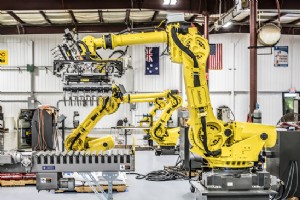
Many applications use materials handling robots in a variety of industries. By choosing to automate with a materials handling robot, manufacturers not only raise the safety levels of their facility, but also cut costs and see a return in investment not long after installation.Automa
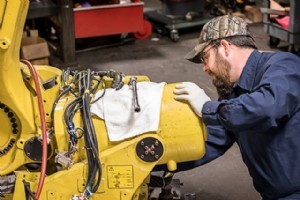
Reconditioned robots are one of the most cost-effective ways to achieve automation. A reconditioned robot system will work just as well as a new system, at only a fraction of the cost. At RobotWorx, all reconditioned robots come with the RobotWorx warranty, this peace of mind ensure
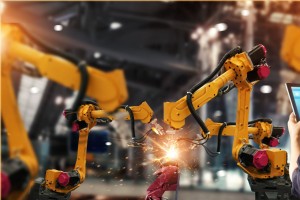
According to Intrado GlobeNewswire, the global robotic welding market size was valued at $5.5 million in 2018 and is projected to reach $10.5 million by 2026, growing at a CAGR of 8.7% from 2019 to 2026. These numbers are no accident, as the market implements Industry 4.0, manufactu
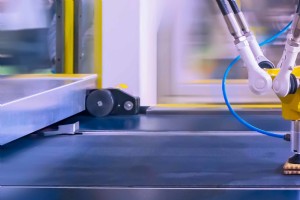
Food manufacturers focus on either primary or secondary food processing. Primary food processing converts raw agricultural goods into consumable food products, like butchering meat. Secondary food processing takes the primary food ingredients and combines them to create new consumab
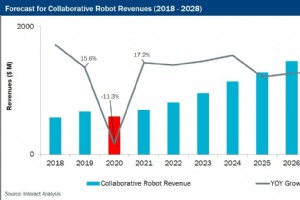
Introduction to Collaborative RobotsIn 2008 Universal Robots sold the first collaborative robot (cobot) to Linatex, a Danish supplier of technical plastics and rubber for industrial applications. This robot broke all preconceived ideas of how companies could integrate automation int
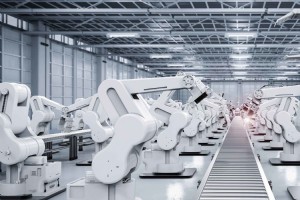
Automation solution providers encountered a major shift in the market in 2021. The covid-19 pandemic created a demand for automation in various business sectors, including those outside industrial manufacturing. Statistics published by the Association for Advancing Automation (A3) s

As more industries come to terms with the need for robots in their operations, the number of industrial robots installed worldwide will experience positive growth within the next five years. With this developing interest in automation comes more investments into research and develop
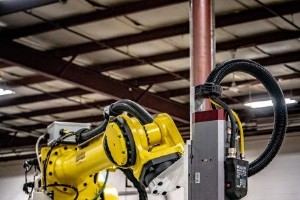
Automated finishing tools have advanced in precision and flexibility over the last ten years. Because of the accuracy and speed offered by robotic cutting tools, companies are relying on automation for processes that traditionally use CNC machining or manual methods. Popular tooling

With market demands more pressing than ever, the “throughput struggle” is real. To increase productivity and strive for 100% effectiveness, many manufacturers are placing greater focus on Overall Equipment Effectiveness (OEE) to measure the efficiency of individual machines, automated wo
If you’re still waiting to take the leap into robotic automation, you’re not alone. Yet, labor is still hard to find for many manufacturers, and ergonomics and safety awareness is pinnacle.While robot shipments have increased steadily over the last decade, only 45 percent of Automation W
If you’re looking to gain flexibility, optimize floorspace, reduce cycle time or lower capital equipment costs on your shop floor, robotic machining may be a good fit for you! Highly versatile and repeatable, robot utilization may be the ideal alternative to supplement your Computer Numerical
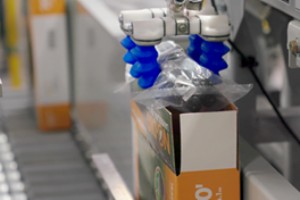
Have you been scoping out robots and automation equipment for your facility lately? If you’re involved in manufacturing, you’ve probably been mesmerized by pictures and videos of automated assembly or packaging lines, robots that weld or paint or other industrial automation. Maybe you&rs
Introduced by Benjamin Franklin in 1748, the concept of the battery continues to spark innovative ideas for new and useful products. From once powering electrical telegraph networks, to today’s extensive use in automobiles, consumer electronics, medical devices, stationary storage and more, ba
With more affordable, more adaptable and easier to program robots spurring greater utilization of robotic automation, especially for small- to mid-size enterprises (SMEs), manufacturing productivity continues to increase. Widely used to perform dull, dirty and dangerous tasks, robots also help to au
From welding and press brake applications to laser cutting operations and many more, safeguarding is essential for a wide variety of robotic applications. However, when it comes to machine guarding, one size does not necessarily fit all. A producer of wire partition products, WireCrafters knows this
Because of the steady increase in consumer adoption for Electric Vehicles (EVs), the battery supply chain has experienced a surge in demand. To address this need, manufacturers are looking to robotic automation for fast and reliable assembly options to effectively reduce the demand-supply gap. But,
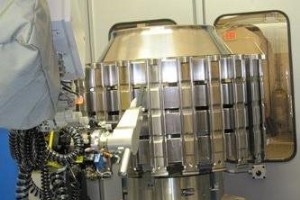
Regardless of the size of the components produced, making a machined part “assembly ready” by eliminating rough edges (burrs) caused by drilling or cutting is crucial. While most, if not all, manufacturers understand the importance of surface finishing, there are still those that have ye
Breaking the limitations of conventional cutting methods, robotic automation has opened the door to innovative high-speed trimming, chamfering and deflashing solutions. Furthermore, as industry’s push for sustainability continues, the need for robust yet eco-friendly robotic technology has gro
Industrial robot