Industrial manufacturing
Industrial robot
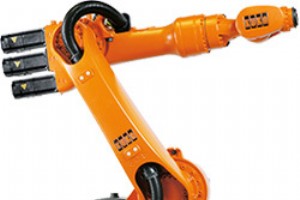
The story of KUKA welding robots does not start with the development of industrial robotics. Instead, this story starts back in the 1800s, when welding was manually applied. Back in 1898, the only KUKA welders available were manual welding apparatuses. Hans Keller and Jakob Knappich
Carbon fiber is an extremely strong polymer made up of carbon fibers. The material is lightweight and has several uses in an array of industries.While carbon fiber can be a little on the expensive side, the material is used heavily in the automotive and aerospace industries. Carbon
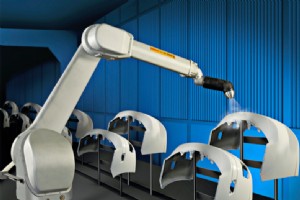
The P-250iA Fanuc coating robot is ready to tackle large painting jobs. Fanuc’s models provide the industry’s best work envelope, as well as optimal motion performance. Low operating costs are achievable with this series of robots, as well as maximum throughput and quality. The P-25

Programmable Logic Controllers (PLCs) are central computers that control where and when industrial robots perform their duties. Like a director controlling a symphony of musicians, a PLC controls a “symphony” of specialized robots. These robots all do their jobs at the direction and
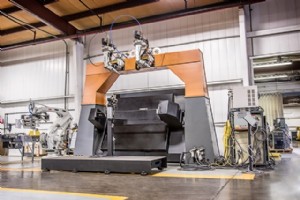
Humans use their arms for a multitude of tasks. Likewise, robotic arms need the freedom of movement around a part, especially if they are involved in a dispensing process. The two most popular types of dispensing robots are the XYZ Gantry model and the 6-axis model. The gantry mode
Touching someone or something and receiving a “shock” can be quite shocking. Electrostatic Discharge (ESD) occurs when a sudden electric current flows between two objects. ESD can cause damage to electrical devices, as well as potential equipment failure and network downtime, which
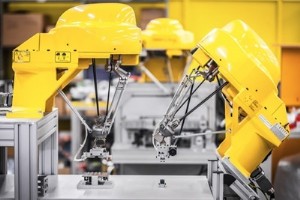
When a dispensing process is automated, productivity and reliability will increase. Both batch and in-line flow processes can be programmed with automated dispense systems using either a benchtop or SCARA robot. However, robots must be implemented correctly for manufacturers to watc
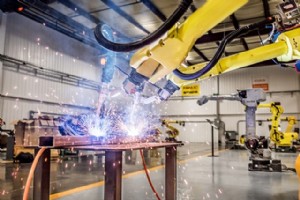
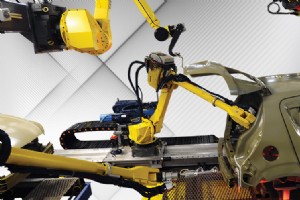
Fanuc, an industry leader in welding robotics, has engineered Fanuc welding equipment in the automotive industry for years. Not only do Fanuc welders help construct automobiles on a production line, they also weld together separate automobile parts.One Fanuc welding system uses two
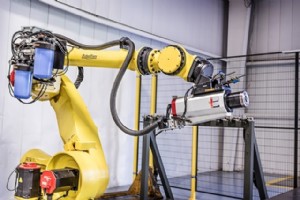
It’s a bird, it’s a plane…yes, it is a plane, on which robots have spent countless hours working! Robots play an important role in aerospace applications, in both the construction of aircraft engines as well as performing tasks such as drilling and painting airframes. Because of rob
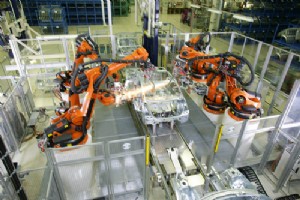
There is nothing quite like watching an assembly robot working on a line. The tireless reliability and efficiency of the robotic assembly arm is a sight to behold. However, these amazing systems don’t just pop into existence. They are not born – they are made. An assembly robot is b
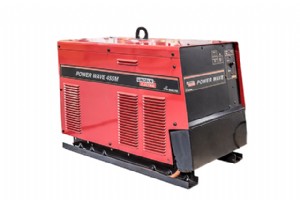
Robots are expected to work tireless hours, yielding perfect, precise results around the clock. But what powers them? They don’t need food and water; they need a power source. The selection of a robotic power source should be decision made in the early stages of design since it impa
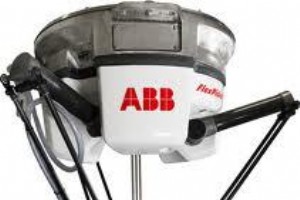
Who didn’t love watching a candy dispenser drop a precious piece of candy into their hand as a child? Robots do the same thing, but their dispensing tasks are automatic. They can dispense a variety of materials: fluids, adhesives, wire, and medication, as well as large objects like
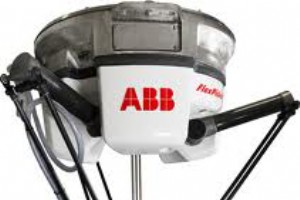
Dispensing automation is critical for time efficiency and product precision. Robots can dispense a wide variety of materials, saving their users time, money, and the tedium of a monotonous, potentially hazardous, process. Dispensing robots are crucial for many assembly and manufactu
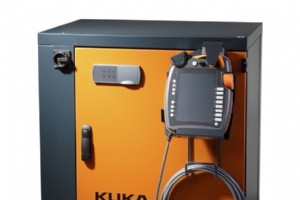
When Delta Sigma Corporation (DSC), a leading manufacturer of custom machines for automotive, medical, aerospace, and general industries, needed a robotics supplier, they called on KUKA. The partnership between DSC and KUKA fostered the platform for KUKA’s Motion Control technology
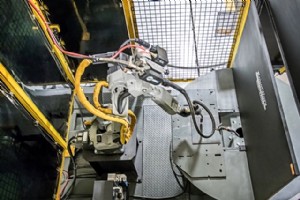
Welding is a perfect application to automate with robots. Even skilled human welders still make mistakes that impact product quality and increase cost. Human labor also has limitations in terms of how quickly a job can be preformed, which can increase product cycle time and cost.In
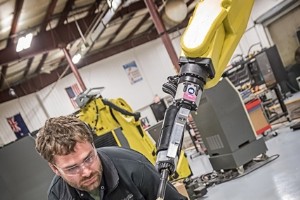
Industrial robotic arms have been assisting humans in manufacturing for decades. The idea of using industrial robotics for applications, in place of manual processes, took off in the 1980s, and manufacturers haven’t looked back. But, how are these machines put together? How are thes
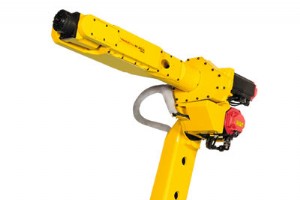
Everyone needs to save money. What better way for a manufacturer to save money on his equipment than to invest in features that will reduce maintenance costs over time? Industrial robot manufacturers, like Fanuc Robotics, use cable management systems, called dress packages, to reduc
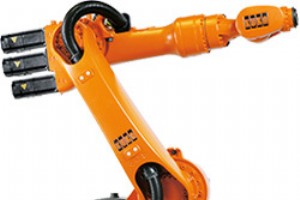
No material is excluded from the possibility of burrs, but plastics give deburring tools a run for their money. Plastics present quite a challenge when deburring because of chip re-welding. The high temperatures associated with deburring can promote the removed chip to melt and weld
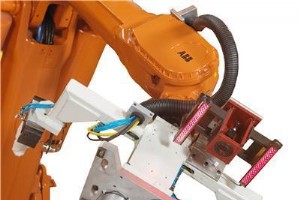
We are all born with idiosyncrasies and imperfections that make us unique…and human! But when a product has imperfections, for both safety and aesthetic reasons, these inaccuracies need to be removed. Deburring is the process of removing burrs, sharp edges, or fins off parts. Roboti
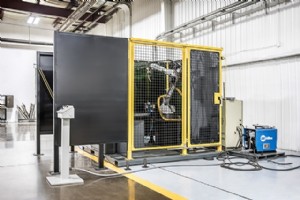
Weld spatter, the small particles of non-metallic material expelled during the fusion of metals during welding, is a big problem for welding applications. Robotic push connectors can help cut down on the occurrence of spatter.Spatter is a problem because it can cause discontinuity t
Industrial robot