


Industrial manufacturing
Industrial robot
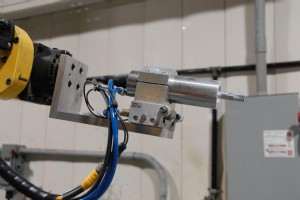
It doesn’t take a rocket scientist to figure out the advantages of robot automation. Robots have enabled manufacturers to speed production rates, keep their manual workers out of hazardous conditions, and increase flexibility and versatility in their industries. Versatile robots hav
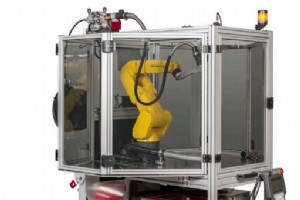
Transformers? Almost! Modular robotics focuses on building a single section of a robot (called a module) that can connect or combine with other modules to form a different type of robot. The modules communicate with other modules wirelessly, or using infrared or surface electrical s
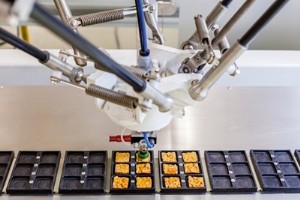
Robots bring versatility to the processes that they automate. Automation, especially in the food industry in processes such as case palletizing and packaging, has led to increased production rates and higher accuracy and efficiency. Advance Brands offers cooked poultry, beef, and p
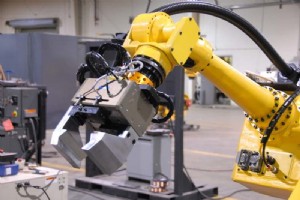
Selecting the proper EOAT to increase versatility is based on end-user’s needs and familiarity of the robot integrator. End-effectors are available in both angular and parallel style and are actuated electrically, hydraulically, mechanically, or pneumatically. Pneumatic EOATs are us
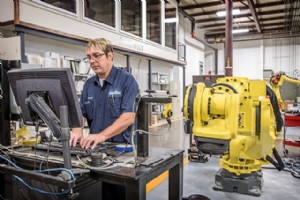
Robots are designed for a multitude of purposes. Depending on the specific purpose for which a robot will be used, the inherent design is essential for proper function. The robotics design process begins with defining the problem or the task for which the robot will be used. The spe
The demand for robotics automation and applications is constantly growing and developing, as advances in computing progress. The manufacturing industry was the first to heavily invest in robots and is still the primary employer, but the rise of robots in fields such as aerospace, ag
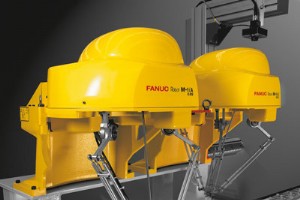
Fanuc’s M-430iA/2F is a revolutionary high-speed picking and packing robot. Its design is optimal for sustained picking to meet the needs of the food industry. It is equipped for both primary (unpackaged) and secondary (packaged) food handling. The M-430iA is a 5-axis electric servo
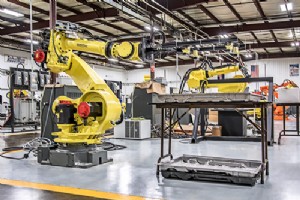
Stacking and de-stacking objects is tedious and can be dangerous to manual workers. Stacking automation can virtually eliminate worker injuries due to heavy lifting and repetitive motion. Manufacturing industries rely on press transfer and stacking robots for material handling. KUK

Parallel robots, as opposed to serial robots, have several simple lightweight arms between the fixed base and move-able part. Each arm is controlled by its own motor and its movements are coordinated by a computer. The arms are placed as close as possible to the robot base, and the
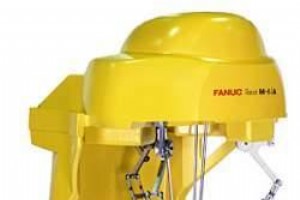
Repeatability is essential for picking robots, as they need to sustain precise and efficient movements. Picking automation speeds the process of picking up parts to place them in different locations. Picking robots replace manual workers who would easily fatigue from the repetitious
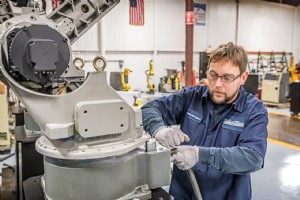
Before robots are capable of dispensing medications, deburring plastic edges, or packaging parts, they have to be created! Engineers get to take the credit for designing the robots to do what they are programmed for. Mechanical engineers design the robot’s structure, joint mechanism
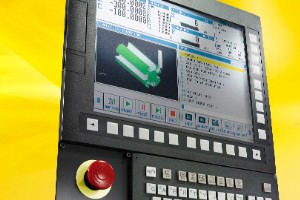
CNC Engineering, Inc. is the largest Fanuc control retrofit provider in North America. Based out of Enfield, CT, it provides Fanuc systems to a multitude of manufacturing industries, and boasts a customer retention rate of 98%. Their business goal is to exceed customer expectations
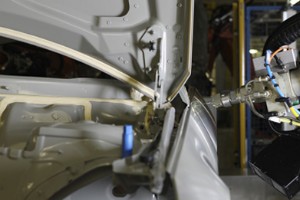
There are several benefits to bringing sealing robotics to your factory. However, there is a bigger question that you need to answer before you ever begin automating with sealing robots – is your factory a good candidate for sealing robot automation? There are several factors about
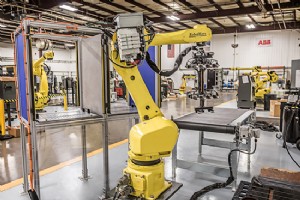
Tool engineering, a specialty field of industrial engineering, exists to plan the processes of manufacture. Workers in this field develop tools and machines and integrate facilities to produce products. A background in tool engineering requires study in the areas of jig design, pres
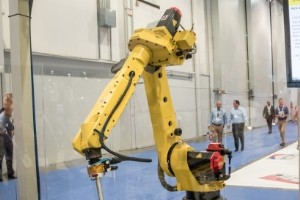
Bin picking has traditionally been a problem for manufacturers because of the unstructured environment of parts. When a pile of randomly oriented parts are stored un-ordered in bins, they need to be separated and then placed on conveyor belts that can adapt to the geometric properti
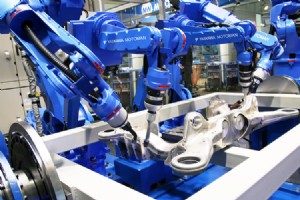
Flux cored welding is one of the more common welding applications available to the manufacturing and other industries today. Since it is common, there are a couple of tips to avoid flux cored welding problems and improve your welding quality.One problem that manufacturers face is wi
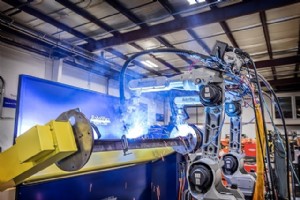
Two of the most common kinds of arc welding used in industrial processes are gas metal arc welding and flux cored arc welding. When researching the GMAW versus FCAW question, one finds that these processes are different and have different advantages and disadvantages when applied to
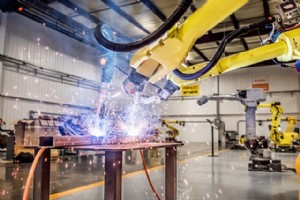
Fanuc Robotics has supplied manufacturers with single-arm arc welding robots for decades. Now, with the progression of technology, Fanuc can also offer manufacturers a system that provides dual arm arc welding robots. This dual-armed arc welding robotic system can enhance the perfor
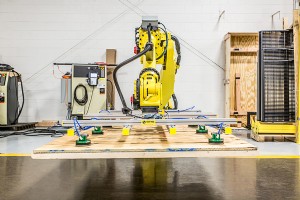
Much like the welding robots that preceded them, the integration of material handling into an already present production line can be a tricky task. Manufacturers have to examine each step in their material handling process and translate that to work with a robot, which is different
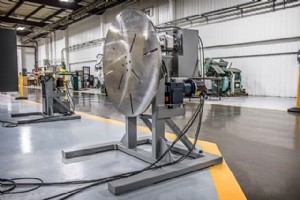
Welding is a highly automated process in the manufacturing industry because of the high level of accuracy that welding robots have attained. However, the placement of the work piece is just as important as the robot welding it. That is why robot weld positioners are so important. Wh
Industrial robot

Getting Started with Connext DDS – Part 3: The Admin Console Every DDS Developer Must Master
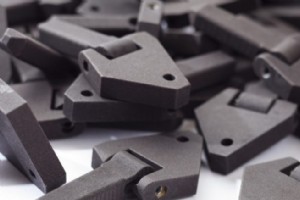
4 Essential Insights from AMFG’s 2019 3D Printing Service Bureau Survey
Mastering Polyjet 3D Printing: Precision, Detail, and Versatile Applications

How Many Lights Can Fit on a Single Circuit Breaker? Expert Guide for 15A, 20A & 10A Circuits

