



What Is a Superconductor? Types, Materials, and Key Properties
Superconductors are materials that conduct electric current without resistance when cooled below a characteristic critical temperature. Unlike ordinary metals, which exhibit some resistance at room temperature, superconductors offer zero electrical resistance and exhibit unique magnetic behaviors.
What Is a Superconductor?
Definition: A superconductor is a substance that, upon cooling below its critical temperature, allows electric current to flow without any energy loss.
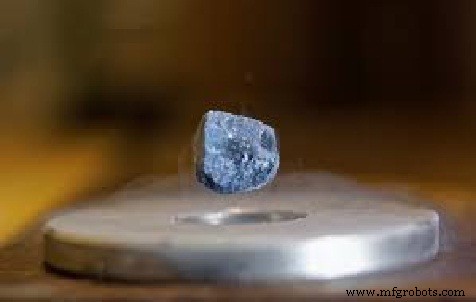
In many materials, resistance drops dramatically as temperature falls, but only superconductors reach exactly zero resistance. This remarkable state enables applications such as powerful electromagnets for MRI scanners, efficient power transmission lines, and advanced computing devices.
Types of Superconductors
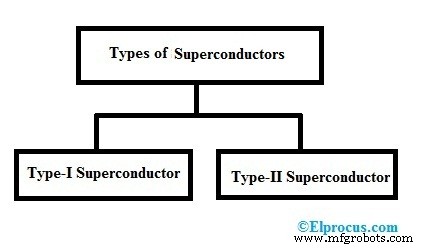
Superconductors are grouped into two main categories:
- Type‑I – Typically pure metals (e.g., zinc, aluminum). They exhibit a complete expulsion of magnetic fields (Meissner effect) until a single critical field, after which superconductivity vanishes abruptly.
- Type‑II – Complex alloys or compounds (e.g., NbTi, YBa₂Cu₃O₇). They allow magnetic flux to penetrate in quantized vortices, losing superconductivity gradually between two critical fields. This makes them suitable for high‑field magnets.
Common Superconducting Materials
Superconductivity has been observed in a wide variety of substances—from elemental metals like mercury and lead to ceramic oxides and carbon nanotubes. Each material has its own critical temperature, which can range from a few kelvins to above 100 K for high‑temperature superconductors.
While most superconductors require cryogenic cooling, research continues to push the critical temperature higher, aiming for practical room‑temperature applications.
Key Properties of Superconductors
- Zero electrical resistance
- Meissner effect (perfect diamagnetism)
- Critical temperature (transition point)
- Josephson tunneling currents
- Critical current density
- Persistent currents in closed loops
Zero Resistance
When cooled below its critical temperature, a superconductor’s resistance drops to an immeasurably small value. For example, mercury becomes perfectly conducting below 4.2 K.
Meissner Effect
Superconductors expel magnetic fields from their interior, creating a perfect diamagnetic state. This property is essential for levitation and magnetic shielding applications.
Josephson Current
Two superconductors separated by a thin insulating barrier can allow Cooper pairs to tunnel through, producing a supercurrent—known as the Josephson effect. This principle underlies superconducting quantum interference devices (SQUIDs) and quantum computing qubits.
Critical Current
Every superconductor has a maximum current it can carry while remaining superconducting. Exceeding this critical current restores normal resistance.
Persistent Currents
In a superconducting loop, a current induced by an external magnetic field can continue indefinitely without decay, making them useful for ultra‑stable magnetic field generation.
Semiconductor vs. Superconductor
| Semiconductor | Superconductor |
| Finite resistivity that varies with temperature | Zero resistivity below the critical temperature |
| Electron scattering causes resistance | Cooper pair formation eliminates scattering |
| Partial diamagnetism (depends on temperature) | Perfect diamagnetism (Meissner effect) |
| Energy gap of a few eV | Energy gap of ~10⁻⁴ eV |
| Flux quantization in units of 2e | Flux quantization in units of e |
Applications of Superconductors
- High‑field magnets for MRI, particle accelerators, and magnetic levitation trains.
- Efficient power transmission lines with negligible losses.
- Sensitive magnetic sensors (SQUIDs) and quantum computing hardware.
- Magnetic shielding and precision instrumentation.
- Fast, low‑power electronic components and memory devices.
FAQs
1. Why must superconductors be cold?
Cooling suppresses lattice vibrations that scatter electrons, allowing Cooper pairs to form and move without resistance.
2. Is gold a superconductor?
No. Gold is an excellent conductor at room temperature but does not become superconducting at any temperature.
3. Could a room‑temperature superconductor exist?
Scientists are actively researching materials that might achieve superconductivity near or above 0 °C, but none have been confirmed yet.
4. Why is there no resistance in superconductors?
Below the critical temperature, electrons pair into Cooper pairs that move coherently, bypassing the scattering mechanisms that cause resistance.
5. Why are superconductors perfect diamagnets?
The Meissner effect forces magnetic flux to be expelled from the interior, creating a flawless diamagnetic response.
In summary, superconductors offer zero resistance and unique magnetic properties that enable a range of cutting‑edge technologies—from medical imaging to quantum computing.
Embedded
- Magnets: Types, Materials, Manufacturing, and Future Applications
- Types of Magnetometers: From Scalar to Advanced Vibrating‑Sample Devices
- Molding Sand Explained: Types, Properties, and Uses in Foundry Casting
- What Is Steel? Properties, Uses, and Types Explained
- Stainless Steel Explained: Types, Properties & Applications
- Composite Materials Explained: Definition, Types, and Applications
- Materials Used in Machining: Types and Applications
- Understanding Magnetic Clutches: Function, Design, and Applications
- Understanding Molding Sand: Types, Properties, and Its Role in Sand Casting
- Key Mechanical Properties of Materials: A Comprehensive Overview