



Inside Vayyar’s 4D Imaging Radar SoC: Design, Applications, and Market Impact
As radar technology expands beyond traditional defense use cases into consumer and automotive markets, Systems Plus Consulting examined the inner workings of Vayyar’s first‑generation RF system‑on‑chip (SoC). The study offers a detailed technical breakdown while highlighting the broader industry trends that drive the demand for high‑resolution, integrated radar solutions.
Vayyar’s SoC is a highly integrated single‑chip RF platform that delivers 4‑dimensional imaging capabilities. Engineers at Systems Plus were particularly interested in how the company managed to embed an advanced RF front‑end, a high‑speed digital signal processor (DSP), and substantial on‑chip SRAM into a compact package. The SoC’s 3‑10 GHz bandwidth aligns with frequency regulations in many markets, and Vayyar has already released higher‑frequency variants (57‑64 GHz and 77‑81 GHz) that offer broader bandwidth and finer spatial resolution.
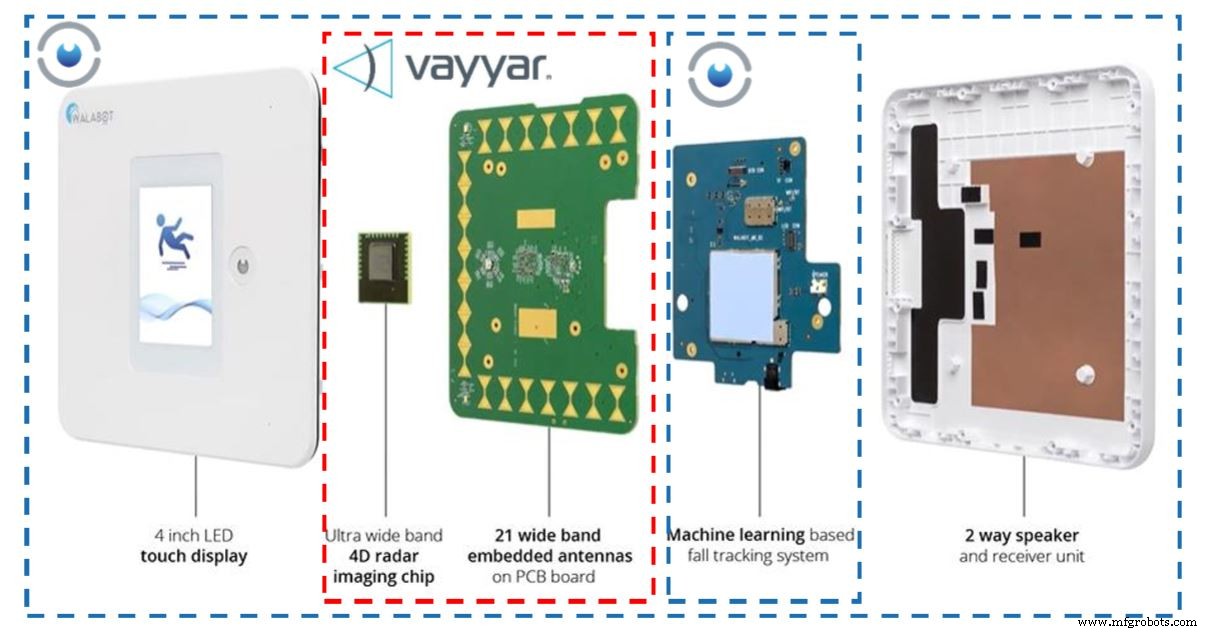
One of the key advantages of Vayyar’s architecture is its modularity. The SoC is paired with a small development board that hosts both the RF chip and a microcontroller unit (MCU). The MCU’s role is to convert the raw SRAM data into a USB‑compatible stream, allowing the SoC to be integrated with any external application processor—whether it’s a Qualcomm Snapdragon, an NXP i.MX, or a custom automotive processor. This design choice gives system designers the flexibility to implement sophisticated imaging algorithms on the chosen CPU while keeping the radar subsystem hardware consistent.
Vayyar’s products demonstrate the versatility of its radar technology. The Walabot Home fall‑detection system, for example, can monitor elderly users through walls and curtains without requiring wearable devices. The same SoC is also the foundation of Vayyar’s automotive offerings, where the company has secured partnerships with Tier‑One suppliers such as Valeo (for infant safety monitoring) and Aisin Seiki (for 4D short‑range exterior sensors).
Strategic investments further underscore Vayyar’s market trajectory. The company raised $109 million in a Series D round led by Koch Disruptive Technologies, positioning it to expand into new verticals. With collaborations spanning automotive, consumer, and mobile devices—including the Infineon‑Google partnership that enabled gesture control on Google Pixel 4 smartphones—Vayyar is poised to become a key player in the rapidly growing imaging radar ecosystem.
Beyond the Walabot Home System
In addition to home safety, Vayyar is making significant inroads in automotive sensing. A two‑year‑old deal with Valeo outlined plans to deploy Vayyar radar for monitoring infants’ breathing inside vehicles, while a recent partnership with Aisin Seiki targets 4D high‑resolution short‑range exterior sensors for blind‑spot detection and other critical driving scenarios.
Next page: Walabot Home Setup
Embedded
- 4D Imaging Radar Chipsets Deliver Precise Object Identification for Next-Gen Automotive Sensors
- Arbe Unveils 2K‑Resolution 4D Imaging Radar Platform for Tier‑1 OEMs
- Specialized Materials Enhance ADAS Reliability and Efficiency
- Kymati: Pioneering Precision Radar Solutions for Industry and Mobility
- Arbe Unveils First Automotive-Grade 30 fps 4D Imaging Radar Processor
- Mini‑Circuits & Vayyar Launch VTRIG‑74: 4D Millimeter‑Wave Imaging Development Kit
- Inside the Toyota MR-50: How the Georgetown Plant Targets a 50% Maintenance Reduction
- Build an Arduino Radar System with Ultrasonic Sensor & Servo – Step‑by‑Step Guide
- Inside Micrometer: Accurate Measurement of Inner Diameters Explained
- Inside Calipers: Definition, Uses, and Key Features