



Specialized Materials Enhance ADAS Reliability and Efficiency
Delivering comprehensive safety for passengers, occupants, and pedestrians demands that automakers and suppliers continuously refine the performance and reliability of assisted‑driving technologies. As vehicles accumulate more safety features and onboard electronics, engineers must seek lighter materials and greater design flexibility. Sabic’s specialty polymers offer lightweight, metal‑replacement options, lower system costs, and enhanced design freedom—especially for radar‑based ADAS.
Radar units are a cornerstone of the ADAS sensor suite, underpinning features such as adaptive cruise control (ACC), autonomous emergency braking (AEB), and forward‑collision warning (FCW). These sensors require materials that provide effective electromagnetic‑interference (EMI) shielding, eliminate cross‑talk and radio‑frequency interference (RFI), absorb radar reflections, and conduct heat away from critical components.
In an interview with EE Times, Martin Sas, Sabic’s lead scientist for the Specialties business, explained how Sabic’s materials drive ADAS performance: “Our compounds deliver EMI shielding for circuitry, suppress RFI, attenuate radar reflections, offer excellent thermal conductivity for heat dissipation, and boast superior mechanical strength and chemical resistance.”
Advanced driver‑assist systems
Next‑generation automotive safety relies on antennas, efficient RFICs, and low‑loss compact circuits. The materials that make up these components are therefore critical to achieving the desired performance. Proper fabrication of these circuits demands high‑quality substrate materials.
Sabic’s Specialties unit focuses on two primary radar sensor families: compact, low‑power units for short‑to‑mid‑range detection, and high‑performance units that deliver precise, high‑resolution data over mid‑to‑long distances.
Sas notes that each sensor type has distinct material needs. For radomes, Sabic offers glass‑fiber‑reinforced polybutylene terephthalate (PBT) compounds, polyetherimide (PEI) resins, and foam sandwich panels that combine low dielectric loss, minimal warpage, high‑temperature resistance, and laser‑welding capability.
“Radio‑frequency absorbers such as our LNP STAT‑KON series help condition transmitted and received signals, mitigating false detections caused by reflections. LNP KONDUIT thermal‑management materials form injection‑molded heat sinks that prevent overheating, while LNP FARADEX compounds provide inherent EMI shielding for radar housings,” Sas added. “These materials also serve as substrates for radar antennas, supporting laser‑direct structuring (LDS) and selective electro‑ or electroless plating.”
Automotive radar operates in two frequency bands: 24 GHz for short‑ and medium‑range functions, and 77 GHz (76‑81 GHz) for long‑range detection. The 24 GHz band will become bandwidth‑constrained by 2022, but it will remain available for certain applications.
The importance of material selection
Radar performance hinges on materials that exhibit the right dielectric constant, dissipation factor, insertion loss, and electrical‑thermal‑mechanical stability, as well as uniform substrate homogeneity.
“When choosing materials, consider the sensor’s placement, visibility, environmental exposure, temperature extremes, and the level of acceptable signal distortion. These factors dictate the requirements for radomes and RF absorbers,” Sas explained.
click for full size image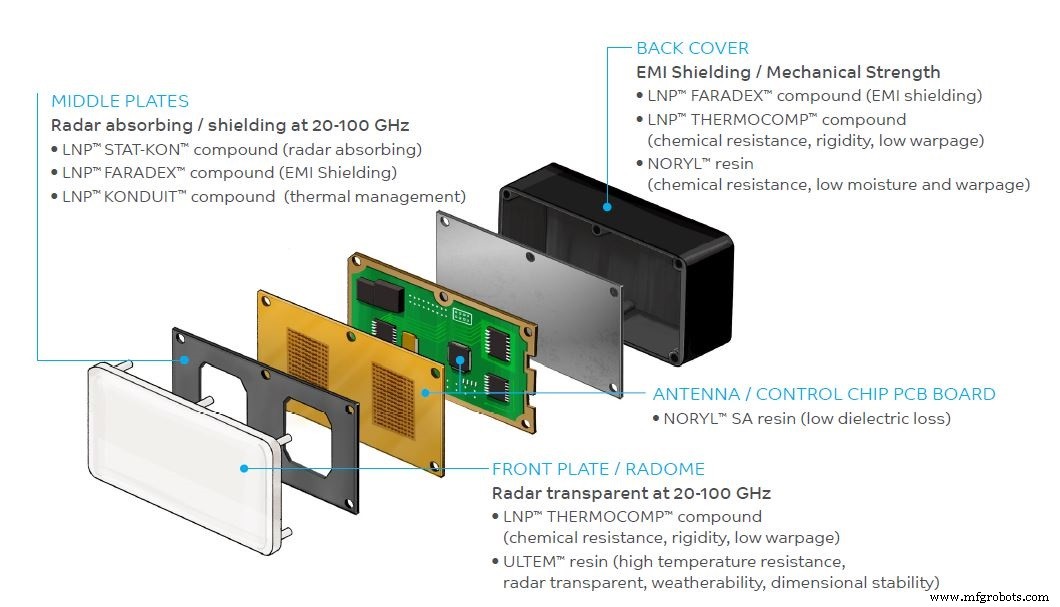
Figure 1. Solutions for Radar Sensor System Applications. (Source: SABIC)
A key challenge is achieving higher resolution with multiple‑input, multiple‑output (MIMO) antenna architectures—so‑called imaging radar. Sabic emphasizes that while imaging radar will rival LiDAR in resolution, it avoids many optical shortcomings and will demand even stricter material properties.
“Ultra‑low‑dielectric radomes—whose relative permittivity approaches that of air—offer significant performance gains. Potential solutions include Sabic’s LNP Thermocomp compounds, LNP copolymers, Noryl, and Ultem resins, selected based on specific dielectric and thermal requirements,” Sas said.
“For RF conditioning and absorption, we’re expanding our LNP Stat‑Kon portfolio: PBT‑based compounds for integration with PBT radomes, PEI‑based variants for high‑temperature processing, and PC‑based options for durable, balanced performance. A broad selection of radar‑absorbing materials lets manufacturers tailor sensors to vehicle size, location, and function.”
Increasing processing power for long‑range, high‑resolution units will amplify thermal management demands and necessitate robust EMI protection. Short‑range sensors will also become seamlessly embedded in other vehicle components.
Sas highlighted the evolving role of electronic control units (ECUs). Modern vehicles host over two dozen distributed ECUs, split between decentralized and centralized architectures. “Future trends point to consolidated domain controllers—particularly for ADAS stacks—according to McKinsey. Our specialty thermoplastics provide attractive alternatives to traditional metal and glass sensor housings, thanks to tunable properties that meet customer and application needs.”
Design decisions for antennas and other electronic devices will be guided by performance requirements, antenna placement, and coverage needs. Radar‑based solutions, coupled with artificial‑intelligence algorithms, empower drivers to make safer decisions on the road.
>> This article was originally published on our sister site, EE Times.
Embedded
- Understanding Toy Slime: Chemistry, History, and Production
- Magnets: Types, Materials, Manufacturing, and Future Applications
- Kymati: Pioneering Precision Radar Solutions for Industry and Mobility
- Inside Vayyar’s 4D Imaging Radar SoC: Design, Applications, and Market Impact
- Digital Radar: The Solution to Growing ADAS Interference Challenges
- Lanxess Announces Legal Independence for High Performance Materials Unit to Drive Growth
- 10 Cutting‑Edge Trends Transforming Performance Plastics
- Preview of Toray Performance Materials at CAMX 2020 – Cutting‑Edge CFRT Carbon Fiber Composites
- Toray Performance Materials Shines at CAMX 2019: Preview of CFRT Innovations
- Toray's New Flame‑Retardant CFRP Prepreg Sets New Standard for Aerospace Performance