



Designing a Superior Pulse Oximeter: Implementation Insights
Designing medical devices that are both user‑friendly and power‑efficient is critical today. This article details the practical steps and design considerations for building a next‑generation pulse oximeter.
The preceding article explained pulse oximeter specifications; here we dive into key design choices—transmissive versus reflective configurations, optimal sensor placement, perfusion index optimization, motion artifact reduction, and the nuances of integrating an optical analog front‑end.
Transmissive vs. Reflective
A photoplethysmographic (PPG) signal can be captured using either a transmissive or a reflective LED–PD arrangement. In a transmissive set‑up, non‑absorbed light passes through the body part, making it ideal for high‑capillary‑density sites such as the finger or earlobe. This arrangement offers a 40 dB–60 dB boost in the perfusion index (PI) and delivers more stable, repeatable readings that are less affected by small placement changes.
Reflective PPG configurations are preferred when the photodiode (PD) and LED must sit side‑by‑side, such as in wrist‑ or chest‑mounted wearables. The configuration can still provide accurate data if the optical path and filtering are carefully managed.
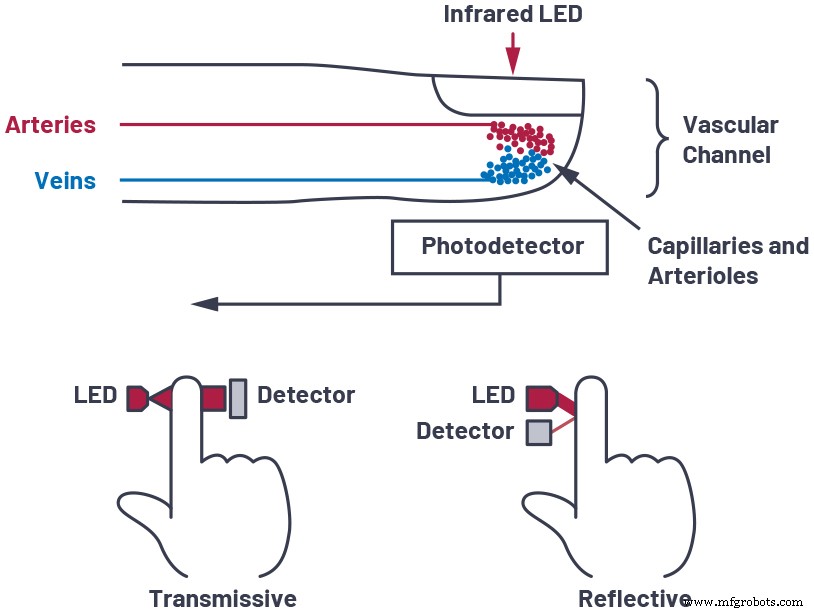
Figure 1. LED‑PD configuration. (Source: Analog Devices)
Sensor Positioning and Perfusion Index
When a sensor is placed on the wrist or chest, the PPG analog front‑end (AFE) must accommodate a larger dynamic range because the DC component of the signal is amplified by deeper arteries, subcutaneous tissue, skin, and bone. A higher PI—typically 1% to 2% for wrist‑worn SpO2 devices—requires either mechanical optimization or a wider AFE range to reduce algorithm uncertainty.
The LED‑to‑PD spacing critically influences the PI. Too close a gap increases crosstalk or backscatter, adding unwanted DC and potentially saturating the AFE. A larger separation mitigates these effects but lowers the current‑transformer ratio (CTR), which can reduce signal efficiency and necessitate higher LED drive currents.
Pulsing LEDs rapidly—either singly or in a multi‑LED burst—cuts 1/f noise and enables synchronized modulation at the receiver, effectively cancelling ambient light interference. Integrating multiple pulses increases the PD signal amplitude while keeping average current consumption low. Expanding the PD area also improves CTR by capturing more reflected light.
Heart‑rate (HR) PPG often uses a single large PD paired with several low‑power green LEDs. Green LEDs offer superior motion‑artifact rejection but require more forward voltage and higher drive power than red or IR LEDs. Most SpO2 systems, which need multiple wavelengths, therefore adopt a green‑red‑IR LED array surrounded by several PDs. The Analog Devices VSM watch (Figure 2) exemplifies this approach, with optimized LED‑PD spacing and a baffle design that reduces backscatter and crosstalk.
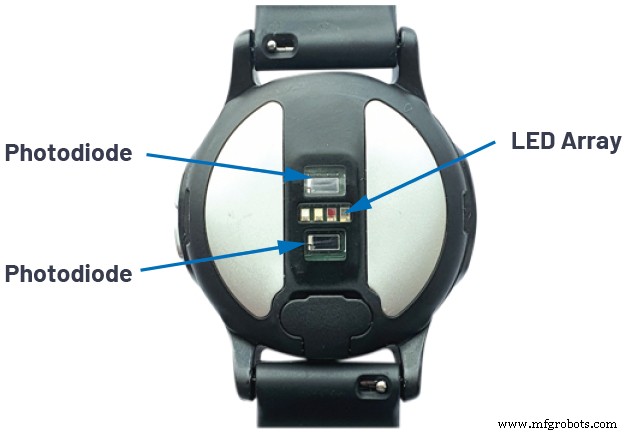
Figure 2. ADI VSM watch V4, baffle, and LED‑PD array. (Source: Analog Devices)
Multiple prototypes of the ADI VSM watch were evaluated to determine the most efficient LED‑PD spacing for combined HR and SpO2 measurement.
Motion Artifacts
Motion is one of the most formidable challenges in PPG measurement. Movement changes vessel width and pressure, altering the amount of light absorbed by the PD. In an ideal scenario—an infinitely wide PD covering an infinite tissue depth—no motion artifact would appear. Practically, increasing PD area and employing careful filtering reduce artifact impact, but the AFE must also maintain low capacitance to preserve bandwidth.
Typical PPG frequencies range from 0.5 Hz to 5 Hz, whereas motion artifacts span 0.01 Hz to 10 Hz. Conventional band‑pass filtering cannot isolate these overlapping components; instead, adaptive filters that ingest high‑resolution motion data are required. Analog Devices’ ADXL362 3‑axis accelerometer, offering 1 mg resolution over an 8 g range while drawing only 3.6 µW at 100 Hz, provides the necessary motion metrics in a 3 mm × 3 mm package.
Optical AFE
Wrist‑mounted SpO2 devices face a unique hurdle: the AC signal of interest is merely 1%–2% of the total light received by the PD. Achieving medical‑grade accuracy under these conditions demands a high‑dynamic‑range AFE that minimizes ambient light intrusion and reduces LED driver and AFE noise.
Next‑generation optical AFEs such as Analog Devices’ ADPD4100 (and ADPD4101) deliver up to 100 dB SNR. This integrated front‑end hosts eight low‑noise current sources and eight separate PD inputs. Its digital timing controller offers 12 programmable slots, allowing developers to customize LED currents, analog and digital filtering, integration timing, and other parameters.
Optimizing SNR per microwatt (µW) is crucial for battery‑powered continuous monitoring. The ADPD4100 can achieve 75 dB SNR at 25 Hz while consuming only 30 µW—including LED supply—during continuous PPG acquisition. Increasing the number of pulses per sample boosts SNR by √n, and raising LED drive current scales SNR proportionally. A total system draw of 1 µW can reach 93 dB SNR when powered by a 4 V LED supply.
Automatic ambient light rejection simplifies host microcontroller responsibilities, providing 60 dB of light isolation through 1 µs LED pulses and a band‑pass filter. The ADPD4100 can also compute the PD’s dark current (LED off state) and subtract it from the on‑state measurement, eliminating ambient light, gain errors, and drift.
Development is streamlined by tools such as the EVAL‑ADPD4100‑4101 wearable evaluation kit and the ADI Vital Signs Monitoring Study Watch. These platforms integrate seamlessly with the ADI WaveTool application, enabling bioimpedance, ECG, PPG heart‑rate, and multi‑wavelength SpO2 measurements. An embedded automatic gain control (AGC) algorithm dynamically tunes the transimpedance amplifier (TIA) gain and LED current to maintain optimal AC dynamic range across wavelengths.
Finger and earlobe SpO2 measurements are inherently easier to design for, as the higher SNR from reduced bone and tissue thickness diminishes the DC component and improves accuracy.
For such applications, sensor modules like the ADPD144RI and front‑ends like the ADPD1080 allow rapid prototyping. The ADPD144RI houses a 660 nm red LED, an 880 nm IR LED, and four PDs in a 2.8 mm × 5 mm package, with optimized spacing for maximum SNR. The ADPD1080 is an integrated AFE featuring three LED drivers and two PD inputs in a 2.5 mm × 1.4 mm WLLCSP, ideal for compact, low‑channel‑count designs.
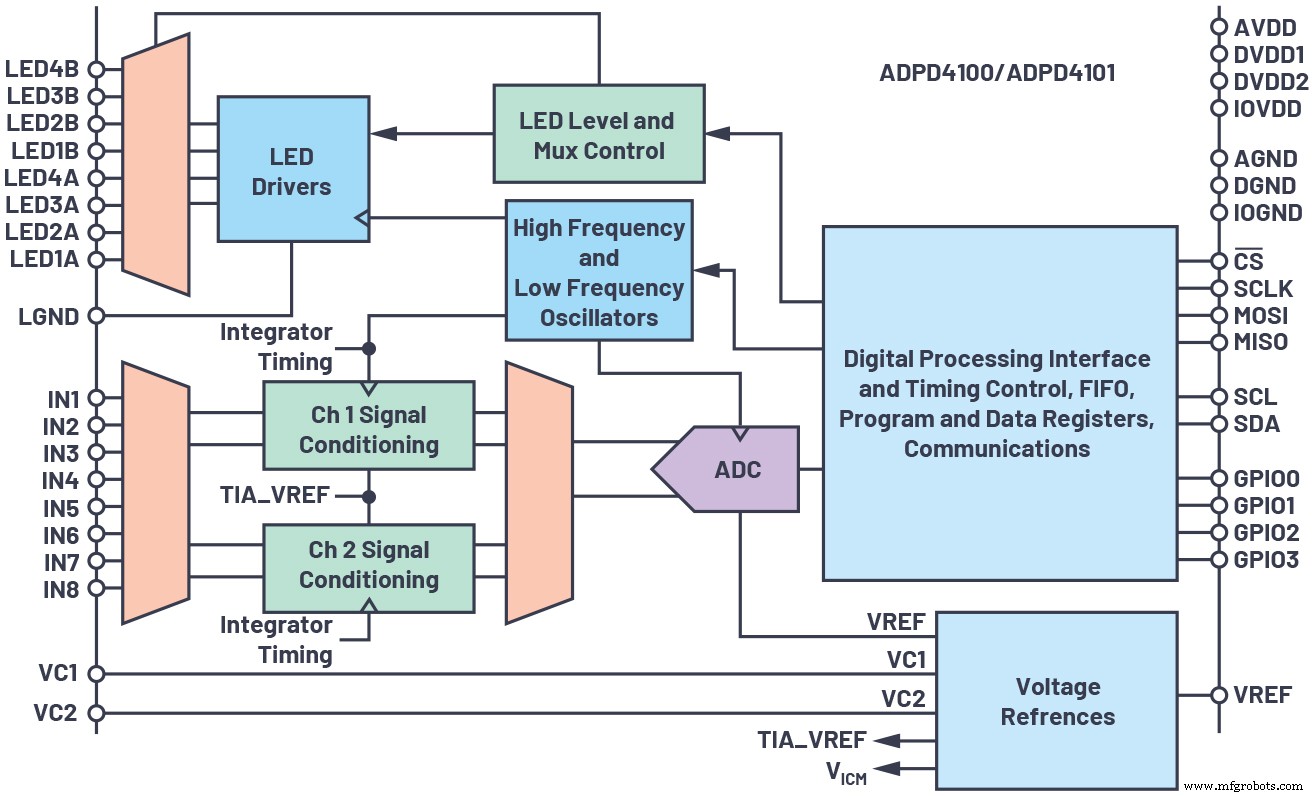
Figure 3. ADPD410X block diagram. (Source: Analog Devices)
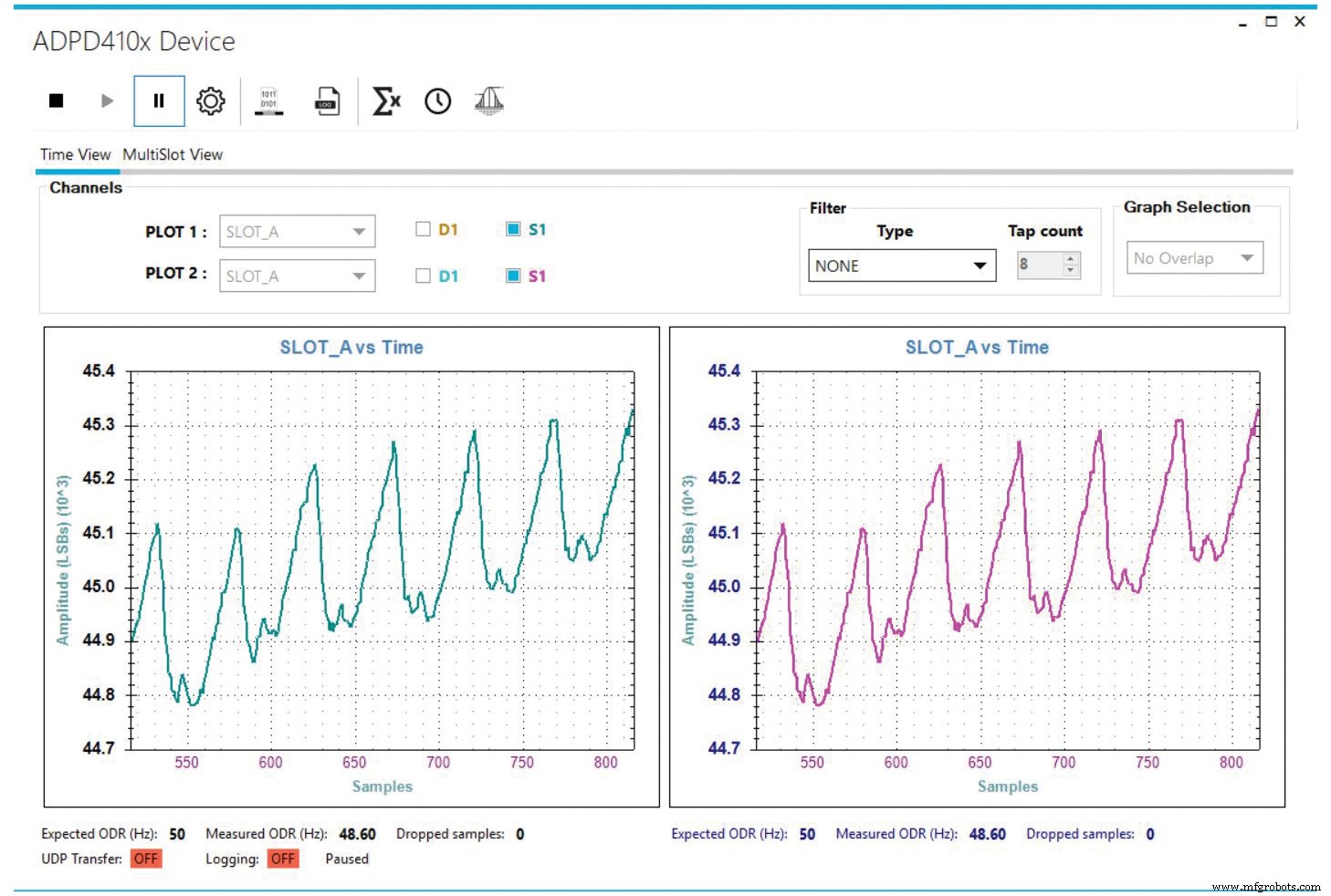
Figure 4. ADPD4100 simultaneous red (right) and IR (left) PPG measurement. (Source: Analog Devices)
References
- Toshiyo Tamura. “Current Progress of Photoplethysmography and SpO2 for Health Monitoring.” Biomedical Engineering Letters, February 2019.
- Jihyoung Lee, Kenta Matsumura, Ken‑Ichi Yamakoshi, Peter Rolfe, Shinobu Tanaka, and Takehiro Yamakoshi. “Comparison Between Red, Green and Blue Light Reflection Photoplethysmography for Heart Rate Monitoring During Motion.” 2013 5th Annual International Conference of the IEEE Engineering in Medicine and Biology Society (EMBC), July 2013.
 Robert Finnerty is a systems applications engineer at Analog Devices where he works in the Digital Healthcare Group based in Limerick, Ireland. He collaborates closely with the Vital Signs Monitoring Group, focusing on optical and impedance measurement solutions. Rob joined the precision converters group within ADI in 2012 and has specialized in low‑bandwidth precision measurement. He holds a bachelor’s degree in electronic and electrical engineering (B.E.E.E) from National University of Ireland Galway (NUIG). He can be reached at rob.finnerty@analog.com.
Related Contents:
- How to design a better pulse oximeter: Specifications
- Cuffless device delivers clinically accurate blood pressure measurements
- Using mmWave radar for vital signs monitoring
- Design kit measures blood pressure with optical sensor
- Specialized sensors support healthcare wearables
- When accuracy matters: Assessing technologies for a social distancing wearable
For more Embedded, subscribe to Embedded’s weekly email newsletter.
Embedded
- Design for Manufacturability: A Practical Guide for Engineers and Designers
- Mastering FPGA Embedded Design: A Practical Implementation Guide
- Why Antenna Placement Matters: Redesigning the Wireless PCB Lifecycle
- Designing Effective Fuzzy Logic Controllers: A Step‑by‑Step Guide
- Accelerate Innovation: Harnessing Engineering Design to Speed Up Product Development
- Unlocking ROI Through Superior Engineering Design
- Fast-Track Your Custom Quote: Accurate Pricing in 2–3 Days
- Optimize Your Designs with Advanced Injection Molding Simulation Software
- Designing a Reliable PWM Circuit for Precise DC Motor Speed Control
- Optimize 3D-Printed Parts with Generative Design: A Practical Guide