



Accelerate Innovation: Harnessing Engineering Design to Speed Up Product Development
New product development keeps companies at the front lines of innovation. In order to compete in today’s market companies have to continuously introduce new products. The engineering design process was developed for the intended purpose of product innovation. The engineering design process is a series of steps that engineers follow to come up with a solution to a problem. Solutions can be a product, method, or a combination of both. The engineering design process involves designing, building, and testing.
Steps in the Engineering Design Process
Let’s take a brief look at the steps in the engineering design process.
-
Identify the Problem
-
Identify Criteria and Constraints
-
Brainstorm Possible Solutions
-
Generate Ideas
-
Explore Possibilities
-
Select an Approach
-
Simulation
-
Test and Redesign
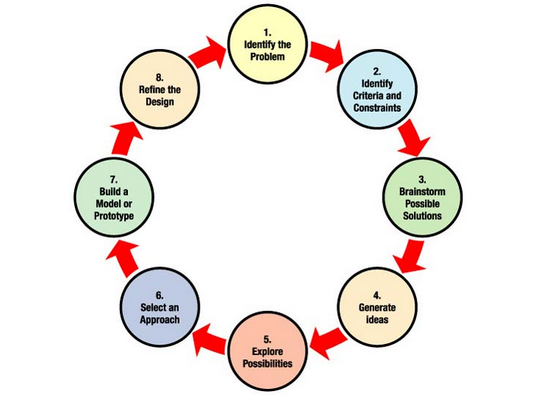
When the design process fails
The process is an effective tool for engineers to develop new products. But, what happens if the design process is hindered. This could happen at any step and take the form of inadequate research, lack of solutions, or poor simulation results. The remainder of the article will focus on step 6 and the cause and effect of poor development work and simulation, and how this can affect the design process, and ultimately the company’s progress.
Stages 1-5 are conceptual; stages 6-8 are tactical
Stages 1 through 5 primarily can be considered intangible, besides a few hand drawings done on restaurant napkins. The area that needs to function smoothly without obstruction is stages 6 through 8. These 3 stages work off of each other. The developmental work prepares for the simulation and trial testing. The simulation provides a virtual means of testing. Testing and Redesign moves the process back to step 5 and then repeats all over. For the engineering design process to function efficiently and without fault the prototyping stage requires the best tools that the company can provide.
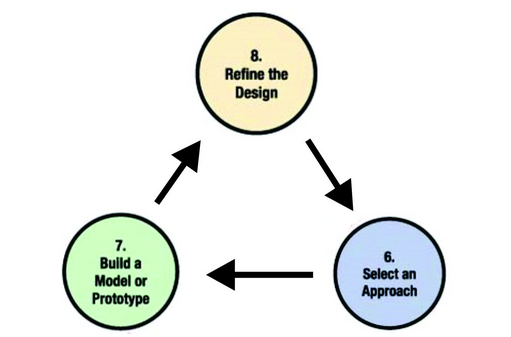 Iteration Stages in Design Process
Simulation challenges
A simulation is an early means for a product to test conceptually. Some items commonly used as representation are schematics, design electronics, CAD modeling, and software programming. It is designed to be tested to enhance understanding of the product and how it might perform. For electrical engineers this is done with wire wrap or breadboards, and CAD software. If the tools necessary to complete the simulation are subpar then production rate decreases.
If simulation suffers then production lead time suffers. What are some common issues in this stage that result in engineering simulation problems?
-
Multiple domain projects (electrical, fluid, mechanical) require tools from multiple vendors.
-
Schedules are missed due to time consuming manual updates to project software and errors.
-
Design errors caught late in the process are causing expensive rework. While some errors still get through to the final product.
-
Design errors and troubleshooting lead to quality problems and project delays.
-
Lack of support to efficiently design and manage documentation for variants and options leads to errors and confusion.
-
Time spent rebuilding circuits that otherwise exist for reuse is costly and unnecessary.
-
Ineffective collaboration between electrical and mechanical engineering causes project delays and impacts quality.
-
Inadequate tools to automate product design that link to manufacturing, sales, and service leads to inefficiencies throughout the process and flow.
-
Must allow extra time for users to perform circuit calculations on sizing and tolerances.
-
Wary of new products which tend to be buggy with incomplete functionality.
The list goes on and on. Issues in the simulation stage can lead to time delays. How do these listed items affect the company and production?
-
Acquiring a full solution from multiple vendors is expensive and can result in mismatched tools.
-
Products are frequently late to market.
-
Customer satisfaction is being affected by poor product quality.
-
Extra time required for simulation and time wasted on troubleshooting increase product cost and lowers profitability.
-
Lack of support for variants and options impacts ability to deliver products for different markets and geographies, lowering market share and revenue.
-
Product delivery is delayed due to extra time spent in design phase. Customer satisfaction is being affected by lower product quality.
-
Inefficient product development process leads to missed schedules, lower quality and customer satisfaction.
-
Insufficient links between design, manufacturing, sales, and service increases cost and lowers operational effectiveness.
-
Products are recalled because wires and fuses on the threshold are not spotted in the design or test phase resulting in poor customer satisfaction.
-
Downtime while users ramp-up on new products impacts delivery schedules and business plans.
Poor simulation can have a great impact on the company lead time and the cost for repairing issues not spotted during the testing phase. Proper software would alleviate many of the stated issues above and hasten the design process as well. From the problems, good engineering software would be one that combines multiple CAD platforms, software intelligence, and software automation.
This would clear issues with product delays, product development cost, and product quality. Choosing the right engineering software is essential for optimizing the engineering design process.
What software is available so I can avoid issues like these for my company? 
Industrial Technology
- Why Antenna Placement Matters: Redesigning the Wireless PCB Lifecycle
- Revolutionizing 3D Printing: The AION500 MK3 Delivers 10× Speed and Precision
- Boost Shop Floor Productivity: Proven Strategies to Maximize Employee Performance
- Streamline Cable Manufacturing with E3.formboard: Automated Documentation and Connector Integration
- Design Electrical Panels Efficiently with E3.panel: Fast, Accurate, and Smart
- Unlocking ROI Through Superior Engineering Design
- Designing DC Circuits with OrCAD: A Practical Guide
- Optimize 3D-Printed Parts with Generative Design: A Practical Guide
- Cut Costs and Boost Safety: Expert Design Strategies for Gas Distribution Systems
- Maximizing CAD Efficiency in Additive Manufacturing