



Key Electrical Design Challenges in Modern Power Plants: A Comprehensive Overview
Power house, power station, and electrical generation plant are all common names used by power plants. Power plants are essential to everyday life modern life. There would be no television, no internet, no electricity, and no lights. Power generation has been around since the late 1800’s, were water from a lake was used to power Siemens dynamos. The electricity supplied power to lights, heating, produced hot water, ran an elevator as well as labor-saving devices and farm buildings.
A power plant is an industrial facility for electric power generation. Each power plant can contain numerous generators to convert mechanical power to electrical power. The level of engineering requires multiple considerations before even fathoming implementation. What are some of the power plant electrical design problem facing facilities today? And what are some common day solutions that have helped remedy this issues?
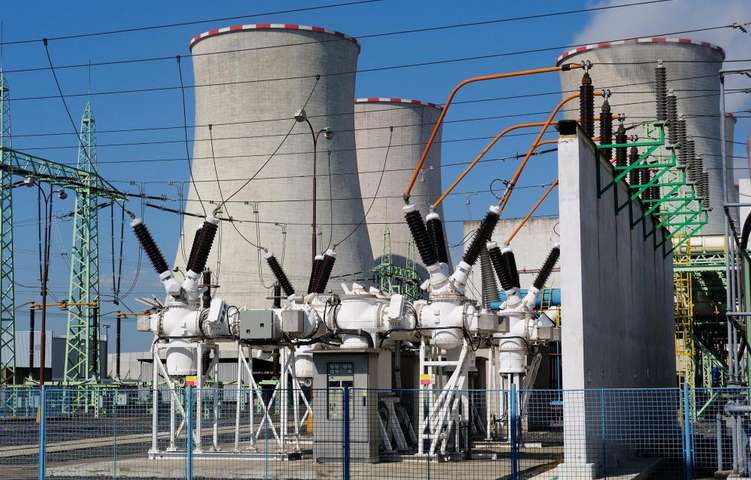 Power Plant Generation Facility
Until recently the main objective of electric systems was to guarantee uninterrupted operation of a facility’s lighting, process, and environmental systems. This very simple model was derived during the early twentieth century, when energy consumption was primarily from linear loads. In recent years nonlinear loads such as variable-speed motors, programmable logic controllers and other electrical equipment have become the norm.
Compared with linear loads , these nonlinear loads are much more sensitive to overvoltage, undervoltage, and other disturbances that have always existed on the utility power line. Such routine disturbances can cause problems ranging from minor equipment malfunctions to costly system shutdowns and damage to equipment. In addition, nonlinear devices can create their own power disturbances, which can cause problems in other parts of the plant facility and may feed back onto the utility distribution system.
The increased reliance on nonlinear loads has added new objectives to electrical system design. While the guaranteed supply of power remains crucial, reliability issues and power quality are becoming paramount, and capacity requirements have increased. In addition, the need continues to control energy use and cost to remain competitive. In the face of these challenges electrical engineers must assets the risk of experience reliability and power quality problems and assess the economic impact of problems and implement a cost-effect risk management program.
Reliable Power Supply
A reliable power supply is one the delivers electricity sufficiently to serve a facility’s load at the grade of power quality desired, and one that provides enough power during curtailment or other emergency conditions to ensure safety of personnel and protection of crucial processes and process equipment.
Power plant electrical design that can anticipate the load requirements demanded by the facility is rarely close to ideal. It is necessary for plant engineers to conduct a facility load profile. The profile will provide management team with a thorough understanding of how facility’s electrical consumption various per desired time interval. One method for identifying electric service load pattern is to conduct analysis through demand charts. Or alternatively utilize metering systems to transmit data with information of during peak usage times. Instrumentation is essential for continuously monitoring electrical systems and informing operators of their performance and efficiency.
 Unreliable Power Supply
Power Quality
In terms of power quality, conventional utility service is not 100% reliable. For some utility customers willing to pay premium, the power supply may be made nearer to 100% reliable. Even at this higher level of reliance it may be necessary for some users to provide in-house power conditioning system.
Despite the use of diagnostics and preventive measures by plant engineers, unexpected outages and other failures do occur. In such situations, a well managed plant electric system provides emergency power, at least enough to allow shutdown of equipment.
Back-up power may be supplied by auxiliary generators or a device known as an uninterruptible power supply (UPS). In a growing number of plants it may be economically feasible to provide on-site power generation through a cogeneration system. Cogeneration systems utilize waste or purchase fuels to generate power and recover wasted heat.
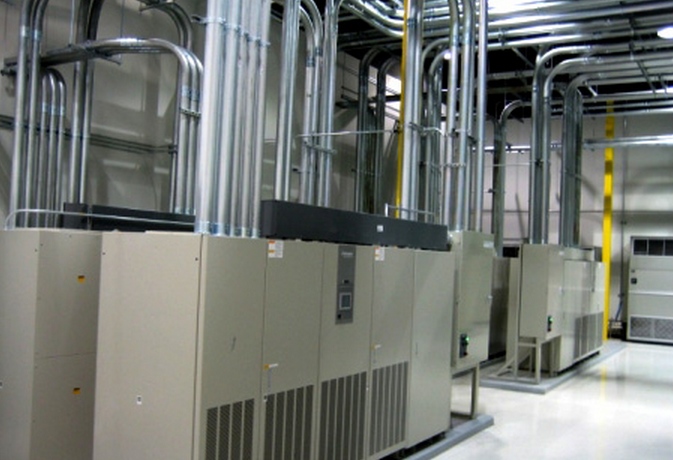 Uninterrupted Power Supply
Sources of Power Quality Problems
Even though today utilities use advanced hardware and software at their substations and on their distribution systems, power disturbances occur. These can result from:
- Transmission faults
- Distribution system switching faults
- Lightning strikes
- Simultaneous operation of equipment
In many cases the disturbances can be traced to wiring and grounding problems within the plant itself. Common disturbances are outages, undervoltage, overvoltage, spikes, sages, surges, or noise. These disturbances can range in duration from sustained outages lasting several hours to surges lasting only a few microseconds, and indiscernible to plant engineers.
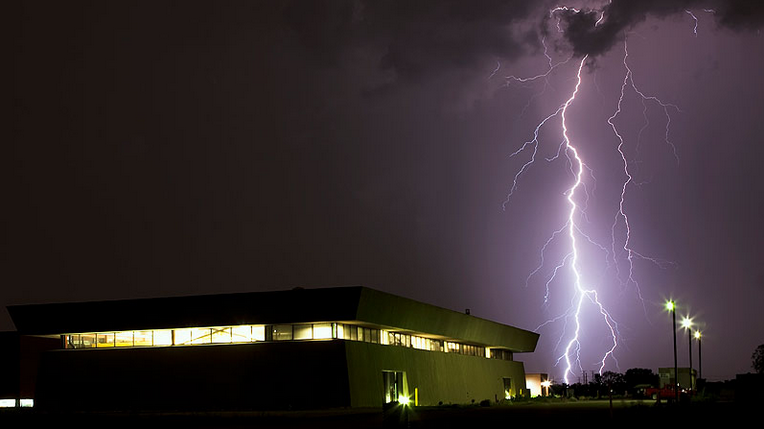 Lightning Strikes Causing Power Quality Issues
Older electrical equipment such as motors, solenoids, and electromechanical controls are largely unaffected by disturbances of short duration. However, solid-state electronic equipment is far most susceptible to a wide range of disturbances. This vulnerability stems from the way electronic device consumes the alternating-current (AC) power supplied to it. Electronic devices that are unable convert Ac power to direct-current (DC) power, can have issues including:
- Device interruption
- Data errors
- Memory loss
- And even shutdowns
In the worst case scenario, some devices can sustain damage.
Considerations for Correcting Power Quality Problems
There are several types of remedies available to protect solid-state, power sensitive equipment from power disturbances; most are simple and inexpensive. In addition, disturbances can be prevented altogether by conditioning the power supply to smooth out sine wave shape(Details Here). Because power conditioning equipment is costly, it is best suited only for those applications requiring the highest grade of power.
- Wiring and Grounding
Approximately 80% of power quality problems at commercial and industrial facilities can be traced to problems with improper grounding, inadequate wiring, loose connections, and the accumulation of dust and dirt from poor maintenance practices. The importance of a good, low-resistance ground cannot be overemphasized, especially since solid-state systems depend on the grounding for a reference to operate by and for dissipating stray power that could cause damage if left on the circuit. This is a low cost prevention measure for power quality problems. - Dedicated Circuits
Most power disturbances in the form of noise are generated within the plant itself. As a result, an effective method of protecting crucial or highly sensitive equipment is to locate the equipment on its own isolated circuit to protect it from power disturbances caused by other equipment in proximity. - Spike Suppressor
Spike suppressors reduce the amplitude of voltage spikes to safe levels and can eliminate many sudden changes in voltage. They are the simplest and least expensive protective devices; however, their capability depends on the quality of the suppressor purchased. - Isolation Transformers
Isolation transformers filter out electrical noise and distortion from other on-site equipment or incoming power. They can not, however, protect against other types of disturbances such as spikes and surges. - Voltage Regulators
Voltage regulators maintain a relatively constant voltage by protecting against surges and sags through mechanical or electrical means. This option is more costly than those listed above, but is at the midpoint of the cost spectrum for power enhancement devices. - Uninterruptible Power Supply
A UPS protects against short-term power interruptions and outside power disturbances. UPS systems typically consist of rectifier/charger, a battery bank, a static inverter and an automatic or manual bypass switch. It offers protection against all power quality problems, including momentary outages. Protection against sustained outages is limited to the size of the battery bank. UPS does not protect against transients, sags, swells, or other abnormalities.

Industrial Technology
- Mastering Product Design: Proven Strategies to Overcome Common Challenges
- Key Electrical Shock Hazards and How to Protect Yourself
- Ensuring Electrical Safety: Grounding, Polarized Plugs, GFCIs, and AFCIs
- Mastering HR Challenges in Manufacturing: Proven Strategies for Success
- Design Electrical Panels Efficiently with E3.panel: Fast, Accurate, and Smart
- Avoid These 10 Common Electrical Design Software Mistakes
- Design Engineering for Energy‑Efficient Power Plant Generation Systems
- Common Gerber File Issues & Expert Solutions
- Evolve Shatters Myths About Generative Design in Fusion 360
- Top PCB Design Pitfalls Explained: A Comprehensive Analysis