



How an AC‑Coupled Transimpedance Amplifier Eliminates Ambient‑Light Noise in Green‑LED Heart‑Rate Sensors
How an AC‑Coupled Transimpedance Amplifier Eliminates Ambient‑Light Noise in Green‑LED Heart‑Rate Sensors
Green‑LED photoplethysmography (PPG) sensors are now standard in wearables, phones, and fitness trackers. Their low cost and simplicity make them attractive, yet they suffer from environmental interference that can degrade or even prevent reliable heart‑rate measurement.
Typical sources of error include finger placement sensitivity, LED‑sensor distance variations, and most critically, bright ambient light that overwhelms the photodiode’s signal. To address this, I designed an AC‑coupled transimpedance amplifier (TIA) that rejects the DC component generated by ambient illumination while preserving the modulated pulse signal.
Simulation confirmed that the AC coupling blocks the photodiode’s DC bias, effectively filtering out sunlight or a 100 W incandescent bulb placed close to the sensor. The circuit, shown in Figure 1, uses a low‑noise 2.5 V reference to maintain a stable baseline.
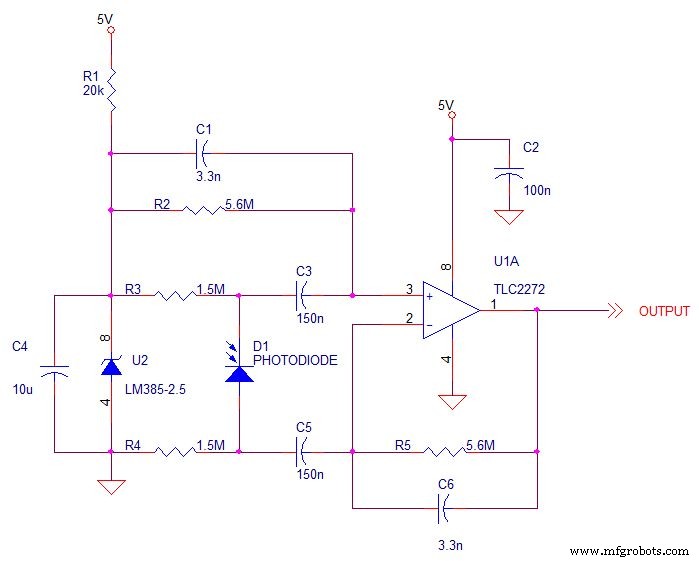
Figure 1: AC‑coupled TIA with low‑noise 2.5 V reference level.
To validate the simulation, I built a prototype with a Yi T1‑3/4 or 5 mm “bullet” photodiode and a standard green LED, all in surface‑mount packages. Even when the photodiode was within a few inches of a 100 W bulb, the sensor still produced clear pulses from a wrist positioned up to six inches away. Motion sensitivity was also negligible.
The complete TIA, illustrated in Figure 2, incorporates a band‑pass filter that limits the response to 48 bpm–390 bpm and suppresses high‑frequency ambient light fluctuations. The filter output, shown in Figure 3, demonstrates a clean 120 bpm stimulus at 1 nA photodiode current.
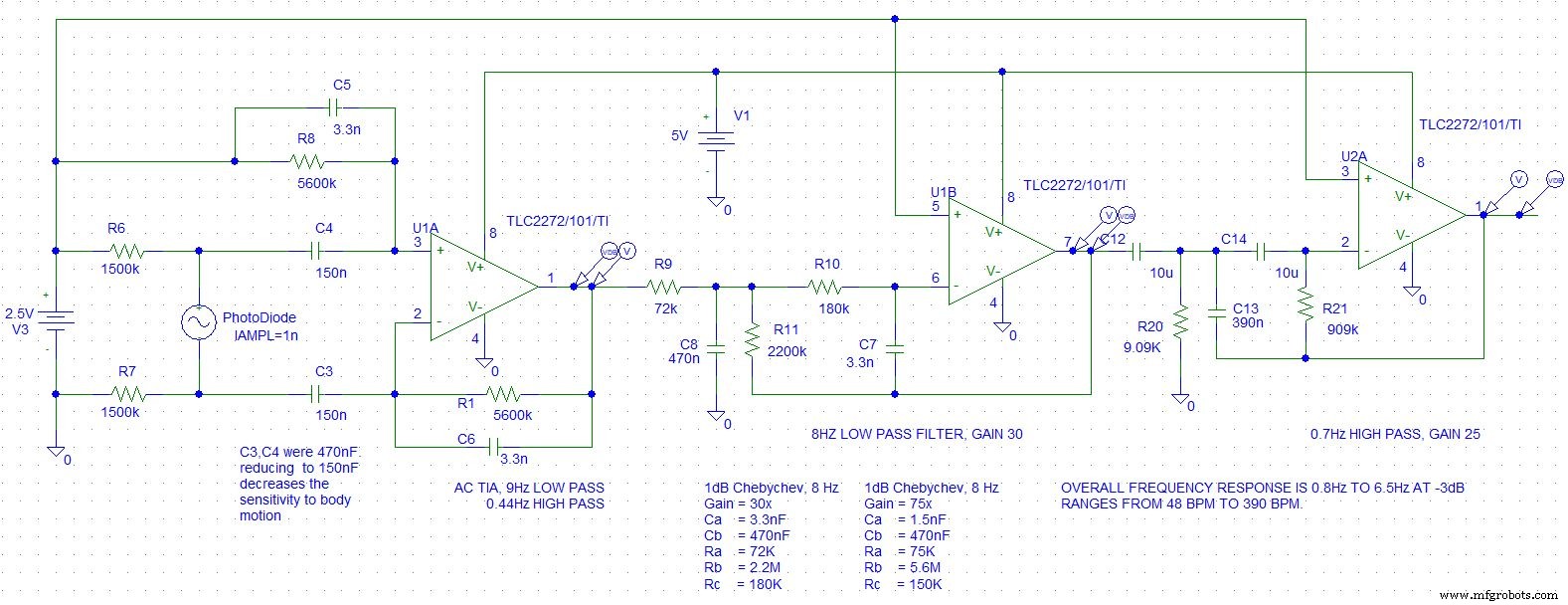
Figure 2: Complete TIA circuit with band‑pass filter. -3 dB response from 48 bpm to 390 bpm.
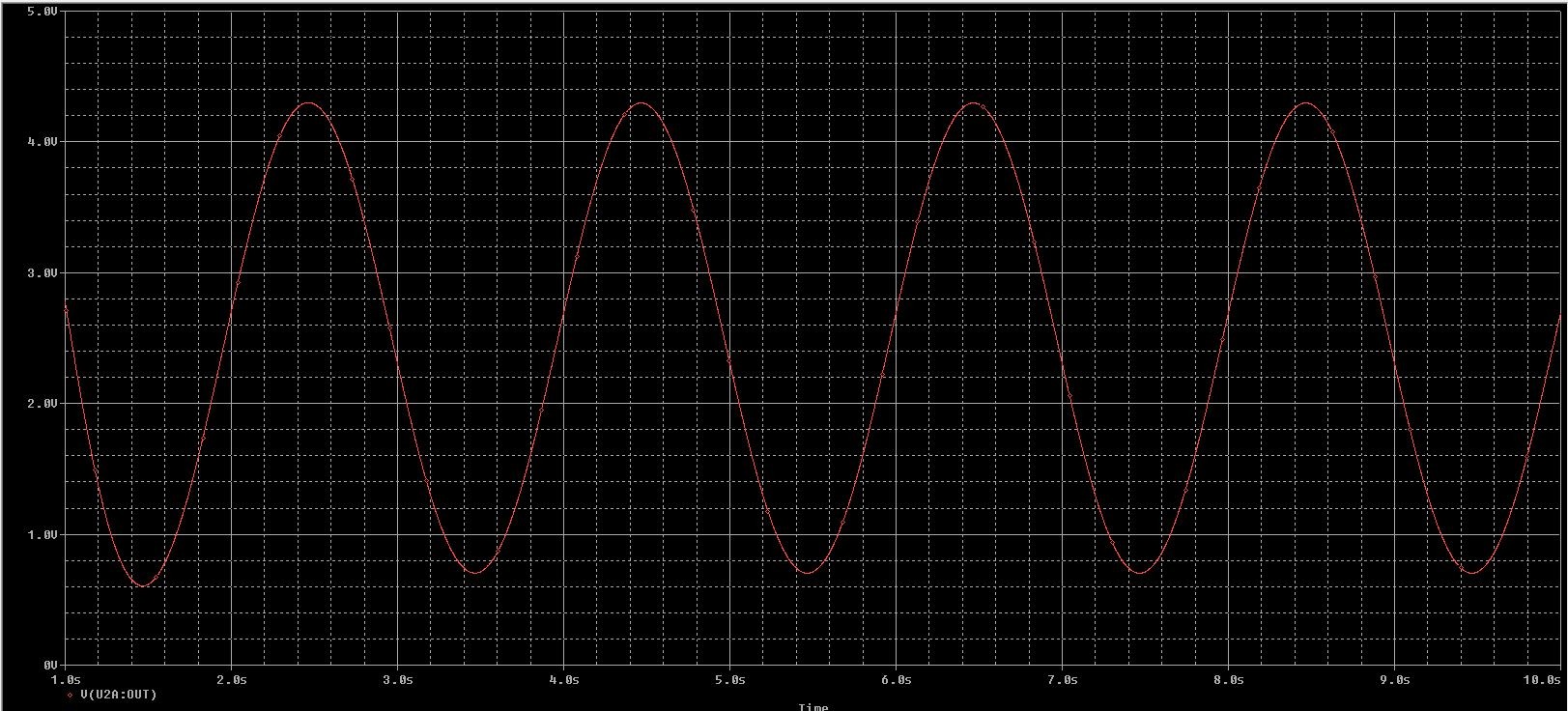
Figure 3: Filter output response to a 1 nA photodiode AC current at 0.5 Hz (120 bpm).
The design tolerates component variations: 5 % resistors and 10 % capacitors were sufficient. The balanced AC input and low‑pass stage provide excellent rejection of 50/60 Hz line noise, eliminating hum even when the photodiode contacts the skin.
Conclusion
Employing an AC‑coupled TIA in green‑LED PPG sensors dramatically reduces susceptibility to ambient light, finger placement, and motion artifacts. The modest cost of the additional components is outweighed by gains in noise immunity, positional tolerance, and measurement range—making this approach ideal for consumer health devices.
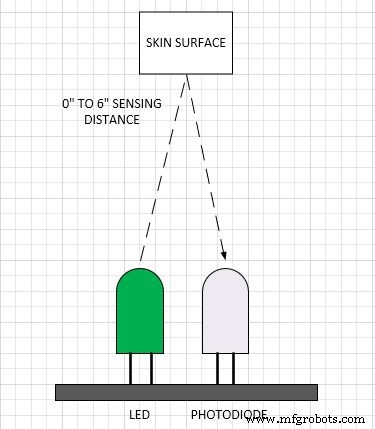
Figure 4: Relative positions of LED, photodiode, and skin surface.
References
- Photodiode Amplifiers: Op Amp Solutions by Jerald Graeme
- Operational Amplifiers: Design and Applications by Graeme, Tobey, Huelsman
- Applications of Operational Amplifiers: Third Generation Techniques by Graeme
— Dave Conrad is a retired electronics engineer with experience in power, video, analog, digital, mixed signal, and software design.
► This article was originally published on our sister site, EDN.
Related Contents:
- How to design a better pulse oximeter: Specifications
- Cuffless device delivers clinically accurate blood pressure measurements
- Specialized sensors support healthcare wearables
- Using mmWave radar for vital signs monitoring
- Sensor module simplifies health and fitness wearable design
For more Embedded, subscribe to Embedded’s weekly email newsletter.
Embedded
- OPT3007 Ultra‑Thin Ambient Light Sensor – Precision Light Measurement for Smart Devices
- Ambient Light Sensors: Functionality, Design, and Key Applications
- Remote Heart Rate Monitoring System with AWS IoT Alerts
- Real‑Time IoT Heart Rate Monitor with Arduino & MAX30100
- Build an Accurate Heart‑Rate Monitor with a Photoresistor and Arduino
- Zerynth Lamp: Smart IoT Ambient Light Control with NeoPixel LEDs
- Build a MAX 30102 Heart Rate Monitor with Arduino Nano & 16x2 LCD
- Measure Heart Rate with the KY-039 Arduino Sensor
- Real-Time Heart Rate Monitoring System with Arduino & Infrared Sensors
- Revolutionary Smart Shirt Delivers Continuous ECG Monitoring with Nanotube Fiber Technology