



VR Means Business: How Companies Can Leverage Virtual Reality for Impactful Training

Emerging evidence shows VR can accelerate corporate training, says Justin Parry, co‑founder and COO of Immerse.
A recent PwC study found VR training is both faster and more cost‑effective than traditional classroom approaches. Employees also report 340 % higher confidence in new skills and feel four times more emotionally engaged with the material.
With enterprise VR growing in flexibility, scalability, and affordability, a broader spectrum of businesses can now adopt it. In an era of diverse, often remote workforces, technology that delivers effective remote learning is increasingly valuable.
As the business case for enterprise VR solidifies, organizations must evaluate key factors before integrating VR into their training stack.
Platform selection and content creation
Flexibility is essential for an effective VR content program; training must evolve alongside your business. Locking into a single provider risks missing future innovations.
Consistency is equally important—both in content creation and in establishing a training framework for content providers. Content should be easy to integrate, scale, deploy, and measure, ensuring a strong return on investment.
When assessing content capabilities, consider whether you’re building a VR program from scratch or already possess robust VR content you wish to continue using. Even if you need a supplier now, you may plan to develop internal VR capabilities later.
In either case, choose an enterprise VR platform that imports existing content effortlessly and offers the tools—toolkits, interaction libraries—to create new material.
Design content with your employees’ learning preferences in mind, aligning it with organizational goals. Good VR training is agile, accessible, and tailored to individual needs.
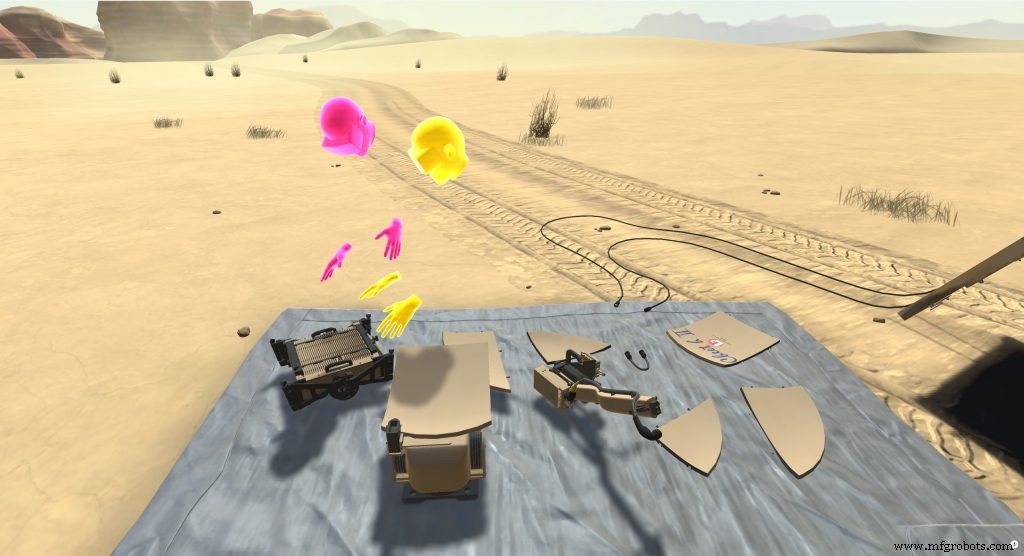
Deliver training in bite‑size segments, provide instant feedback, and enable learner‑specific personalization—for example, minutely tailoring programs to each employee. Also consider playback and evaluation options; content can be recorded so trainers can assess performance via immersive session recordings.
Hardware choices
Different headsets and equipment serve distinct purposes. If supportability and scalability are priorities, ensuring your enterprise VR platform works with multiple hardware options is crucial.
Compatibility with standalone devices such as the Oculus Quest can make rollout easier and more affordable for many employees. However, security and accessibility must be weighed carefully with corporate use of standalone headsets.
For enterprises where data protection is paramount, balancing ease of access with robust security is key. Consider user flow: how employees log in—pin, single sign‑on, or another method—whether the VR platform integrates with learning management systems, how users are identified and differentiated, and what happens to captured data. Trainers should also understand how to assess training outcomes.
A VR platform that supports standalone headsets and offers a seamless, secure user flow can unlock VR training for many more businesses and employees.
Data is king
The ability to capture vast amounts of data and transform it into insights is a core advantage of VR training. As you explore enterprise VR, carefully decide what data to capture, how to process it, and how to act on the insights.

A robust VR training platform can track user movements, comments, speed, errors, and more—feeding thousands of data points into a dashboard.
This data allows trainers to build a detailed picture of employee development and provides valuable feedback on training efficiency and broader business processes, measuring ROI and highlighting improvement areas. When used proactively, this data can be transformative—leading to better‑trained employees, higher engagement, and a leaner business.
Embracing enterprise VR
We stand at a watershed moment for enterprise VR. Platforms are becoming more flexible, user flows smoother, hardware cheaper, and data richer. With the COVID‑19 pandemic accelerating the need for effective remote‑working and remote‑learning tools, the shift toward enterprise VR is accelerating.
Businesses exploring VR should seek a platform that integrates seamlessly with existing systems, offers content and hardware flexibility, and provides comprehensive data capture to revolutionize training—and the entire organization.
The author is Justin Parry, co‑founder and COO of Immerse.
Internet of Things Technology
- Geo‑IoT: How Asset Tracking Transforms Business – Lessons from 67 Industry Leaders
- Unlocking IoT Data: How Business Rules Management Drives Enterprise Value
- Augmented Reality: Transforming Manufacturing with Real‑Time Insights and Remote Expertise
- AR & VR Technologies Transform Training, Warehouse Efficiency, and Assembly Accuracy
- Harnessing IoT to Protect the Planet: Proven Success Stories
- Leveraging Virtual Reality to Optimize Industrial Robot Design
- Leveraging Intelligent Automation to Transform Utility Operations
- Preparing Leaders for AI & Automation: Strategies to Drive Business Impact
- Revolutionizing Design Engineering with Virtual Reality
- Maximize Workplace Safety: How Training Protects Your Business