



How Corporate Innovation Centers Drive Competitive Advantage
One of the most iconic advertising campaigns of all time, the “Kodak Moment”, was more than a slogan—it was a cultural touchstone that tied memories, technology, and nostalgia together. Today the phrase carries a cautionary weight: executives who cling to legacy thinking risk missing the very shifts that reshape markets.
Kodak’s decline is a textbook example of a company that, despite pioneering digital photography, could not translate its innovation into strategic action. The lesson is clear: technology alone does not safeguard a firm; it must be coupled with visionary leadership, a culture that rewards experimentation, and a clear alignment between innovation and business outcomes.
See also: How Helsinki is bringing corporate innovation to their core
What Are Corporate Innovation Centers?
In the modern economy, “innovation” is no longer a buzzword—it’s the engine of growth. While startups are often the face of disruption, large enterprises are increasingly establishing dedicated innovation hubs in global tech ecosystems to stay ahead. These centers bring together intrapreneurs, external partners, and cutting‑edge technologies to solve existing problems, enhance customer experience, and experiment with new business models.
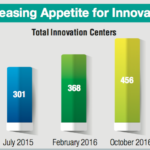
Our research shows a rapid rise in such facilities. In July 2015 there were 301 verified corporate innovation centers worldwide. By February 2016 that number grew to 368, and by October 2016 it had reached 456—an unmistakable indicator that corporate investment in innovation is accelerating.
Technological Focus and Evolution
Innovation priorities shift with emerging tech trends. Between March and October 2016, the top investments were: 28% in big data and analytics, 26% in the Internet of Things, and 23% in cloud computing. Other key areas included robotics, fintech, biotech/digital health, artificial intelligence, and cybersecurity.
Learning from Kodak’s “Moment”
Despite pioneering digital imaging, Kodak’s leadership failed to move decisively into new markets. The company’s collapse was less about a lack of innovation and more about an inability to execute, risk‑take, and realign shareholder expectations. This case underscores that even well‑intentioned innovation programs can falter without strong executive sponsorship and a clear vision for market relevance.
Successful innovation is rooted in more than technology. It draws on social science—anthropology, sociology, ethnography—to understand how consumer behaviors evolve and how new solutions can reshape those behaviors.
Embedding Innovation in Corporate Culture
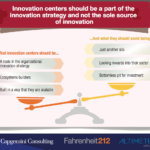
Innovation centers should serve as:
- A strategic node that aligns with the company’s broader business objectives.
- An active contributor to the local technology ecosystem.
- Scalable and effective both inside and outside the organization.
They must avoid becoming:
- Isolated silos detached from core operations.
- Insular, overly focused on a narrow set of technologies.
- Unsustainable investment drains.
Innovation Is a Business Imperative, Not a Luxury
The true measure of innovation is impact—new products, improved processes, cultural shifts, and fresh expertise that drive tangible business outcomes. While the proliferation of innovation centers is a positive trend, their value lies in how they integrate with corporate DNA and resist becoming passive experimentations.
To learn how leading companies are investing in these hubs—and to explore their global impact—download our comprehensive reports below.
Part 1: The Innovation Game – Why and How Businesses Are Investing in Innovation Centers
Part 2: Digital Dynasties – The Rise of Innovation Empires Worldwide
Download the full report on Slideshare or access previous research on innovation centers.
Internet of Things Technology
- Unlocking IoT Data: How Business Rules Management Drives Enterprise Value
- Building an Arduino‑Powered Robot with Raspberry Pi: A Step‑by‑Step Guide
- The Complete Guide to Fiberglass Production
- Expert Guide to Designing and Manufacturing Injection Molds
- Build a Stunning NeoPixel LED Matrix with Arduino Nano: Step-by-Step Guide
- Step-by-Step Guide to Crafting Durable Silicone Molds at Home
- Build a Winning Prototype: Step‑by‑Step Guide for Rapid Product Development
- Step‑by‑Step Guide to Replacing a Hydraulic Hose on Heavy Equipment
- DIY Guide: Build Your Own DC Motor Controller
- Master CNC Programming: A Beginner’s Guide to Fanuc Controls