



How to Build and Validate IoT Business Models That Work – A Practical Guide
Philipp Richert
Philipp is a seasoned Business Developer at Bosch.IO (formerly Bosch Software Innovations). With a Master’s degree in Mechanical Engineering from the Technische Universität Berlin, he has guided retail customers through strategic planning of IoT solutions. His hands‑on experience spans business development, user experience, and lean methods, enabling teams to craft IoT solutions that are feasible, viable, and desirable.
Why Validating Early Matters
When corporates design new IoT business models, they often spend excessive time debating theory instead of testing hypotheses. This delay, coupled with a lack of agile and iterative experience, leads to costly mistakes during the innovation cycle.
The four most common pitfalls corporate teams encounter:
- Perfectionism – working until the solution is flawless.
- Waiting for the “perfect” launch window.
- Over‑deliberating execution details.
- Assuming facts without evidence.
Assumptions Gone Wrong: A Personal Story
My first venture into entrepreneurship began at a flea market. I made several erroneous assumptions:
- Everyone loves thrift shopping.
- Customers will pay my highest asking price.
- All items will sell.
Key Questions for IoT Business Model Validation
Whether you’re developing a device, a service, or an ecosystem, ask yourself:
- What do customers truly want? (Desirability)
- Can we build it with existing technology? (Feasibility)
- Is the business model profitable? (Viability)
These three lenses help uncover hidden assumptions and guide you to the right validation methods—technical tests for tech assumptions, market surveys for user assumptions, and financial modeling for business assumptions.
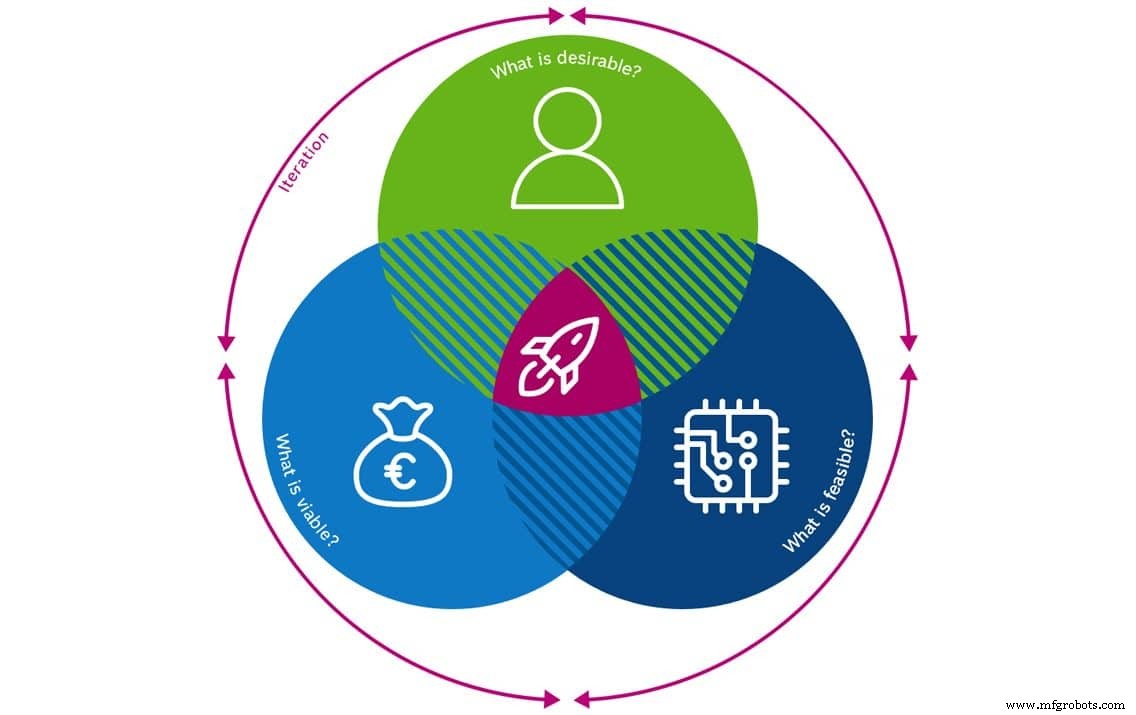
Source: Bosch.IO
A Step‑by‑Step Validation Blueprint
- List your assumptions – Write down every hypothesis, no matter how small.
- Prioritize by impact – Rank them by how much they could make or break the project.
- Select validation methods – Choose user interviews, prototype tests, or market analysis accordingly.
- Assign owners and deadlines – Turn validation into a team sprint with clear responsibilities.
- Iterate based on findings – Use results to refine the concept or pivot early.
- Repeat continuously – The market and technology evolve; keep assumptions under review.
Validation is an ongoing discipline. Even a small misstep can ripple into failure if left unchecked, but systematic checks enable early course corrections.
Want to see how these steps were applied in real projects? Join our webcast on validating IoT business models.
Webcast: How to Validate IoT Business Models
Register now to learn proven techniques and real‑world examples from Bosch.IO experts.
Internet of Things Technology
- Pioneering Industrial IoT Business Model Innovation
- Secure IoT: Best Practices for Building Trustworthy Connected Products
- Building an IoT‑Enabled Car‑Sharing Business Model in Two Days: Lessons from a Bosch Hackathon
- Unlocking IoT Data: How Business Rules Management Drives Enterprise Value
- 7 Proven IoT Business Models That Drive Growth & Profit
- Understanding How IoT Devices Work: A Practical Guide for Product Managers
- Maximizing IoT for Restaurants: Boost Efficiency, Reduce Waste, and Delight Customers
- How to Build a Profitable IoT Business Model
- Turning IoT Data into Business Value: A Practical Guide
- IoT: Driving Mainstream Adoption and Business Model Disruption