



Data Harvest Fuels Agriculture 4.0
Farmers are turning sensor data into a strategic asset, moving from preventive to predictive agriculture.
Since the Industrial Revolution, automation has driven production. Today, Industry 4.0 has made most processes data‑centric, following a five‑step cycle: collect, transmit, store, analyze, and present. The final step keeps humans in control, yet data can also be fed back to actuators, enabling robotic automation.
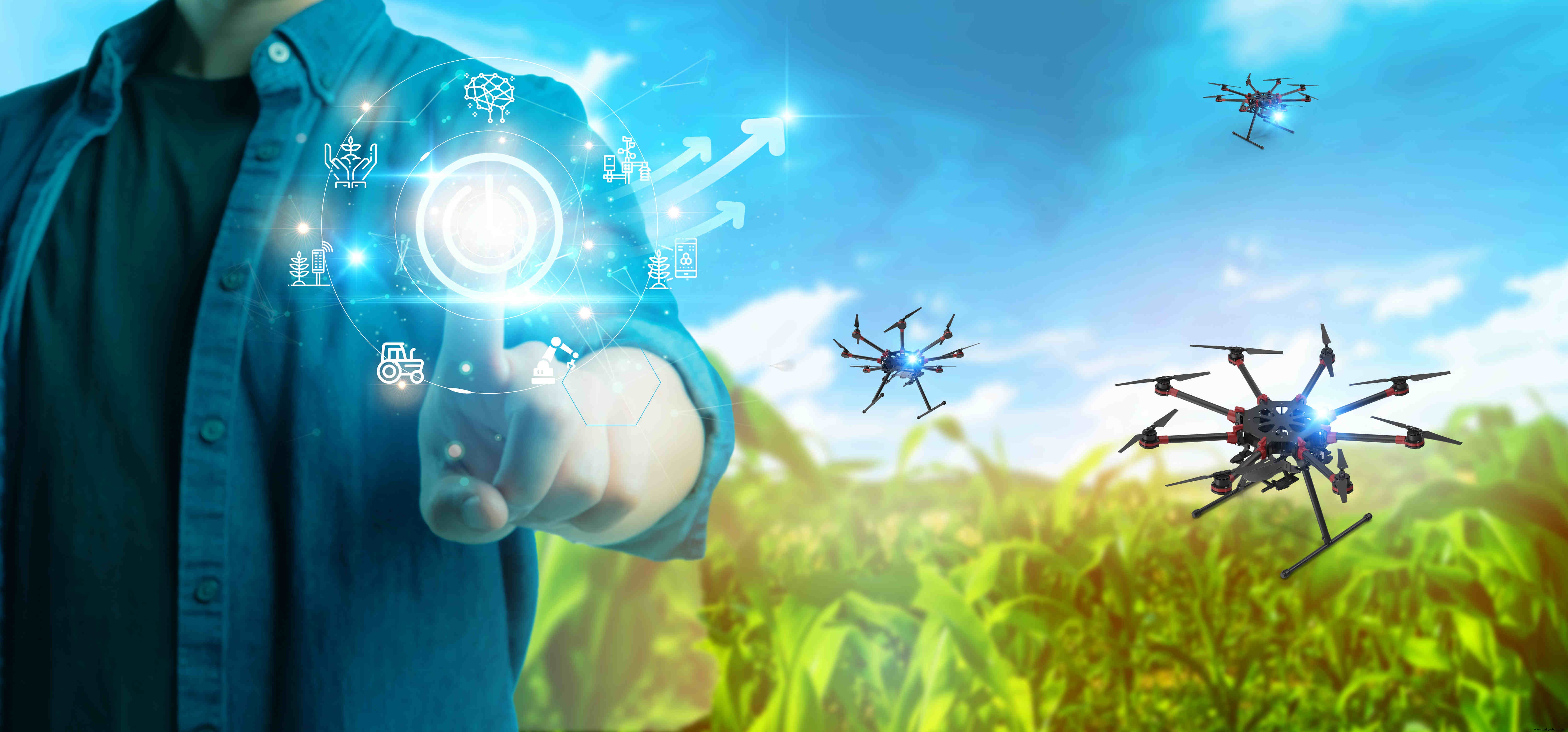
Agriculture has mirrored industrialization over the past two centuries, and Agriculture 4.0 is now accelerating. Just as manufacturing adopted data management, farmers are embracing similar data‑centric solutions. Industrial firms are expanding into ag‑tech, and equipment makers are branching into industrial production. Despite its unstructured environment, the adaptability of new data technologies is aligning agriculture with automotive and aerospace, turning farmers into modern engineers.
It began in the 1990s with the first automation for the high‑value dairy sector—milking machines from Swedish maker DeLaval and Netherlands‑based Lely. At the same time, optical sorters for grains, especially rice, emerged from Japan’s Satake and Switzerland’s Bühler. Some of these sorting technologies found new life in high‑end agriculture, such as vineyard grapes, where French firm Pellenc developed robotic gear that turned farmers into data scientists.
Once automation was in place, farmers could move beyond passive observation of yield to proactive improvement of both quality and quantity. Small‑scale farms once relied on a farmer’s eye and intuition; today’s massive operations cannot depend on human senses alone. Data technology has become central to guiding the farm in the right direction—whether for herding, crop production, or premium products like wine.
Camera Utilization in AgricultureDrone‑based field monitoring is a prime example of agricultural data management. Paris‑based Parrot, through its U.S. subsidiary MicaSense, pioneered a camera that captures multiple wavelengths to compute normalized difference vegetation index (NDVI) maps—now the industry standard for monitoring crop health and identifying problem areas. In January, Parrot announced the sale of MicaSense to U.S. aerial‑imaging company AgEagle Aerial for US$23 million. NDVI maps are now downloaded to tractors, allowing real‑time fertilizer adjustments.
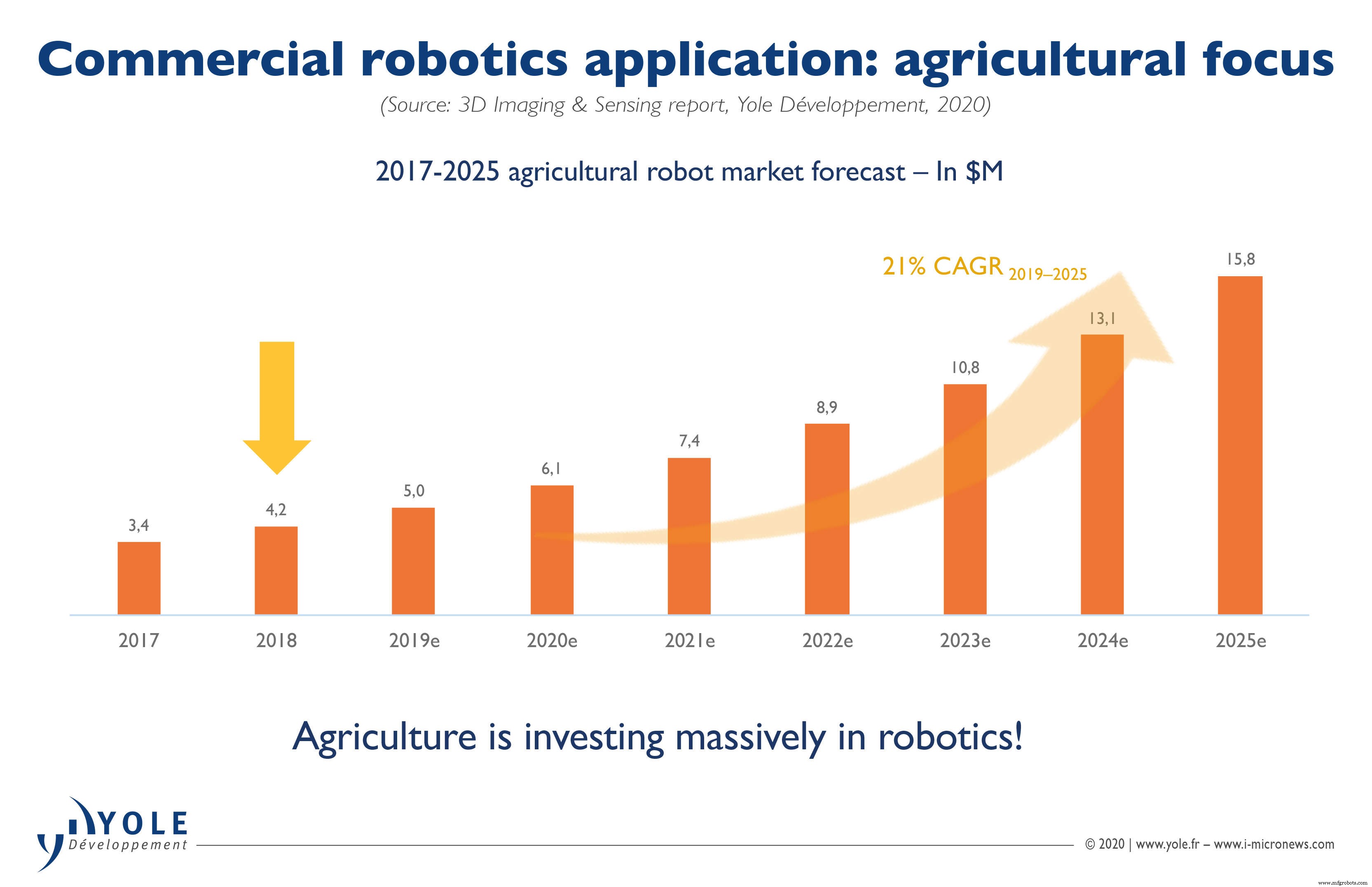
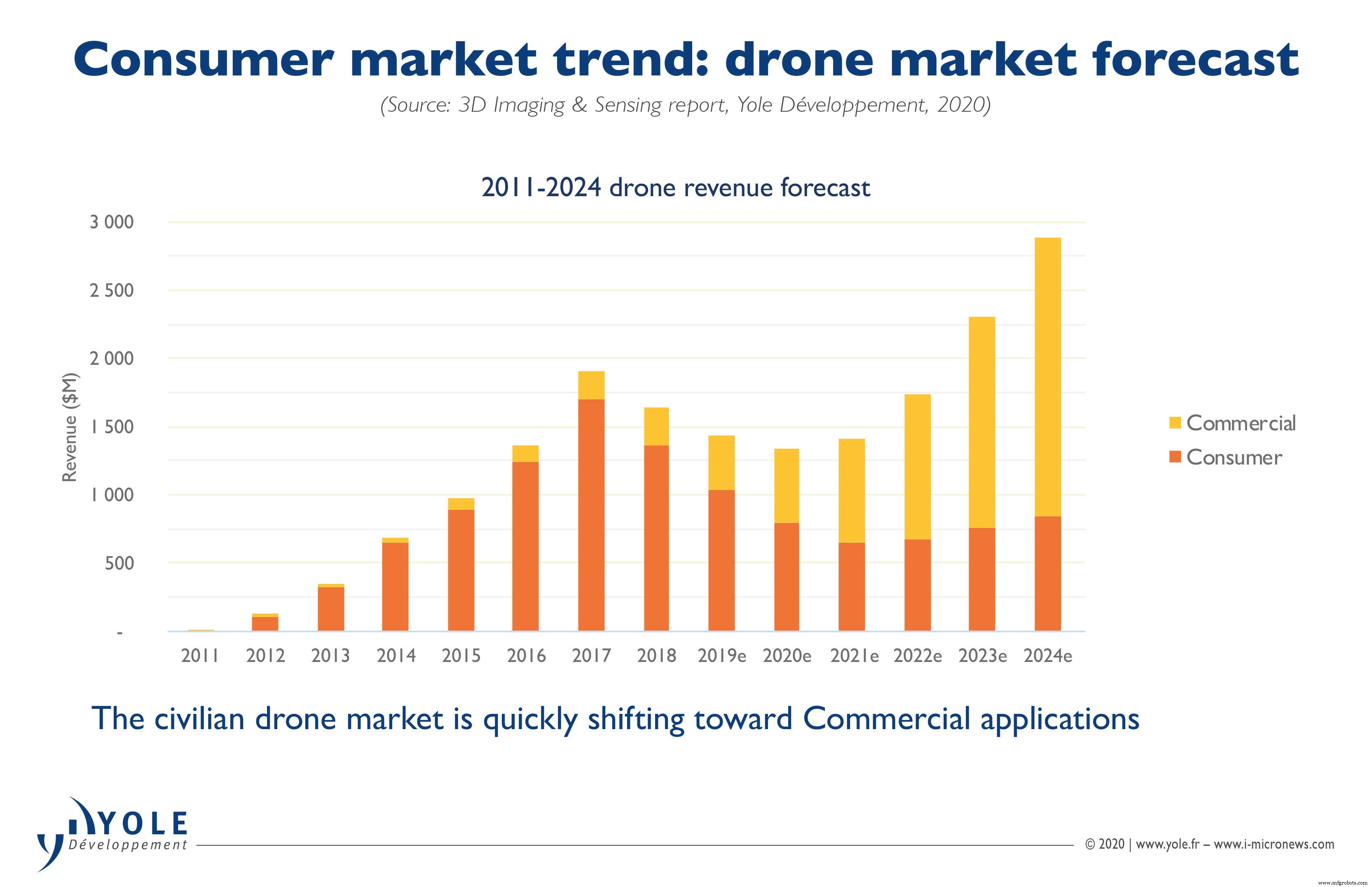
The U.S. Federal Aviation Administration (FAA) reports that 7% of the 1.6 million registered drones in the U.S. serve agricultural purposes—over 100,000 active agricultural drones. While a small share of the commercial drone market, the agricultural segment is a significant revenue generator. Data collection is increasingly the realm of robots, whether autonomous barns, drones, or tractors—data is no longer the new oil; it is the new crop.
IMU Utilization in AgricultureSmart‑agriculture robots fall into two main categories: aerial (drones) and land‑based (tractors, harvesters). In both cases, functionality relies on various sensors, with the inertial system for navigation and stabilization being paramount. It must deliver high performance, reliability, low bias drift, low bias instability, and stable temperature behavior—all at an affordable price to justify investment.
click for full size image
(Source: Yole Développement)
click for full size image
(Source: Yole Développement)
Drones monitor crop health via cameras and are often used for fertilization of small to medium fields (<20 ha) as a cheaper alternative to airplane‑based solutions. Accurate navigation and stabilization are critical when pointing a camera at the ground; at a height of 10 m, a 5° error translates to an 80‑cm positional error. While GPS can provide sufficient accuracy for many applications, robust inertial measurement units (IMUs) are essential for camera stabilization.
Land‑based robotic vehicles navigate crop rows with centimeter‑level precision to avoid damaging plants. Most rely on accurate GPS, preventing double fertilization or gaps. However, GPS signals can be lost—under trees, for example—necessitating IMU or attitude‑heading‑reference system (AHRS) solutions. MEMS‑based IMUs meet the high‑performance, low‑size, weight, power, and cost (SWAP‑C) requirements of land‑based applications.
Internet of Things Technology
- Industrial‑Grade Connectivity Architecture for the IoT
- Mastering Data Monetization: Strategies for Direct and Indirect Revenue
- IoT Edge Computing: Bridging Devices and Cloud for Real‑Time Insights
- Connectivity by Design: Unlocking Unified Data for Digital Twins and Real‑Time Decision‑Making
- IoT Data Drives Precision Agriculture: Boosting Yields and Cutting Costs
- Harnessing Data in the Internet of Reliability: Strategies for Effective Management
- Revolutionizing MRO with Voice-Enabled IIoT
- Turning IoT Data into Actionable Insights: John Deere's Approach to Agricultural Efficiency
- Connected Farming: Harnessing IoT to Boost Yield, Cut Costs, and Drive Sustainability
- Bringing Precision Analytics to AgTech: Challenges and Opportunities