



Boost Profits with Condition‑Based Monitoring of Wear & Tear Parts
Unplanned downtime caused by worn machine components erodes customer satisfaction and inflates maintenance costs. Implementing condition‑based maintenance (CBM) to monitor wear‑and‑tear parts not only enhances equipment uptime but also opens new revenue opportunities for machine builders.
When industrial machines fail, the impact is immediate: production stops, orders slip, and profit margins shrink. Continuous monitoring of wear‑and‑tear parts through a CBM strategy mitigates these risks by identifying impending failures before they occur. According to a 2023 Deloitte survey, firms that adopted CBM experienced a 25% reduction in unplanned downtime.

When spare parts are not readily available
Often, a single missing or degraded component can cripple a machine, and spare parts may not be on hand in time. Even with rapid supply chains, many manufacturers still rely on reactive, "run‑to‑fail" maintenance.
Reactive maintenance—sometimes called "run‑to‑fail"—is the simplest approach. It typically results in prolonged downtime and lost throughput, because failures occur during peak production periods.
Predictive or scheduled part replacements at fixed intervals have been tried, yet they require swapping components well before their actual wear‑out point. This approach inflates both part inventory costs and production downtime.
So, how challenging and rewarding is the journey from reactive and preventive to proactive maintenance?
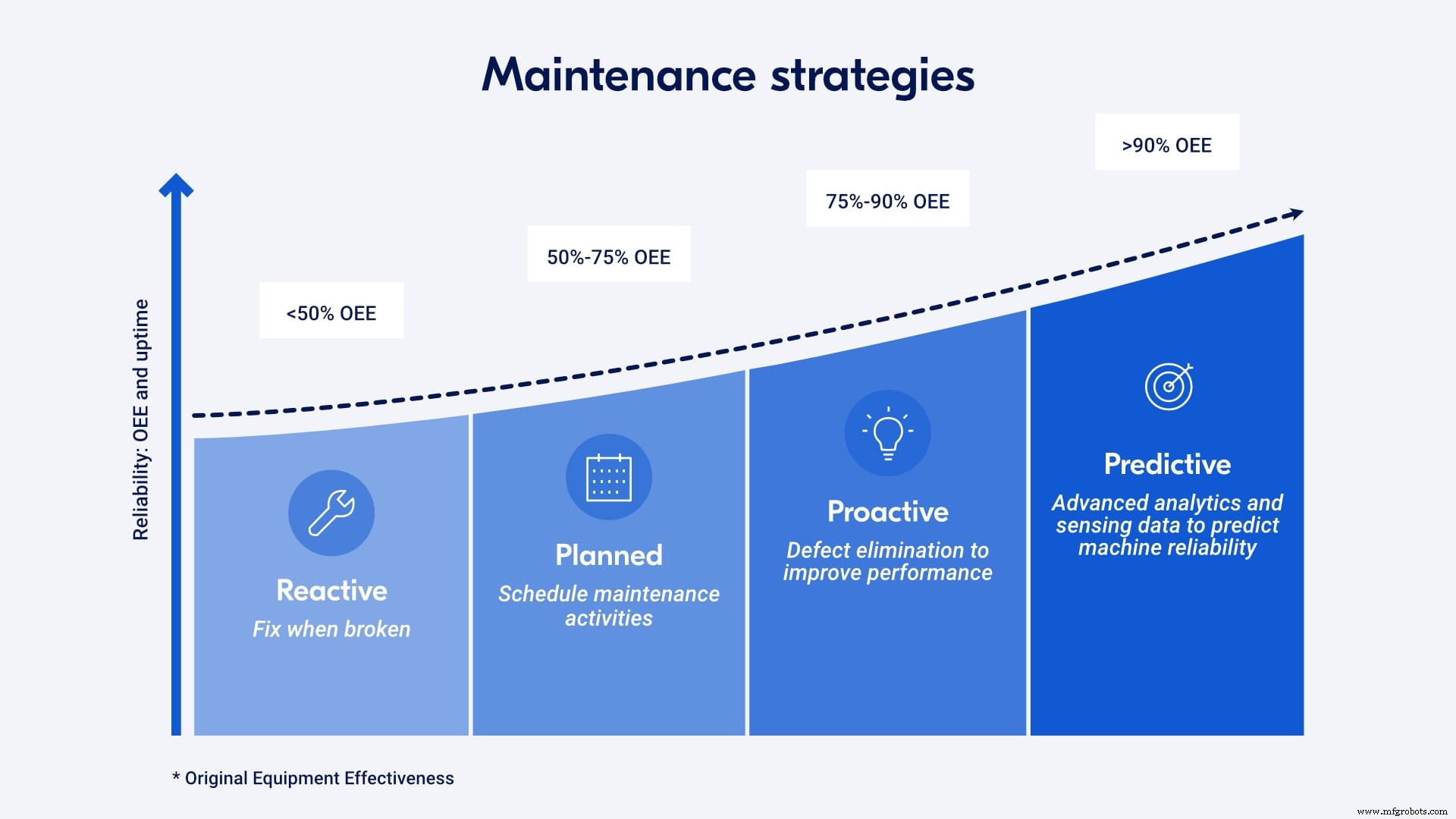
Multiple sources of profit for proactive monitoring approach
Reactive maintenance involves running equipment until failure, with occasional preventive replacements of seemingly sound parts. In contrast, a proactive, condition‑based approach boosts uptime and overall equipment effectiveness (OEE). By offering CBM services for wear‑and‑tear parts, machine manufacturers unlock a lucrative new revenue stream.
Condition monitoring—the heart of CBM, also called predictive maintenance—prevents component failures before they manifest. Delivering this service can generate additional income from digital offerings.
Manufacturers can monetize this capability by providing timely alerts to customers for a modest fee, thereby averting shutdowns, boosting spare‑part sales, securing service contracts, and enhancing satisfaction.
Consider a machine with a flying knife: by monitoring the drive‑axis current, you can detect when the knife dulls. Offering a just‑in‑time (JIT) spare‑part service alongside this monitoring adds tangible value for your clients.
The benefits of condition monitoring wear and tear parts for you as a machine builder:
- Less unplanned downtime for your customers
- More positive customer experiences
- Increased customer satisfaction and loyalty
- Additional revenue from monitoring services, contracts, or spare‑part sales

Building new business models and revenue
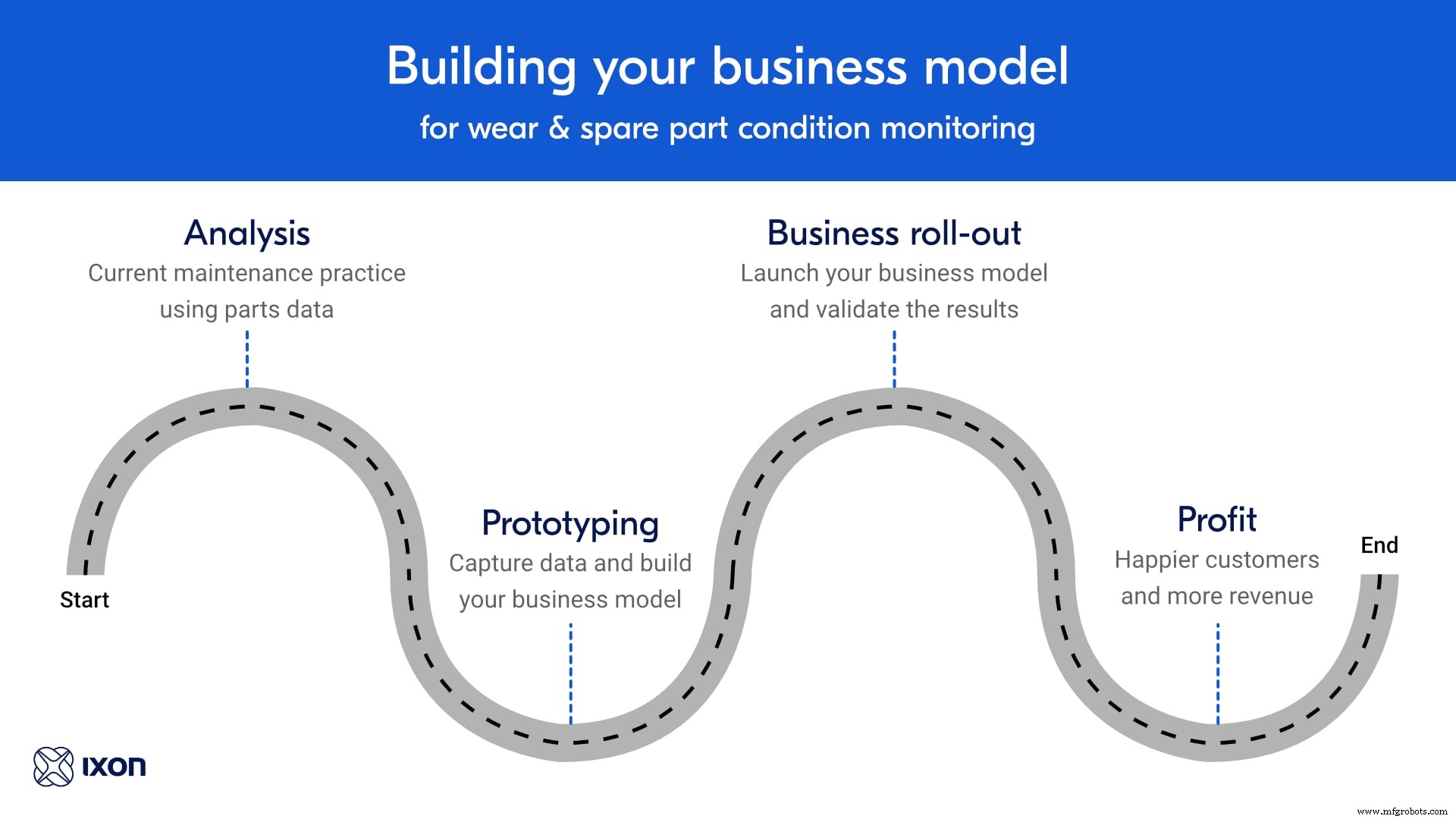
Below is a concise roadmap to develop a CBM‑based business model for wear‑and‑tear spares:
1️⃣ Assess Existing Maintenance Practices and Part‑Life Data
The first phase is to analyse current maintenance practices. Identify which parts have a defined life expectancy and determine whether any data—clear statistical correlations and causality between sensor values and part condition—are already captured.
Some data will have a direct correlation between standard PLC variables and part wear; others may require additional parameters or extra sensors.
2️⃣ Prototyping & Testing
Conduct in‑house tests on component test rigs to validate or refute hypotheses. Strategically plan data capture using sensors or PLC parameters, relay the data via an edge gateway, and store it in the cloud for analysis.
Field data and analysis build confidence in the model and its commercial viability.
3️⃣ Business Model Roll‑Out
Define how the added value translates into revenue, customer satisfaction, and brand differentiation:
- Is this merely an additional after‑sales offering, or can it become a differentiator in sales and marketing?
- What value does it deliver to end‑users, and can you apply value selling to achieve an attractive price point?
Happier and more profitable customers
Want happier, more profitable customers? Introducing a wear‑and‑tear part condition‑monitoring service elevates service quality, fosters loyalty, and strengthens client relationships.
Need help defining your digital strategy and extracting value from condition monitoring? Schedule a free, no‑obligation consultation with our industry experts.
[[Free expert consultation]]Internet of Things Technology
- 12 Essential Maintenance Templates to Streamline Operations and Reduce Admin Burden
- Maximizing the Impact of Condition‑Based Maintenance: A Practical Guide
- Mastering Maintenance Storeroom Organization for Peak Productivity
- Crafting an Effective Maintenance Policy: A Step‑by‑Step Guide
- Predictive Analytics in Manufacturing: Driving Efficiency, Quality, and Demand Forecasting
- Condition‑Based Maintenance: Core Principles and Key Advantages
- Expert Guide to Ski Lift Maintenance & Key Parts
- Detect Brake Drum Wear Early: Essential Signs & Inspection Tips
- Condition‑Based Monitoring: Key Benefits & Practical Tips for Proactive Maintenance
- Root Causes & Maintenance Strategies for Wear in Non-Standard CNC Machining Parts