



Healthcare IIoT: From Concept to Reality—Why Execution Matters

Every day we uncover new markets where the Industrial Internet of Things (IIoT), Artificial Intelligence, and Machine Learning promise to reshape our world. While these technologies hold promise for transportation, smart grids, and home automation, their most profound impact is poised to emerge in healthcare.
Medical errors rank as the third leading cause of death worldwide, claiming over 200,000 preventable lives annually. Meanwhile, the global population aged 65 and older—currently 617 million—will nearly double to 1.6 billion by 2050, driving a projected physician shortage of more than 50,000 by 2025. Healthcare costs are climbing, largely due to the rapid adoption of new technology. Though innovation often yields efficiency in other sectors, healthcare faces unique technological hurdles that have stalled widespread benefits.
Ideas Are Easy
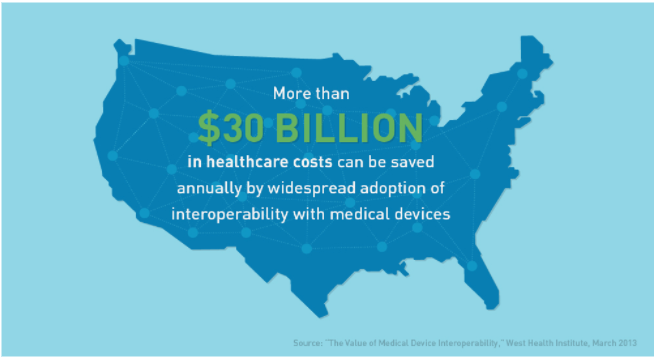
Professionals at the intersection of technology and health agree that many contemporary challenges can be solved with a connected healthcare system that leverages IIoT, AI, and ML. A 2013 West Health report highlighted potential industry savings of nearly $30 billion while improving patient outcomes.
The vision is clear: a fully networked, interoperable, and secure ecosystem that captures data and delivers real‑time clinical support that continuously improves. But why does this seem so daunting?
It’s very hard to build software well…It’s even harder to build software well when you have multiple end users.
—Andrey Ostrovsky, CMO, Centers for Medicare & Medicaid Services & Children’s Health Insurance Program
Execution Is Hard
Back in 2006, we began outfitting medical devices with Wi‑Fi and Bluetooth, underestimating the difficulty of updating equipment in an industry that traditionally refreshes every 10–15 years. Two years ago, when connectivity became ubiquitous, new challenges surfaced:
- Securing data at rest and in motion
- Scaling a highly reliable, real‑time network for thousands of nodes
- Designing a software architecture that simplifies device commissioning and decommissioning
- Reaching consensus on robust standards for data models and connectivity
Consistent terminology and definitions further complicate the landscape, resulting in a fragmented ecosystem where vendors provide only partial solutions and lack a clear roadmap for a complete Healthcare IIoT system.
Making It Easier
Progress is underway. Standards bodies—such as the Center for Medical Interoperability, Medical Device Plug and Play, the Industrial Internet Consortium, Integrating the Healthcare Enterprise, the Personal Connected Health Alliance, and the FDA’s Digital Health Group—are driving standard data models, connectivity frameworks, and security requirements.
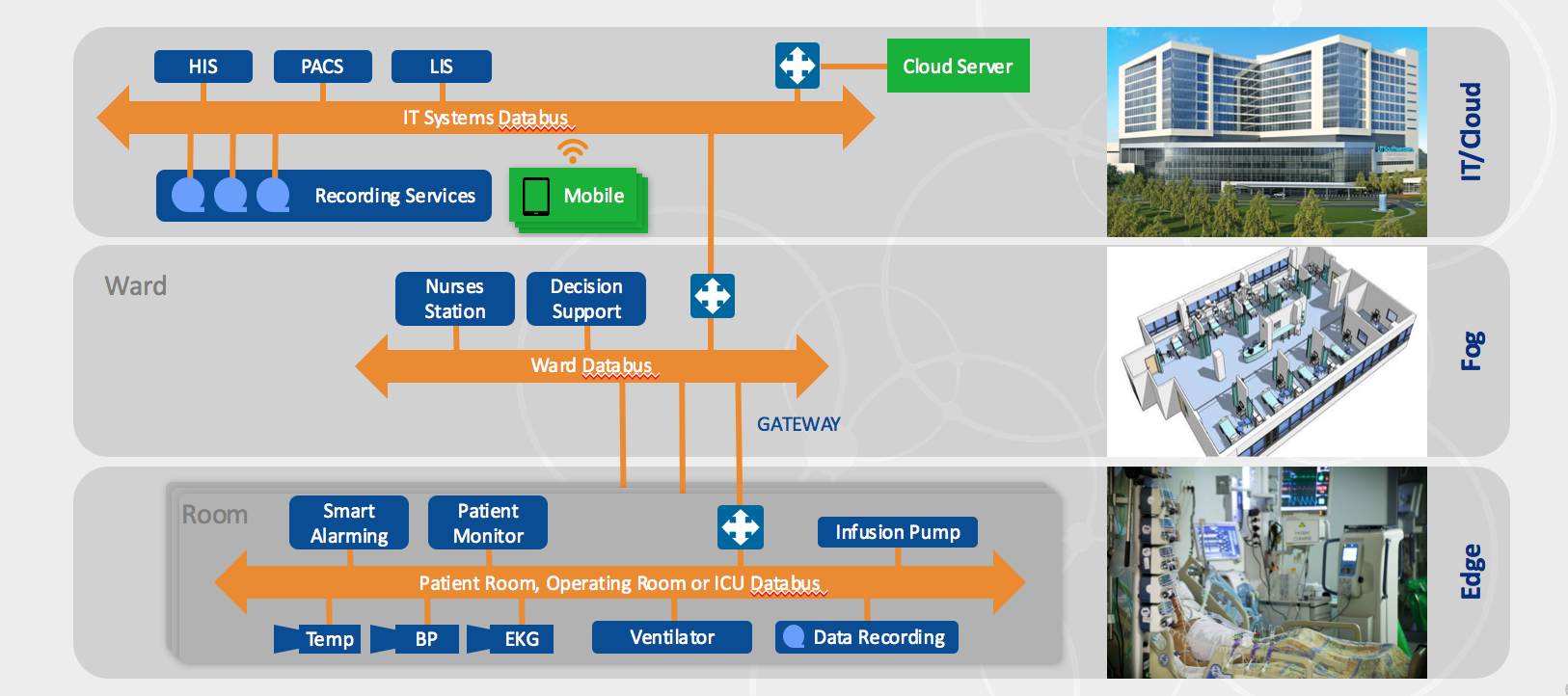
Private enterprises are also stepping up. RTI recently expanded its Connext DDS connectivity framework with Interoperable Security, Historical Data Query, IP Mobility, and Web Application Interoperability. Designed around a data‑centric publish‑subscribe model, Connext’s layered databus architecture aims to become the go‑to framework for Healthcare IIoT.
The Time Is Now
Technologists in the IIoT space must act now to realize a fully networked, interoperable, and secure healthcare system that delivers real‑time clinical support and self‑improving outcomes. The journey will be fraught with business and technical obstacles, but the stakes—improving patient care and reducing costs for future generations—are too high to ignore.
Want to learn more? Join our webinar on November 1st at 11 am—click here to register.
References
- BMJ Article on Medical Errors
- NIH: Aging Population
- Census Report
- Healthcare IT News
- FedScoop: Health Interoperability Challenges
Internet of Things Technology
- Expert Guide to FDA Approval for Healthcare IIoT Solutions
- DocBox CEO on Building Data‑Centric, Interoperable Healthcare IoT Solutions
- 2021 State of 3D Printing in Healthcare – Market Growth & Emerging Applications
- Assessing Your Industrial IoT Readiness: Are You Ready for Industry 4.0 Success?
- Securing the Industrial Internet of Things: Strategies, Standards, and the Chain of Trust
- Why Selecting Industrial IoT Connectivity Is Harder Than It Appears
- Edge Computing & IIoT: Transforming Industrial Data Strategy
- How IIoT & Industrial Robotics Drive Factory Transformation
- Revolutionizing Manufacturing: AR & IIoT Empower Workers & Boost Efficiency
- Industrial IoT: Advancing Smart Warehousing Trends