



Snap‑Cure Epoxy Prepreg Systems: High‑Performance Thermoset at Thermoplastic Speeds

Source (All Images) | PRF Composite Materials Ltd. Imagery derived from original PRF content and enhanced by AI‑assisted refinement.
In high‑performance manufacturing, time is the ultimate currency. Snap‑cure epoxy prepreg systems are redefining efficiency, offering some of the fastest thermoset processes available today. They approach the cycle times of thermoplastic compression‑molding systems while preserving the superior mechanical properties of thermosets.
This technology excels in automotive, motorsports, marine and defense sectors where structural integrity must coexist with high‑volume production.
Featured Content
Unlike traditional prepregs that require hours in an autoclave, snap‑cure systems are engineered for compression‑molding (press curing). Key advantages include:
- Rapid cycles: Demoldable cure achieved in as little as 2–4 minutes at elevated tool temperatures (typically 140–160 °C, system dependent).
- Reduced consumables: The snap‑cure process eliminates the need for vacuum bags, breathers and sealants, lowering waste, cost and shop‑floor clutter.
- Hot‑in/hot‑out processing: Mold tools remain heated, eliminating energy‑intensive ramp‑up and cooldown cycles (system dependent).
- Excellent surface finish: Controlled resin flow delivers superior surface aesthetics directly from the mold when processed in temperature‑controlled metal tooling.
- High Tg development: Rapidly reaching DMA‑measured onset glass‑transition temperatures (Tg) up to ~170 °C (system dependent), ensuring outstanding thermal stability.
NOTE: As with most high‑performance prepregs, frozen storage (–18 °C typical), controlled out‑time and strict moisture management remain critical for process stability and void‑free results.
The snap‑cure process begins with precision. Controlled tack allows automated cutting and ply handling, enabling clean CNC‑based processing or manual lay‑up templates. Once the plies are ready, the transformation is remarkably swift, as illustrated below.
Images shown represent PRF Composite Materials’ (Poole, Dorset, U.K.) RP570 eXpress cure and RP570 FR eXpress cure prepreg systems. Processing steps for other suppliers will differ. The sequence reflects laboratory processing, though these systems are already in use by industrial manufacturers in press‑based production with pre‑loaded tooling—see PRF for further details on the RP570 eXpress range.
SNAP‑CURE PROCESS

1️⃣ Place the precut prepreg stack into the precision mold cavity.
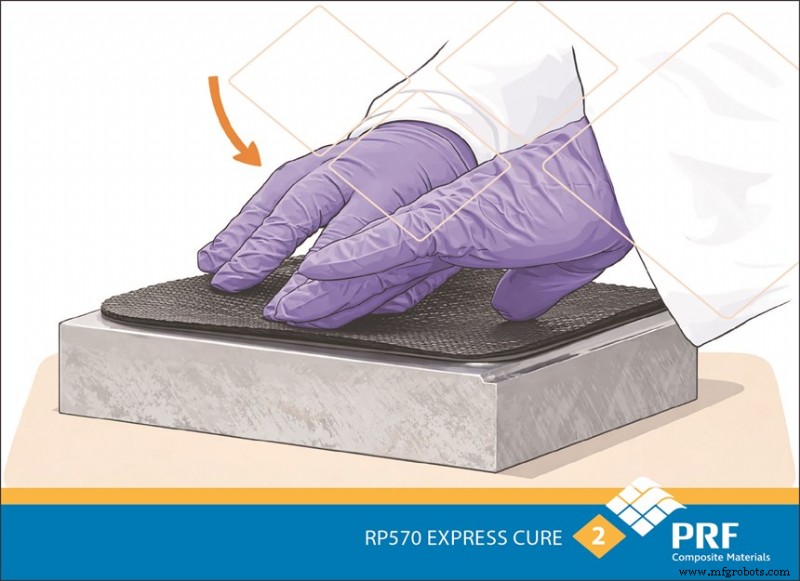
2️⃣ Ensure precise material alignment and draping for optimal geometry.

3️⃣ Secure the upper mold half to prepare the assembly for the press.

4️⃣ Insert the mold into the press, where process time and temperature parameters are preset.

5️⃣ Apply pressure (typically 5–40 bar, depending on fiber architecture, resin viscosity and part geometry) to ensure full consolidation and resin flow.
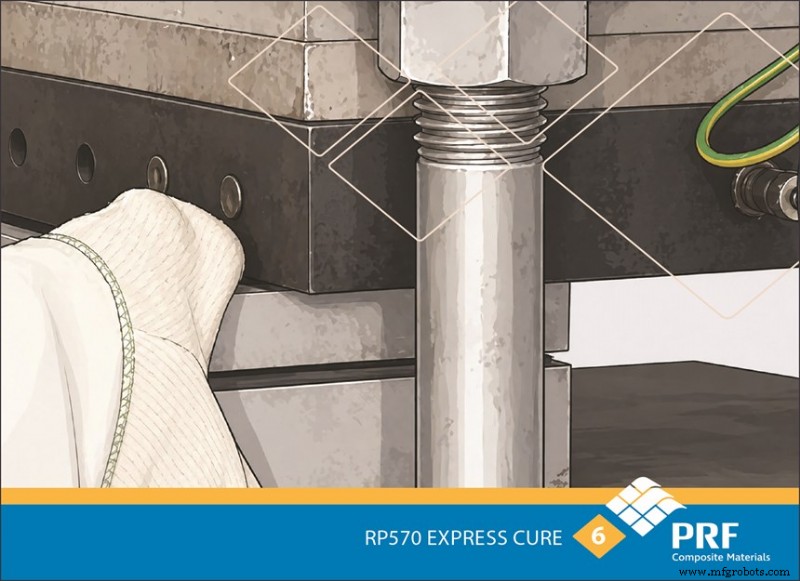
6️⃣ Open the mold carefully after the rapid 2–4 minute cure cycle is complete.

7️⃣ Using the system’s rapid cure and modulus development, demold the structural part while still hot from the press cycle once sufficient green strength has been achieved (wear heat‑resistant gloves), then transfer it to the trimming station for flash removal.
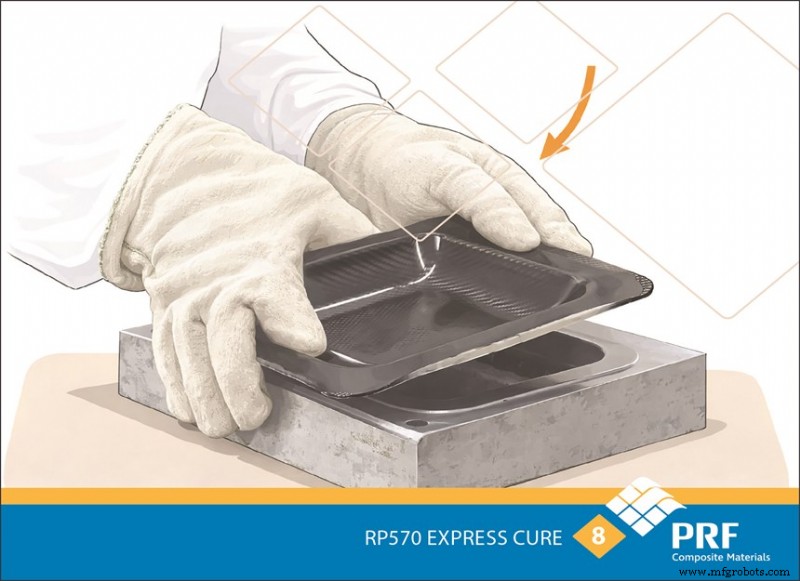
8️⃣ The result is a series of finished, polished components, stacked and ready for final assembly.
Efficiency need not compromise quality. Snap‑cure technology paves the way for a faster, leaner and more robust composites future.
Learn more about snap‑cure systems in related CW content.
About the Author

Başar Öztuna
Başar Öztuna has more than 20 years of experience in composites manufacturing, product development and project management. He has held key technical and managerial roles at leading industry organisations, including Metyx Composites, Polser Composite Materials and AIATA Boats (Anadolu Group). His core expertise spans advanced manufacturing processes and structural design.
Composite material
- Phenolic BR60 Sheet: Premium High-Performance Composite
- Denal® 920 159 20 – Premium Tungsten Heavy Alloy for High-Performance Applications
- Phenolic BT22NPN Tube – Ultra-Fine Fiber-Free Fabric for High-Performance Machining
- GNPGraystar Fused Calcia‑Stabilized Zirconia: High‑Purity, Ultra‑Strong Ceramic for Advanced Applications
- A Comprehensive Guide to Aerospace Thermoplastic Composites
- CTU05E Cemented Carbide: High-Performance Wear-Resistant Material
- RM271 Epoxy Rods – High-Temperature Glass Fabric Composite with Superior Mechanical Performance
- CTF54A Cemented Carbide: High-Performance Tungsten Composite for Wear Protection
- High-Performance Epoxy Sheet NP643 – Superior Strength & Thermal Resistance
- Enhancing Tungsten Carbide: A Promising Alternative for Modern Applications