



Designing Thermoset Composite Parts: A Practical Guide & Infographic
Quality begins with the design stage, regardless of the manufacturing route. A part engineered for machining, thermoplastic molding, or metal casting may not translate directly to a thermoset process. Whether you’re crafting a 5‑ounce thin disc or a 35‑pound industrial switchgear, the design criteria—aesthetics, strength, and moldability—must be tailored to thermoset manufacturing.
When designed correctly, thermoset parts deliver lower material and tooling costs, faster time to market, and superior strength compared to many alternative methods. The three main thermoset molding techniques—Injection, Compression, and Transfer—offer high dimensional accuracy thanks to the material’s inherent stiffness and minimal shrinkage.
Thermoset components are less susceptible to sink marks and warpage than their thermoplastic counterparts, especially in designs with variable wall thicknesses. They also support tighter tolerances and eliminate the need for post‑molding machining often required with cast metal parts.
Choosing the right material and process, and designing with those constraints in mind, is critical to achieving optimal performance.
.png)
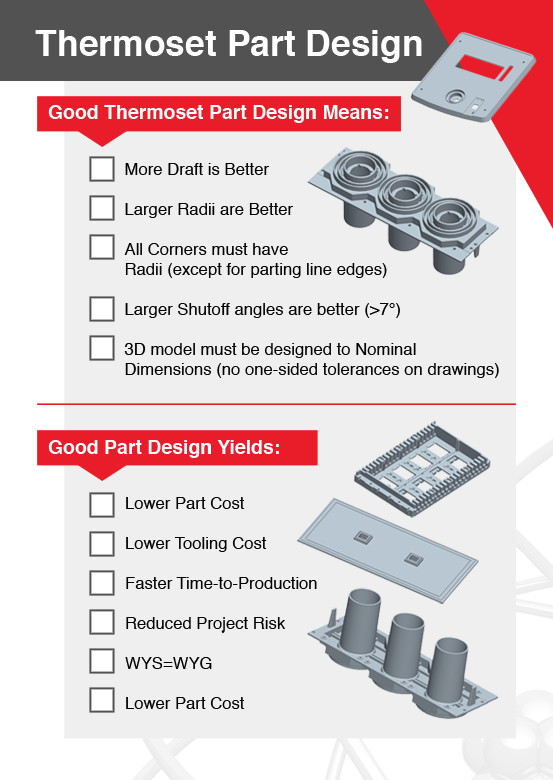
Key design principles for high‑quality thermoset parts:
- Increased Draft: Because of low shrinkage, adding draft improves mold release and reduces ejection stress.
- Large Radii: Use generous fillets and rounds on all corners to promote even material flow and reduce tooling stress.
- Strategic Openings: Position openings to allow proper tool shut‑off and support during molding.
- Undercut & Side Actions: Incorporate these features into the tooling design or plan them for secondary operations.

Composite material
- Designing Transparent Plastic Components for Optimal Performance
- Master CNC Machining: Proven Design Strategies for Optimal Parts
- Cut CNC Machining Costs Without Compromising Quality
- Master CNC Part Design: Expert Tips & Techniques
- Selecting the Right Machine Parts Supplier: A Practical Guide for Construction Projects
- Create a CAD File for Legacy Parts: A Step‑by‑Step Guide
- Optimize 3D-Printed Parts with Generative Design: A Practical Guide
- Enhancing the Strength of 3D Printed Parts: Proven Techniques
- Cutting Costs in Metal Machined Parts: Proven Strategies
- CNC Machining Design Guidelines: Maximize Precision, Minimize Cost & Accelerate Production