



Comparing Oleamide and Erucamide: Selecting the Ideal Slip Additive for Polymer Processing
Why Use a Slip Additive?
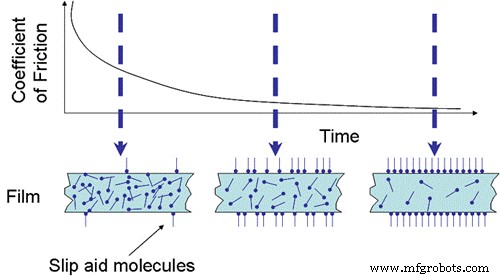
In the world of film manufacturing and filament production, lubricants play a pivotal role. When polymer chains are processed, friction arises in two primary ways:
- Internal friction between polymer molecules.
- External friction between the polymer and equipment surfaces—screw, die, guide system, and the like.
A slip additive mitigates both types of friction, reducing energy loss, preventing uncontrolled heat build‑up, and protecting the polymer’s molecular chain from breakage. The result is lower production costs, consistent product quality, and extended equipment life.
How Slip Additives Work
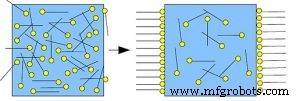
Oleamide and erucamide are low‑molecular‑weight waxes with low coefficients of friction and low melting points. After extrusion or injection, they migrate to the product surface, forming a smooth, low‑friction layer that eases contact with processing tools. In packaging, where polyethylene (PE) and polypropylene (PP) dominate, these additives are often combined with other waxes such as ethylene bis(stearamide) to fine‑tune performance.
Note that thickening agents can affect printing on the finished film, so adjust formulations accordingly.
Operating Principle
The core function of a slip additive is to act as a highly mobile, low‑friction component. It buffers polymer molecules from each other and from equipment surfaces:
- To lower internal friction, the additive must be compatible with the polymer, penetrating spherulites and creating a soft inter‑molecular cushion.
- To reduce external friction, it must quickly migrate to the surface and adhere to metal, forming a lubricating layer that eases slide.
Oleamide vs. Erucamide: Key Differences
While both additives share the same core functions, they differ in cost, performance nuances, and optimal applications. Oleamide is a cost‑effective choice for finished products such as blown films and plastic bags. Erucamide, being more advanced, commands a premium and is preferred by manufacturers who require superior surface finish and lower friction in high‑performance plastics.
Product Name | OLEAMIDE (other names: FinaWax O; OleWax; Crodamide; Emerest) | ERUCAMIDE (other names: FinaWax E; Emoslip E; EruWax;…) |
Concept | Oleamide is derived from the amide reaction of natural fatty acids. In plastics, it functions primarily as a thickening agent that improves flow, reduces scratches, and enhances color dispersion.
| Erucamide is a long‑chain amide that provides superior gloss and a smooth, easy‑open surface—ideal for grease bags and high‑clarity films. It also reduces friction on metal surfaces, improving mold release.
|
Chemical Formula | C18H35NO | C22H43NO |
Melting Point | ≈70 °C | ≈80 – 85 °C |
Mechanism of Action | Oleamide’s non‑polar chain and polar amide group give it a polypolar structure. Its low molecular weight allows it to migrate to the polymer surface, creating a thin, low‑friction layer that eases adhesion to processing tools. | Erucamide behaves similarly, but its longer chain provides slightly better surface smoothing and reduced metal adhesion, making it ideal for high‑clarity applications. |
Benefits |
• Enhances resin flow and reduces flow defects. • Lowers internal and external friction, cutting energy consumption and wear on equipment. • Migrates to the surface, improving smoothness, mold release, and scratch resistance. • Assists in color dispersion and modestly improves gloss. |
• Same flow‑enhancing and friction‑reducing benefits as oleamide. • Superior surface finish and reduced metal adhesion, ideal for glossy, high‑clarity films. • Supports color dispersion and provides a subtle gloss boost. |
Applications |
• Blown films and packaging for PE and PP. • High‑smoothness, high‑clarity grease bags. |
• PE, PP, PET, and other thermoplastics. • Low‑friction PVC sheaths for power cables. • Blown films for rubber nugget packaging, separator films, and anti‑snow tarpaulins. |
Usage Rate | 0.05 – 0.12 % (50–120 g per 100 kg resin) | 0.05 – 0.12 % (50–120 g per 100 kg resin) |
Packaging | 25 kg per bag | 25 kg per bag |
Dye
- How Acid Dyes Work and Their Key Applications
- How to Choose a Leading Plastic Additive & Color Masterbatch Supplier in Vietnam
- 8 Common Pitfalls of Service Technicians and Proven Strategies to Avoid Them
- How Kuka Robots and Laser Technology Transform Additive Manufacturing
- PLA+ vs. Regular PLA: Key Differences and Benefits Explained
- Synergizing Additive and Subtractive Manufacturing to Elevate Product Quality
- Additive vs. Traditional Manufacturing: How They Complement Each Other
- Proactive Maintenance Explained: Benefits & How It Differs from Reactive Strategies
- How SDKs Accelerate Innovation in Additive Manufacturing
- Understanding the Key Differences Between FDM and SLA 3D Printing Technologies