



Overview of Paints and Pigments: Composition, Types, and Environmental Impact
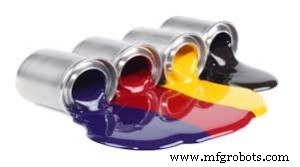
Paints not only add visual appeal to objects and structures but also shield them from weathering, corrosion, and other environmental stresses. They fall into two main categories: decorative paints for aesthetic enhancement and industrial coatings designed for performance in manufacturing settings.
Key Constituents of Paint
- Pigments – The primary source of color, pigments form the visual core of the paint.
- Binder (Resin) – Creates a cohesive matrix that locks pigment to the substrate. The industry’s most common binders are acrylic, alkyd, and epoxy resins. Acrylics are used in both solvent‑borne and water‑borne decorative and industrial paints, alkyds dominate high‑gloss decorative finishes, and epoxy resins are essential for high‑performance industrial coatings.
- Extender – Large‑particle pigments added to improve adhesion, reduce binder usage, and strengthen the dry film.
- Solvent (Thinner) – Water or organic solvents lower viscosity for optimal application. Water‑borne systems are preferred for lower VOC emissions.
- Additives – Tailored chemicals that enhance specific properties. Examples include bactericides, dispersants, driers, silicones, thixotropic agents, anti‑settling agents, and fungicides.
Formulation and Application
Paints are engineered for their intended use, proceeding through stages such as primer, undercoat, and final finish—gloss, matte, abrasion‑resistant, anti‑corrosive, or heat‑resistant layers. The manufacturing process involves dispersing pigment particles in the binder (a process called “wetting out”), adding solvent to achieve the desired viscosity, and thoroughly mixing all ingredients in large batches. The final product can be applied via dipping, roller, brush, spray, flow coating, airless or electrostatic spraying, powder coating, immersion, vacuum impregnation, or hot spraying.
Characteristics of High‑Quality Paint
White titanium dioxide, an inorganic pigment, represents roughly 70% of all pigments used. Among organic pigments, anthraquinone and phthalocyanine derivatives are the most prevalent. A superior paint should offer easy application, good flow, high opacity, resistance to heat and water, anti‑corrosiveness, scratch resistance, rapid drying, flexibility, and easy cleaning.
Addressing Environmental Concerns
Growing environmental awareness has driven the removal of lead from automotive and decorative paints. The industry now favors water‑based emulsions, powder coatings, and high‑solid formulations to reduce VOCs and hazardous waste. Leading manufacturers set a benchmark that the rest of the sector follows.
Dye
- Key Qualities to Evaluate When Selecting Pigment and Dye Manufacturers
- How to Choose the Right Pigments for Paints, Inks & Plastics
- Essential Pigment Qualities for High‑Performance Paints
- Understanding Dyes & Pigments: Origins, Applications, and Impact
- Premium Colouring Solutions from Trusted Manufacturers
- Eco‑Friendly Anti‑Corrosive Pigments: Enhancing Paint Durability & Sustainability
- How Pigments Power Paints: A Deep Dive into Color, Protection, and Industrial Applications
- Colorants in Paints, Inks & Plastics: Their Functions and Modern Uses
- Choosing the Right Color Masterbatch for Plastic Production
- Biocides: The Key to Protecting Paints from Microbial Spoilage