



GE Secures Long‑Term U.S. Wind Blade Recycling Deal with Veolia
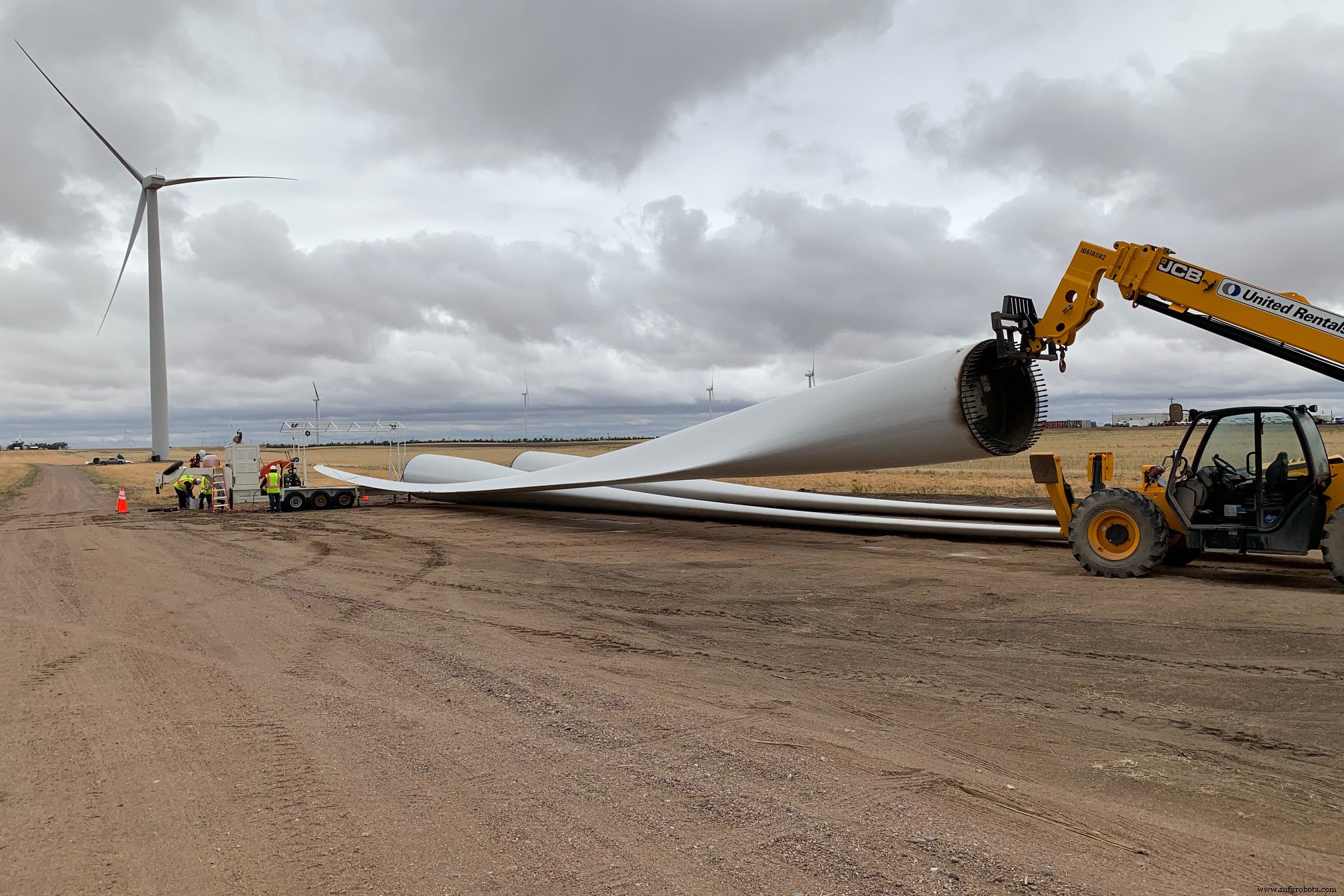
GE Renewable Energy (Paris, France) announced on Dec. 8 that it has signed a multi-year agreement with Veolia North America (VNA, Boston, Mass., U.S.), a group that designs and provides water, waste and energy management solutions, to recycle wind blades removed from GE’s U.S.-based onshore turbines during upgrades and repowering efforts. Through this agreement, GE plans to recycle the majority of blades that are replaced during repowering efforts.
As a part of the agreement, blades that have been removed from turbines will be shredded at VNA’s processing facility in Missouri via the company’s cement kiln co-processing technology and then used as a raw material replacement for coal, sand and clay at cement manufacturing facilities across the U.S. On average, nearly 90% of the blade material, by weight, will be reused as a repurposed engineered material for cement production. More than 65% of the blade weight replaces raw materials that would otherwise be added to the kiln to create the cement, and about 28% of the blade weight provides energy for the chemical reaction that takes place in the kiln. Similar recycling processes in Europe have been proven to be effective at a commercial scale.
“Sustainable disposal of composites such as wind turbine blades has been a challenge, not only for the wind turbine industry, but also for aerospace, maritime, automotive and construction industries,” says Anne McEntee, CEO of GE Renewable Energy’s Digital Services business. “VNA’s unique offering provides the opportunity to scale up and deploy quickly in North America, with minimum disruption to customers and significant benefit to the environment. We look forward to working with them on this effort to create a circular economy for composite materials.”
Wind turbine blades may be replaced through turbine improvement or ‘repowering’ efforts, when specific elements of the turbine are upgraded to improve the efficiency and lifespan of the turbine, without replacing the entire machine. Longer, lighter blades help the turbine to generate more energy every year, providing even more renewable energy to their end customers.
Bob Cappadona, COO for VNA’s Environmental Solutions and Services division, says, “By adding wind turbine blades — which are primarily made of fiberglass — to replace raw materials for cement manufacturing, we are reducing the amount of coal, sand and minerals that are needed to produce the cement, ultimately resulting in greener cement that can be used for a variety of products. Last summer, we completed a trial using a GE blade, and we were very happy with the results. This fall we have processed more than 100 blades so far, and our customers have been very pleased with the product.”
An environmental impact analysis conducted by Quantis U.S. found that the net effect of blade recycling through cement kiln co-processing is positive in all categories. Compared to traditional cement manufacturing, blade recycling enables a 27% net reduction in CO2 emissions from cement production and a 13% net reduced water consumption. In addition, a single wind turbine blade that weighs 7 U.S. tons recycled through this process enables the cement kiln to avoid consuming nearly 5 tons of coal, 2.7 tons of silica, 1.9 tons of limestone and nearly a ton of additional mineral-based raw materials. Largely due to the avoided coal consumption, this type of blade recycling also has a net-positive environmental impact in the categories of human health, ecosystem quality and resource consumption. The resulting cement has the same properties and performance as cement manufactured using traditional means, meeting all applicable ASTM standards.
According to GE, recycling decommissioned wind turbine blades into cement production will aid the cement industry in its efforts to decarbonize. Likewise, GE Renewable Energy is committed to reducing environmental impacts throughout the life cycle of its products, including by announcing an ambitious pledge in 2019 to decarbonize its operations and achieve carbon neutrality by the end of 2020.
fiber
- Allegiant Air Secures $30M, 4-Year Maintenance Agreement with American Airlines Maintenance Services
- SKF Secures Integrated Maintenance Solutions Contract with Valero Energy to Cut Costs and Boost Reliability
- Lanxess Bond‑Laminates Launches Recycled Polycarbonate Composites for Lightweight, Flame‑Retardant Electronics
- Recycling Wind Turbine Blades for Cement Co‑Processing: A European Industry Initiative
- Cygnet Texkimp Secures Slitter‑Spooler Deal with Leading Chinese Aerospace Composite Manufacturer
- Swancor Secures Global Wind Blade Material Supply Deal with MHI Vestas in Taiwan
- SAERTEX Extends Carbon Fiber Partnership with Bombardier for Airbus A220 Wingskins
- Gurit Extends 5-Year Contract with Pilatus Aircraft for Aerospace-Grade Prepregs
- Vestas Expands Blade Recycling Partnership to U.S. and Global Markets
- Maximize Sawing Efficiency: Start with the Right Material