



Is Fiber‑Reinforced Plastic (FRP) Maintenance‑Free? Here’s What You Need to Know
Fiber‑Reinforced Plastic (FRP) is engineered to withstand the toughest environments—chemical exposure, UV radiation, and electrical hazards—without the upkeep that metals and wood demand.
Virtually, none. Since FRP is corrosion resistant and UV stable, you really don’t have to do any type of maintenance to it.
FRP’s unique composite construction gives it a longevity that traditional materials simply cannot match. Its resilience translates into real savings for industries ranging from oil and gas to municipal infrastructure.
5 Reasons FRP Outperforms Metal
- High Strength‑to‑Weight Ratio – FRP delivers superior load capacity while remaining light, simplifying transport, handling, and installation.
- Custom‑Tailored for Your Needs – Engineers can design FRP to meet exact specifications, whether you require extreme chemical resistance or specialized surface finishes.
- Optimized Anisotropy – By aligning fiber strands with load paths, we maximize structural efficiency, ensuring peak performance in every application.
- High Tensile Strength with Flexibility – FRP absorbs impact better than rigid metals, spreading force across a wider area and reducing the risk of dents or fractures.
- Design Flexibility – From complex geometries to integrated noise‑reduction features, FRP lets designers push boundaries that metal simply cannot accommodate.
Corrosion Resistance Means No Maintenance
In corrosive settings where metal deteriorates, FRP remains unchanged. This eliminates costly replacements of grating, piping, or handrails that would otherwise suffer rust or cracking.
How FRP Resists Corrosion
FRP combines fiberglass fibers for strength with polymer resins for protection. The thermoset resins prevent melting under heat and lock in corrosion‑resistant barriers.
It’s All About the Laminates
Our pultrusion process applies specialized laminates—most commonly a corrosion‑barrier schedule—to enhance resistance against abrasion, chemicals, and UV degradation.
Typical Functions of the Corrosion Barrier
- Corrosion resistance
- Abrasion resistance
- Chemical resistance
Choosing the right resin (polyester or vinyl ester) is critical; it dictates thermal performance and long‑term durability.
DEFI FRP: The Best Choice for Any Application
At DEFI, we gather detailed project requirements to manufacture FRP products that match or exceed the performance of steel while eliminating weight, freight, and installation burdens.
From small custom orders to large‑scale plant installations, our pultruded FRP solutions offer unmatched reliability and cost‑effectiveness.
Structural Applications
- Mining and Minerals
- Oil and Gas
- Nuclear
- Water and Wastewater
- Restaurant/Hotel
- Chemical Processing
- Pulp and Paper
- Water Purification
- Electric Utility
- Telecommunications
- HVAC
- Desalination
- Architectural
Structural Components
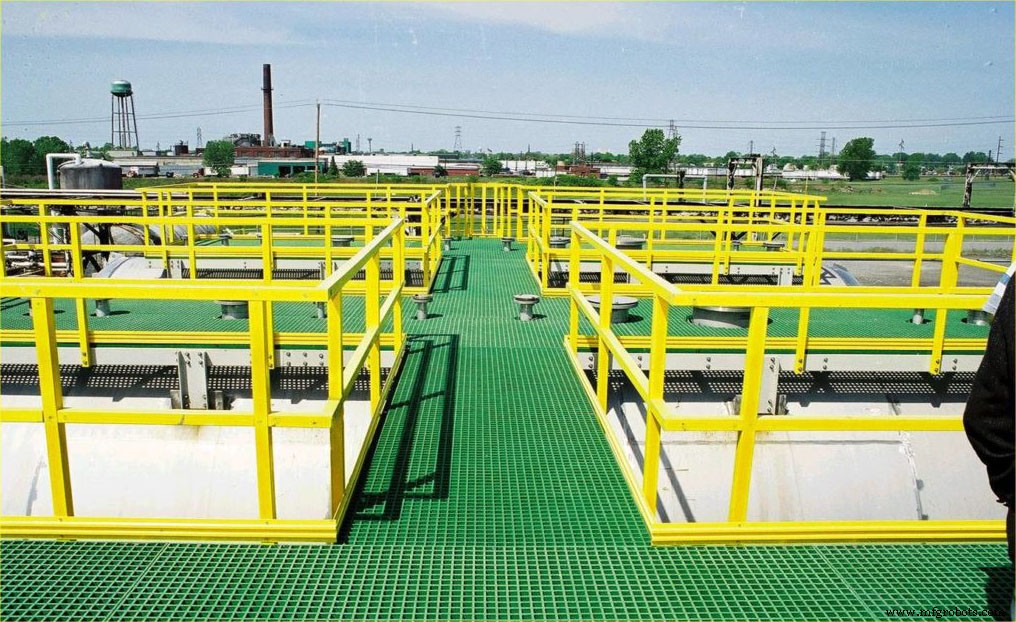
We produce decking, platforms, grating, beams, bars, and angles—all customizable with textures for non‑slip performance:
- Pedestrian bridges
- Platforms
- Walkways
- Railings
- Catwalks
- Grating
- Municipal playgrounds
- Stairways
- Fencing
- Ladder and cage systems
Upgrades and Retrofitting
Industries such as marine, water treatment, chemical processing, and automotive manufacturing increasingly replace aging metal with FRP to lower ownership costs while boosting performance.
Key Retrofit Benefits
- Increased load capacity without added weight
- Seismic retrofitting for steel, concrete, and masonry structures
- Improved structural integrity and load distribution
- Prevention of progressive decline
- Lower long‑term cost of ownership
- Installation compatibility with existing dimensions
DEFI Delivers Sustainable Solutions
We design FRP for the long haul, not just a few years of service. Our stringent manufacturing standards and dedicated customer support ensure you receive a product that outperforms metal and saves money over its lifecycle.
Contact us today to start designing a project that stands the test of time.
fiber
- Corrective Maintenance: Boosting Facility Reliability & Cutting Downtime
- Desktop Metal’s BMD and Microwave Sintering: A New Era for Metal Additive Manufacturing
- Reliability: The Comprehensive Guide to Asset Management
- FRP Grating Lead Times & Why DEFI Is the Industry’s Trusted Choice
- Niobium: Applications in Industry, Jewelry, Gravimetry, and Orthopedic Implants
- Metal Fabrication 101: A Clear Guide for Beginners
- Why Steel Remains the Gold Standard for Agricultural Implements
- Choosing the Right Sheet Metal Fabrication Method for Your Project
- Choosing the Right CNC Machining for Your Project
- Key Criteria for Selecting a Trusted Metal Supplier