



Durability of Carbon Fiber: Strength, Corrosion Resistance, and Longevity
Carbon fiber outperforms steel in tensile strength, is lighter than fiberglass, and stiffer than aluminum. Yet, how durable is it over time? This article examines the factors that influence carbon fiber’s longevity and its performance in real‑world conditions.
RELATED: What is Carbon Fiber?
In this article:
- Can Carbon Fiber Rust?
- Can Carbon Fiber Break?
- Do Weather Conditions Affect Carbon Fiber’s Durability?
- Can Carbon Fiber Withstand High Temperatures?
- Is Carbon Fiber Bullet‑Proof?
Can Carbon Fiber Rust?
Carbon fiber is chemically inert and highly corrosion‑resistant, making it ideal for harsh environments. It does not rust, but strong oxidizers—such as hydrogen peroxide or sulfuric acid—can degrade the material over time.
Epoxy resin, the common matrix used to bind carbon fibers, is also inert but is vulnerable to UV radiation. Applying a UV‑resistant finish protects the composite from long‑term sunlight damage.
In contact with certain metals, carbon fiber composites can trigger galvanic corrosion. While surface corrosion may not appear immediately, the accumulation of corrosion products can weaken the structure over years. Specialized coatings can mitigate this risk.
Can Carbon Fiber Break?
Like any material, carbon fiber can fail, but the failure mechanisms are more nuanced. Factors such as manufacturing quality, fiber lay‑up, and loading conditions dictate durability.
Uneven resin application or insufficient resin can create micro‑cracks that propagate under repeated stress, eventually leading to catastrophic failure. Even minor impacts can accelerate this process.
The fiber orientation and the number of layers significantly influence fatigue resistance. For example, a 0° lay‑up has lower torsional strength than a 45° lay‑up and may fail under twisting loads.
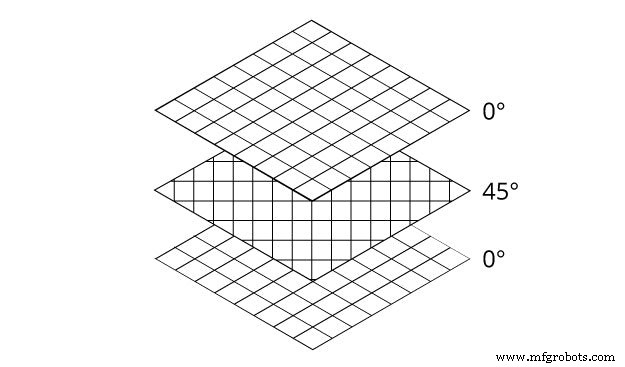
Adhering to the specified load limits for each part prevents most failures. However, detecting impending damage can be challenging, and when carbon fiber does fail, it can shatter dramatically.
RELATED: What is Forged Carbon Fiber? The Ultimate Guide to Forged Composites
Do Weather Conditions Affect Carbon Fiber’s Durability?
Carbon fiber’s low coefficient of thermal expansion means its geometry remains stable across temperature swings. Nonetheless, environmental factors can influence long‑term performance.
Freeze–Thaw Cycles
Research from the Civil Engineering Research Foundation indicates that freeze–thaw cycles can compromise carbon‑fiber‑reinforced concrete, especially in salt‑water environments. The damage arises from micro‑cracks in the epoxy matrix and fiber‑matrix debonding, rather than from the fibers themselves. Despite these challenges, studies show that carbon‑fiber‑reinforced concrete outperforms conventional concrete in durability.
Hygrothermal Aging
Hygrothermal aging—combined heat and moisture exposure—can modestly reduce flexural strength but may lower tensile strength by 7–12 % when the composite is loaded in salt water.
Wet–Dry Cycles
After 4 000 wet–dry cycles, the likelihood of tensile failure increases markedly, although deformation remains largely unaffected.
UV Exposure and Condensation
UV radiation combined with condensation erodes the epoxy matrix, which can reduce tensile strength by up to 29 %. A UV‑resistant finish is essential for outdoor applications.
Overall, weather impacts depend on the application. For example, a building façade will experience more pronounced degradation than a carbon‑fiber bicycle frame.
Can Carbon Fiber Withstand High Temperatures?
Carbon fibers themselves can endure extreme heat; the limiting factor is usually the surrounding matrix. Certain epoxies resist up to 100 °C (212 °F), while carbon‑fiber‑reinforced carbon composites can tolerate temperatures above 2 000 °C (3 632 °F).
Is Carbon Fiber Bullet‑Proof?
In theory, carbon fiber can stop a projectile, but aramid fibers like Kevlar® offer superior flexibility and impact absorption, making them more cost‑effective for ballistic protection. Carbon fiber is favored in racing applications for its ability to disperse impact forces. However, multiple layers are required to stop bullets effectively.
Carbon nanotubes, a nano‑scale form of carbon, have shown ballistic resistance surpassing both carbon fiber and Kevlar® in some studies.
Carbon fiber’s base material—graphite—remains essentially indestructible under normal conditions. While environmental factors and matrix choice affect longevity, research predicts typical carbon‑fiber components can last over 50 years.
We source, design, develop, and curate unique and high‑quality products made with carbon fiber and other advanced composites. Contact us or visit our website to learn more.
Up Next:
- Carbon Fiber Manufacturing
- All Carbon Fiber M-14/M1A Rifle
- Colored Carbon Fiber Is Usually Texalium, But What Is Texalium?
fiber
- Carbon Fiber: Composition, Manufacturing, and Future Applications
- How the Medical Industry Harnesses Carbon Fiber for Innovation
- Carbon Fiber Explained: Strength, Production, and Industry Applications
- How Medical Industries Harness Carbon Fiber for Advanced, Lightweight Devices
- Carbon Fiber: The Cornerstone of Modern Aerospace Design
- Carbon Fiber Manufacturing: From Precursors to Premium Composites
- From PAN to Performance: The Expert Guide to Carbon Fiber Manufacturing
- Is Carbon Fiber Conductive? Understanding Its Electrical and Thermal Properties
- DIY Carbon Fiber Fabrication: A Step‑by‑Step Guide to Making Carbon‑Fiber Parts at Home
- Fiberglass vs. Carbon Fiber: Choosing the Right Reinforcement for 3D Printing