



13 Types of Refractory Materials and Their Key Industrial Applications
13 Types of Refractory Materials and Their Key Industrial Applications
Refractory materials form the backbone of high‑temperature processes across the iron and steel, glass, cement, ceramics, petrochemical, and power generation sectors. Their ability to withstand extreme temperatures while maintaining structural integrity ensures efficient production, safety, and longevity of critical equipment.
What Are Refractory Materials?
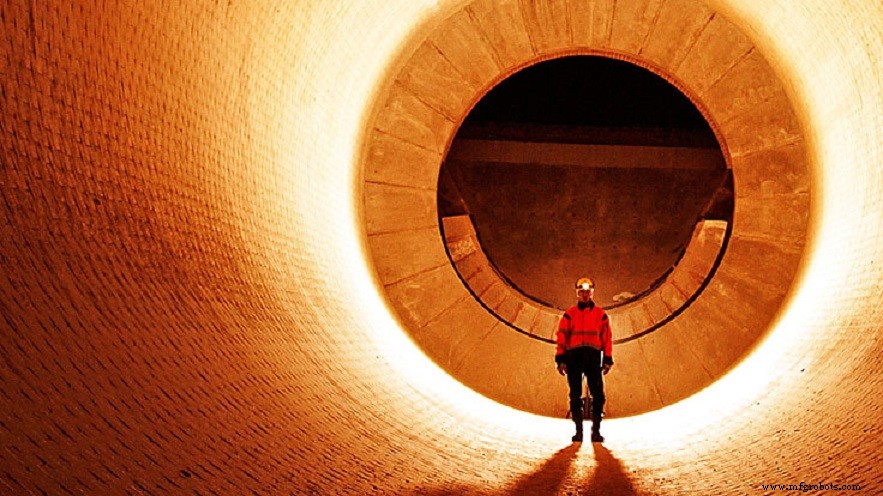
In industrial parlance, refractory materials are inorganic, non‑metallic substances that can endure temperatures of 1,500°C or higher. They are derived from natural ores or engineered through controlled processes, combining high‑melting oxides, non‑oxides, and carbon. Their exceptional thermal stability and mechanical strength make them indispensable for lining furnaces, boilers, kilns, and other high‑heat equipment.
13 Types of Refractory Materials and Their Applications
1. Fired Refractory Products
Produced by molding and high‑temperature sintering, fired refractories offer precise dimensional control and superior mechanical properties for demanding industrial environments.
2. Non‑fired Refractory Products
These refractories are formulated from raw granules and binders and used directly without sintering, providing rapid deployment for temporary or low‑temperature applications.
3. Special Refractory
Special refractories incorporate unique combinations of high‑melting oxides, non‑oxides, and carbon to meet niche performance requirements such as slag resistance or electrical insulation.
4. Monolithic Refractory (Bulk Refractory or Refractory Concrete)
Monolithic refractories are cast from finely graded aggregates, binders, and admixtures. They are poured or molded directly into place, offering a seamless lining solution for large‑scale furnaces.
5. Functional Refractory Materials
These tailored refractories are engineered for specific process conditions, combining refractory particles and binders to achieve optimal thermal and mechanical performance.
6. Clay Bricks
Composed of 30–48% Al₂O₃, mullite, glass, and cristobalite, clay bricks provide excellent strength and durability at high temperatures.
Applications: Widely used in masonry blast furnaces, hot‑blast stoves, glass kilns, and rotary kilns.
7. High Alumina Bricks
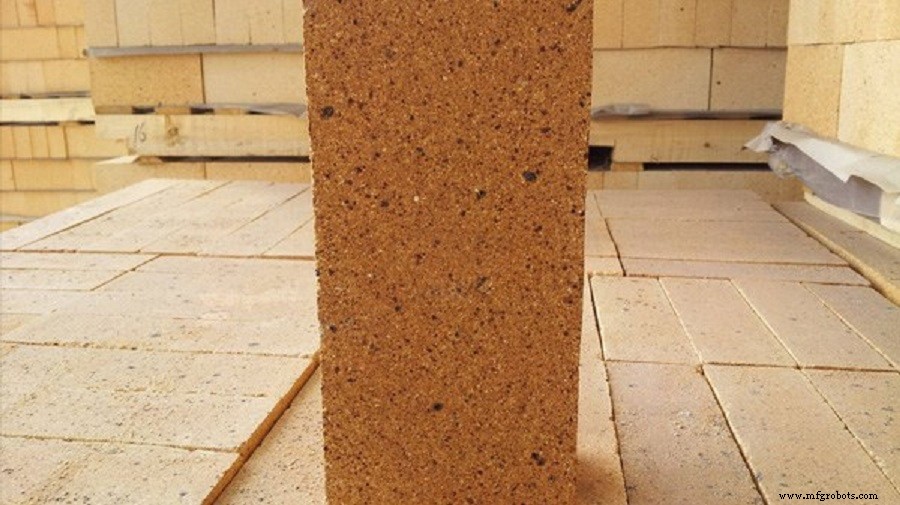
With over 48% Al₂O₃, these bricks consist mainly of corundum, mullite, and glass, delivering superior corrosion resistance and thermal stability.
Applications: Ideal for blast furnace plugs, hot‑air furnaces, electric furnace roofs, steel drums, and pouring systems.
8. Silicon Bricks
Silicon bricks contain more than 93% SiO₂, made from quartz, cristobalite, and glass, offering excellent thermal shock resistance.
Applications: Used for coking oven partitions, open‑hearth heat storage chambers, hot‑blast stove bearings, and high‑temperature kiln vaults.
9. Magnesium Bricks
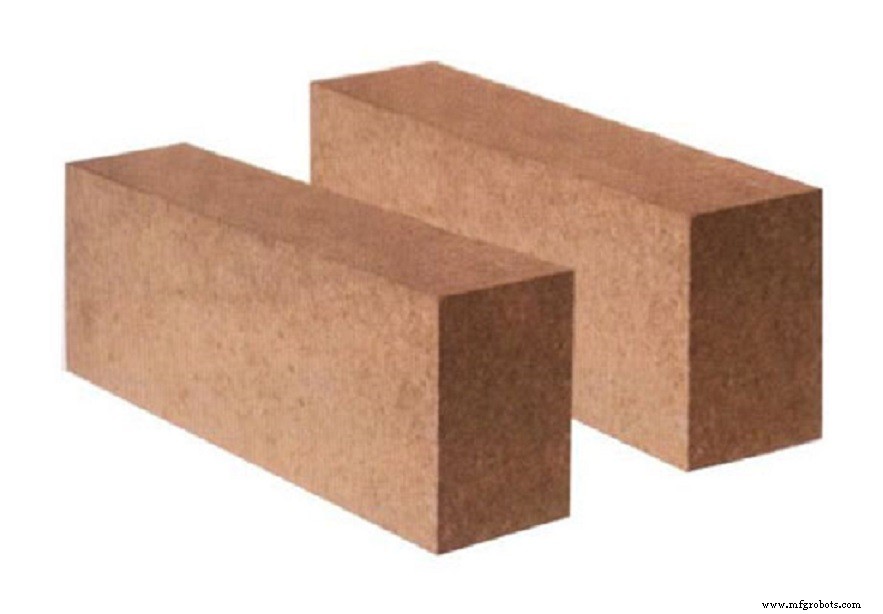
Alkaline refractories derived from sintered or fused magnesia, molded and sintered for optimal density.
Applications: Essential for open‑hearth furnaces, electric furnaces, and mixed‑iron furnaces.
10. Corundum Bricks
Containing ≥90% Al₂O₃ with corundum as the primary phase, these bricks excel in extreme heat environments.
Applications: Commonly installed in blast furnaces, hot‑blast stoves, furnace refining sections, and sliding nozzles.
11. Ramming Material
Formed through a high‑pressure ramming process, this bulk material combines refractories, binders, and additives for uniform density.
Applications: Lining of furnace bottoms, induction furnace linings, ladle linings, and tapping troughs.
12. Plastic Refractory
Amorphous, highly plastic refractory mixtures that maintain shape over extended periods, consisting of refractory, binder, plasticizer, water, and admixtures.
Applications: Suitable for heating furnaces, soaking furnaces, annealing furnaces, and sintering furnaces.
13. Casting Material
Fluid and castable, these refractories blend aggregates, powders, cement, and admixtures to produce a smooth, defect‑free lining.
Applications: Widely adopted monolithic refractory in various industrial furnaces.
Conclusion
We appreciate your interest in refractory materials. For deeper insights into refractory types, refractory metals, and their applications, visit Advanced Refractory Metals, where we offer premium refractory solutions at competitive prices.
Metal
- Titanium Wires: Types, Properties, and Industrial Applications
- Arduino Sensors: Types, Applications, and Real‑World Projects
- 8 Essential Conveyor Belt Types & Their Ideal Applications
- Industrial Ladders: Types, Applications & Safety Standards
- Diodes Explained: Types, Functions, and Applications
- Refractory Metals: Key Properties, Types, and Industrial Applications
- Explore the Four Key Welding Processes & Their Real-World Applications
- Punch Tools: Types, Uses, and Practical Applications
- Exploring Hot and Cold Chamber Die Casting: Types, Applications, and Advantages
- 7 Vise Types & Their Applications: A Practical Guide