



Understanding Pneumatic Valve Operation: A Practical Guide
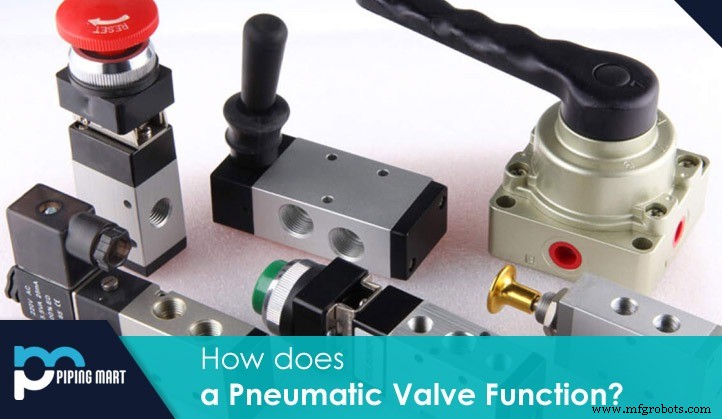
Pneumatic valves are the backbone of any compressed‑air system, directing airflow, controlling speed, and managing friction across a wide range of industrial and automotive applications. Selecting the right valve is critical for reliability, efficiency, and safety.
How Do Pneumatic Valves Work?
A typical pneumatic system consists of a lubricator, a pump, an air tank, and a flow regulator. The valve itself converts compressed air into controlled motion, effectively managing the energy that drives cylinders and other actuators. In many setups, the valve is actuated by a solenoid, enabling quick, repeatable, and precise control.
The core function of a pneumatic valve is to regulate the direction of compressed air. Actuation can be manual, automatic, pneumatic, or electronic. Solenoid‑actuated valves are common in automated systems, where a control signal opens or closes the valve, routing air to the desired path.
Key benefits of electrically‑actuated valves include:
- Rapid connection or disconnection of the compressed‑air source
- Precise control over cylinder extension and retraction
Common Valve Types
1. Spring‑Offset (Two‑Way) Valve
In this design, a spring returns the valve spool to a default position. The valve can reverse airflow, allowing for simple on/off control.
2. Two‑Way Directional Valve
Featuring two ports, this valve directs air between two paths. Ports can be locked or unlocked, enabling or blocking airflow as required.
3. Three‑Way Directional Valve
With three terminals, this valve can switch between two inlet ports and one outlet, or vice versa. It’s ideal for diverting flow between two cylinders or controlling a single cylinder’s direction.
4. Four‑Way Directional Valve
Equipped with four ports, this valve offers maximum flexibility, allowing for complex routing of air to multiple actuators or creating dual‑actuator systems.
Why Choose Pneumatic Valves?
Miniature, cost‑effective, and corrosion‑resistant, pneumatic valves are engineered for tight spaces and high reliability. Their robust construction and wide range of port configurations make them a go‑to solution for applications that demand speed, precision, and durability.
Metal
- Artificial Heart Valves: Types, History, and Future Innovations
- Mastering VHDL Functions: A Practical Guide to Efficient Design
- How Control Valves Operate: A Technical Overview
- Proportional Solenoid Valves: Precision Control in Modern Manufacturing
- Mastering Pneumatic Valve Sizing: A Practical Guide
- Key Qualities of High-Performance Pneumatic Valves
- Advanced Pneumatic Valves Drive Smarter Automation
- How a 3D Pen Works: From Filament to Finished Model
- Choosing the Right Valves for Industrial Fluid Systems: A Practical Guide
- Understanding Hydraulic Flow-Control Valves: Function, Types, and Applications