



The Science Behind a Great Manicure: How SNS Dipping Powder Outperforms Gel and Traditional Polish
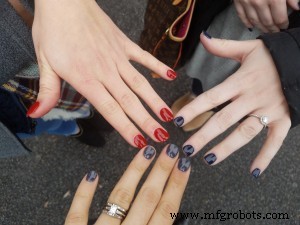 It started when our Quality Support Intern, Hannah, arrived with a stunning manicure that caught our eye. Her nails were finished with an SNS dipping‑powder system—a technique that diverges from gels, acrylics, and conventional polish, and claims to be gentler on natural nails. Intrigued, the Polymer Solutions blog team decided to experience the technology firsthand. We headed to Nail Envy in Christiansburg, VA, for a dip‑powder session.
Upon arrival, we selected colors from a swatch, since the powder containers don’t reveal the true hue. The process involves three distinct steps: a clear gel base coat, multiple dips into the powder, and a final gel top coat. Each nail receives four to five dips, and the top coat adds a glossy finish. The result is quick, durable, and visually striking.
One major selling point of dipping powder is its purported health benefits compared to acrylics or gels. From an aesthetic standpoint, it delivers a natural feel with a long‑lasting glossy look. The SNS Nails website notes that this technology has been in use for 20 years—though it was new to us. At $40 per manicure, it is pricier than standard options, but it endured a solid two weeks without chipping, while maintaining a healthy nail bed underneath.
To deepen our understanding, I reviewed the Safety Data Sheets (SDS) for the powder system components, a standard acrylic polish, and a gel polish. I consulted our scientist, Dr. Alan Sentman, who helped explain the underlying polymer chemistry.
Traditional nail polish typically contains nitrocellulose dissolved in a solvent, along with a sunscreen and plasticizer. The plasticizer reduces brittleness, while the sunscreen protects against UV‑induced fading. When applied, the solvent evaporates, leaving a polymer film. While easy to apply and remove at home, conventional polish usually lasts only a day or two before chips develop.
Gel polish, on the other hand, relies on a mixture of five monomers and a photoinitiator. When exposed to UV light, the initiator “sparks” a polymerization reaction, curing the polish. This process requires a salon’s UV lamp and a specialized removal routine—typically involving soaking in acetone and filing. Many users find it harsh on nails and inconvenient for home removal.
The dipping‑powder system is a two‑stage process. The base coat is a fast‑drying adhesive—essentially a super‑glue formulation enriched with vitamin E and B5—allowing the powder to adhere instantly. The powder itself is composed of poly(methyl methacrylate), pigment, and benzoyl peroxide, the latter acting as the initiator. The top coat is a solvent‑based accelerator that completes the polymerization. Notably, Dr. Sentman pointed out that the powder and top coat share three chemicals commonly used in bone cement, underscoring their proven safety in biomedical applications.
Because the base is a super‑glue, the only reliable remover is acetone, which is readily available in everyday nail polish removers. This means dipping‑powder manicures can be undone at home with minimal fuss, unlike gels.
Despite the higher upfront cost, the dipping‑powder manicure endured two weeks of daily dishwashing and hand washing—my routine as a mother of two—without damage or chips. The low‑maintenance removal process and the protection it offers to natural nails make it a compelling choice. Learning about the polymer science behind nail products has highlighted how everyday beauty routines are supported by advanced chemistry.
Polymer Materials
- The Ultimate Guide to Nail Types: Understanding Every Variety
- The Science and Craft of Modern Nail Polish
- 5 Critical IoT Gateway Mistakes to Avoid – Lessons from Fingoti’s Pebl
- Why Companies Are Building Custom Voice Agents to Secure Data and Drive Automation
- Level 5 Leadership: The Mirror That Drives Greatness
- Understanding Maintainability: The Key to Reliable Asset Management
- Inside Our Custom Camera Mounts: A Behind‑the‑Scenes Look at Time‑Lapse Production
- Tableau: Turning Raw Data into Strategic Insight
- Experience Wisconsin’s Premier Chili Cook‑Off: Spicy Competition & Local Flavor
- How Paint Protects Steel: The Science Behind Industrial Coatings