



IBEX 2018: Marine Industry Booms with 3D Printing & Thermoplastic Composites
In its seventh year of growth, the marine industry is surging in boat production and new models. This could be seen in the 28th International BoatBuilders’ Exhibition and Conference (IBEX, Oct. 2-4, Tampa, FL, US), which posted a 23% increase in attendees to reach 4,300 and a 14% increase in exhibitors, totaling 700 different companies. Four International Pavilions — Australia, France, Italy and South Korea — were part of a growing global presence, with 55 countries represented this year.
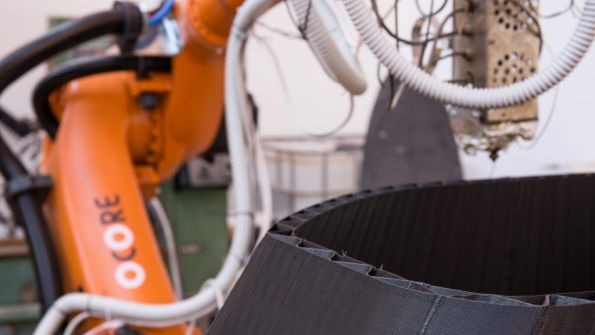
The heart of IBEX, its Education Conference, also saw growth this year, with seminar sales up 27%. For me, notable topics were 3D printed composite production tooling and thermoplastic composites. Highlights and composites-focused offerings included:
- The IBEX Special Seminar: Designing for Speed, which featured a panel of the industry’s top boat designers and 160 attendees with standing room only;
- 3D Printed Production Tooling presented by Belle Blanding of Composites Consulting Group and Stephen Wu of Xplora Yachts and Alliance MG LLC;
- Labor Efficiency and Vacuum Infusion by Kurt Hopf of Vectorworks;
- Making and Breaking Test Panels by Gougeon Brothers and Composites One;
- Composite Cosmetics: Techniques for Improving Surface Profile by Jeff Wright (Gougeon Brothers Inc.), Eric Heilshorn (3A Composites) and Rick Pauer (Polynt Composites USA);
- Resin Flow Fundamentals by Belle Blanding and Dean Callander, Composites Consulting Group;
- Avoiding Common Composite Repair Mistakes by Reid Fleming (Fleming Marine Composites) and Jeff Reber (Composites One);
- Making Structural Components with Thermoplastics by Darcy Hornberger (PolyOne Advanced Composites).
Professional BoatBuilder magazine, the original founder of IBEX and continued supporter of the annual event, has done a great job covering the latest in 3D printed marine molds and actual boats, including two articles by Dieter Loibner: Just Print it! and Print Yourself a Boat. Also, UMaine just made an announcement about helping boatbuilders deploy 3D printing for molds (see “UMaine Composites Center receives $500,000 to help boat builders ...”).
Future Materials seminar
I helped to present the CompositesWorld Seminar: Future Materials, covering new materials and processing methods, including innovations gathered from my travels, interviews and research. Co-presenter Jeff Wright explained how Gougeon Brothers Inc. seriously considers Life Cycle Analysis (LCA) and sustainability as new resin formulations are explored for its West System, PRO-SET and Entropy brands. He also discussed how continuing to increase sustainability must also be balanced with composite structural performance, processing and supply chain needs. Regarding processing, Wright noted future developments toward achieving higher Tg with lower post-cures. The final Future Materials speaker was Lingrove president Joe Luttwak, who presented a wood replacement, offering the look, feel and lightweight structural performance of old-growth wood but via much more sustainable flax fiber-reinforced bio-thermoplastic composites. Attendees were very interested in Lingrove’s technology for both interiors and structural applications.


Lingrove Ekoa TP materials combine flax fiber and bio-thermoplastic polymer to form lightweight, high-performance composites with the look and feel of wood but with much improved sustainability. SOURCE: Lingrove.
Recycling glass fiber composites
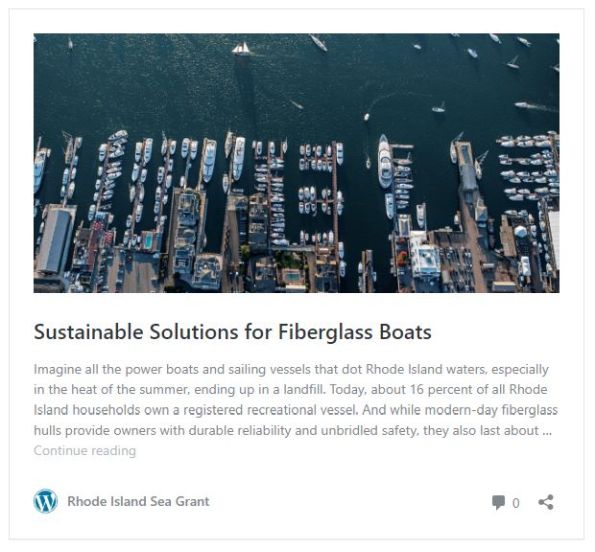
The most impactful seminar that I attended was Developing Sustainable Solutions for End-of-life Fiberglass Boats, presented by Evan Ridley and Wendy Mackie of the Rhode Island Marine Trades Association (RIMTA). A pilot recycling network has been established by RIMTA in collaboration with many other state organizations and government agencies. Modelled after a successful German system, the 2018 Rhode Island Fiberglass Vessel Recycling (RIFVR) project will collect end-of-life boats, drain fluids, remove engines, metals and electronics, and then work with industry partners to shred the fiberglass composite structures. This recyclate will then be trucked to a cement kiln where it will be used as fuel. It may also be combined with composite production waste — e.g., resin-filled vacuum bags, scrap laminate and resin — which increases the BTU content for the energy-intensive cement kilns.
The potential impact of this project is huge, offering the composites industry an opportunity to take a significant leap in closing the loop and achieving zero-landfill manufacturing. The challenge is will the industry come together and support RIMTA in completing this initial prove-out? For example, RIMTA is seeking financial backing but also partners to help with logistics R&D and expansion to other durable waste streams (e.g., composite production waste), as well as further collaboration with cement industry partners. This, then, gives the composites industry a firm step from which to continue forward, refining and expanding across the country and into other markets (e.g., windpower).
“Strain-tuning” gelcoats for different applications
Another highlight was recognition of Structural Composites Inc.’s development work with the 2018 Innovation Award in the Boatbuilding Methods & Materials category for its CoCure Technology used in Interplastic Corporation’s new Advanced Marine Coatings. These coatings offer a 200% increase in impact resistance, with a 70% increase in elongation, offering boatbuilders a tougher, more flexible exterior surface and increased design freedom in the underlying composite structure.
CoCure Technology comprises a unique polyester/polyurethane hybrid, where the urethane content can be varied, providing the ability to “tune” Advanced Marine Coatings for different strain requirements and tailor toughness from rigid to elastomeric. This product line also reportedly provides a 20% decrease in Hazardous Air Pollutant (HAP) content vs. conventional gelcoats. Structural Composites Inc. president Scott Lewit reviewed the technology development work in an IBEX technical seminar, noting that new formulations are in testing for the RV market that offer up to three times the weathering performance of current polyester gel coats. “This is very exciting,” he explains, “because we can improve durability and lightweight existing products while simultaneously opening opportunities for composites in new markets all with a low HAP material!”
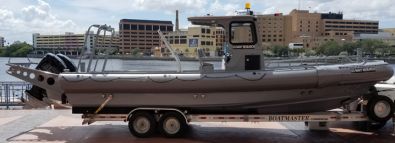

Exhibited at IBEX 2018, the 9-m-long explosive ordnance disposal (EOD) Advanced Combatant Craft (left) developed via a US Navy SBIR Phase III project uses new Advanced Marine Coatings based on CoCure Technology to allow hull flexure without coating failures to help mitigate shock. SOURCE: Structural Composites Inc.
IBEX 2019 is scheduled for October 1-3 at the Tampa Convention Center, where the show will remain for the next three years. For more information, visit www.ibexshow.com.
Resin
- Terry Wohlers on the 2018 Wohlers Report: Metal AM Growth, Global Trends, and the Future of 3D Printing
- Seven Key Trends That Shaped 3D Printing in 2018
- Revolutionizing Food & Beverage: How 3D Printing Drives Innovation and Efficiency
- Why Marine Industries Are Embracing Composites: 3 Key Benefits
- Industrializing Thermoplastic Epoxy: Innovations and Applications
- IACMI: Pioneering Innovation in Advanced Composite Manufacturing
- Fiberline Composites Sees Strong Growth in Wind Power Market
- Revolutionizing Sports Gear: How 3D Printing Transforms Athletic Equipment
- IMTS 2018: How Industry 4.0 is Revolutionizing Tool Holding
- Understanding the Printing Industry: Key Roles and Services