



Choosing Between Overmolding and Insert Molding: A Guide to the Best Manufacturing Solution
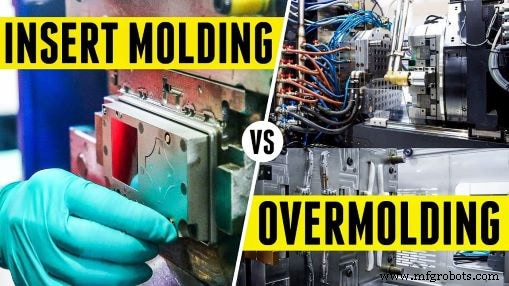
Gripping of tools used every day is now easy with the introduction of insert molding and overmolding. However, confusion tends to set in when comparing overmolding vs insert molding. It is understandable because the two have similar uses, and they are both types of injection molding.
A closer look will help you realize that the processes and some of their applications differ. There are many benefits of using insert molding and overmolding. In this article, you will learn about the differences between overmolding vs insert molding, the application of each manufacturing process, and their advantages and disadvantages.
What is Insert Molding?
Insert molding is a manufacturing process that involves the addition of parts, especially metal, over the molded parts. It involves the introduction of inserts in injection molding. Manufacturers carry out this process before curing the product and help reduce the processes involved during assembling after molding.
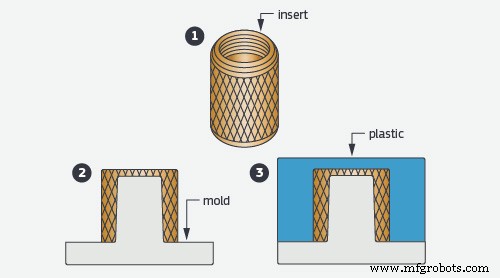
After obtaining the parts to be molded over the product, a secondary layer is obtained after inserting the parts into a mold.
There are two ways for carrying out insert injection molding – manual and automated insert molding. In terms of cost, manual insert molding is not as costly as automated insert molding. However, the latter is the best option in terms of consistency. There is a minimization of errors from humans, and efficiency increases with automated insert molding.
The introduction of inserts onto mold cores cast using the manual or automated process leads to the plasticization of plastic pellets after closing the mold halves. Ejection of the pieces from the mold takes place after the plastic’s hardening, followed by the encapsulation of the inserts in the parts.
Examples of application of insert molding include the addition of a plastic layer on top of the metal part of a screwdriver to make a plastic handle.
What is Overmolding?
The overmold meaning is the manufacturing process that involves a seamless combination of numerous materials into a solitary part or item. There are two necessary steps in carrying out the overmolding process. The first step involves molding and curing a substrate that is usually plastic.
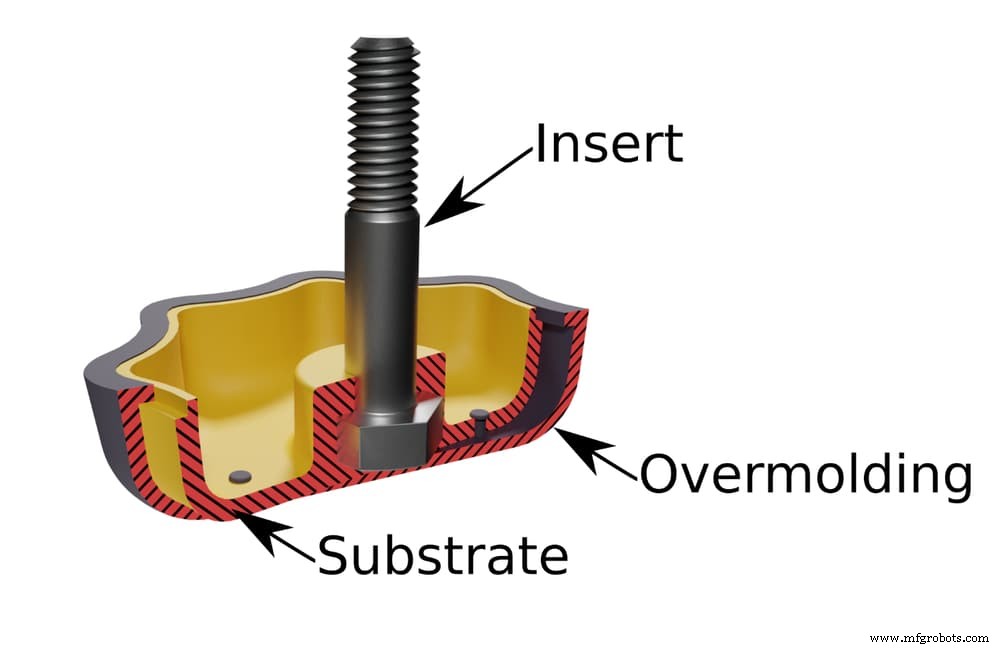
The second step involves the direct molding of a layer on the first layer leading to creating one product. A typical example is the overmolding of a toothbrush by forming a basal layer and then another rubber layer to the product.
The cost of production greatly reduces with overmolding. Some of its components include a rigid plastic base enclosed with a thin, flexible material that resembles rubber. The versatility of the manufacturing process is astounding – useful for various items used at homes, such as toothbrushes, razors, and hand tools.
Common Trait: Applications of Insert Molding and Overmolding
Insert molding and Overmolding both can produce various parts in several industries. Despite the overmolding vs insert molding difference (shown in the next part), they have common traits in applications.
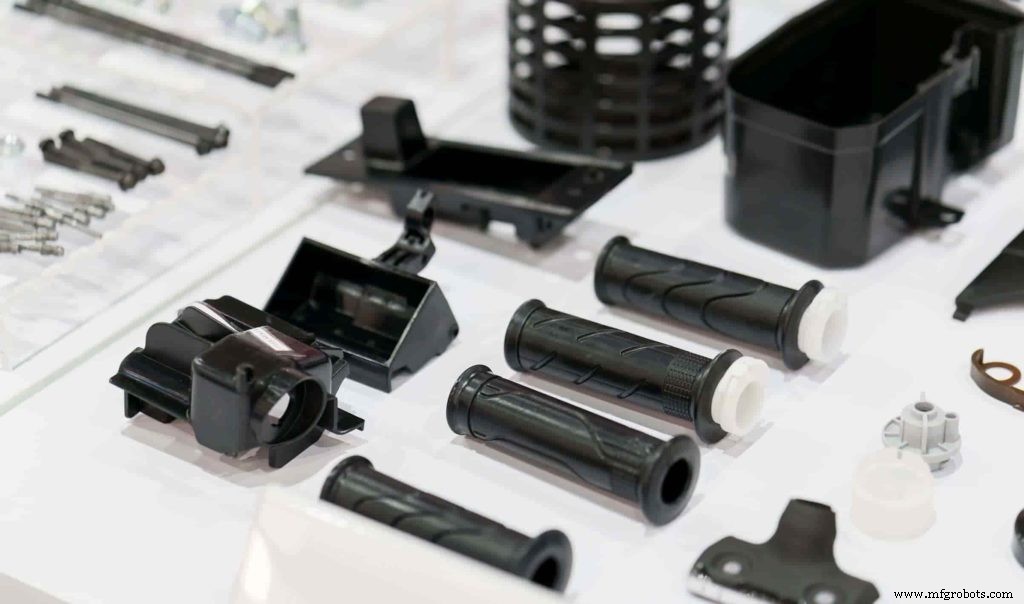
The applications of these processes either singly or combined result in the production of different products, including:
Automotive Devices
Both processes help produce numerous automotive components containing both metal and rubber/plastic parts. One of the production processes of a battery includes insert molding. Other devices produced with insert molding include knobs, dash panels, motors, and handles.
Cosmetics Industry
The cosmetics industry is another sphere of life that insert molding and overmolding cut across. The insert molding and overmolding produce many of the equipment used in beautifying and enhancing the products’ attractiveness.
These manufacturing processes made creating custom packages with multiple colors and special surface textures possible. Examples of such products include perfume bottles, makeup brushes, and compacts.
Consumer Goods
As stated earlier, insert molding and overmolding is not limited to medical industries and automotive plastic parts production, but it also finds applications in various homes. Many of the materials used at home undergo these manufacturing processes.

These materials include toothbrushes, containers, and cell phone cases. Patio chairs and step stools undergo the process of overmolding before it is safe to use. Whenever you notice solid materials that contain numerous colors at home, they must have undergone one of these processes.
Electrical Appliances
The placing of rubber on top of the electrical wire is possible by the process of insert molding. Coating many products with insulators prevent them from conducting electricity through another body when in contact. Insert modeling makes this possible, and it is safer to handle electrical appliances.
Insert molding and overmolding, the sub-processes of injection molding, are cost-effective manufacturing solutions to produce prototypes and end-use production parts. RapidDirect has the capabilities to adequately manufacture these custom products across many industries. The expertise and experience of our technical team ensure that you get the best results at the most competitive pricing from your project. Be it consumer goods, electrical appliances, or automotive devices, you can be sure of the utmost quality.
Differences Between Overmolding vs Insert Molding
Although there are many similarities between insert molding and overmolding based on their applications, certain differences exist. The overmolding vs. insert molding difference spans over the following:
Process
Overmolding involves a two-step manufacturing process. The molding and curing of substrate entail one step, while the second step is molding another layer on the former. Insert injection molding does not involve a two-step manufacturing process. Still, it eventually leads to molding another layer on top of a product.
Speed
Insert molding takes time in molding another layer on the product because both pieces are developed separately. This makes it relatively time-taking than overmolding. It entails a total product encapsulation in the molded component, unlike overmolding, which entails a partial encapsulation.
The overmolding process reduces the manufacturing time. This is possible because it does not require producing the two pieces separately and requires direct molding of the second piece to the product. However, the process of overmolding is difficult; therefore, operators need to adhere to stated instructions.
Material Selection
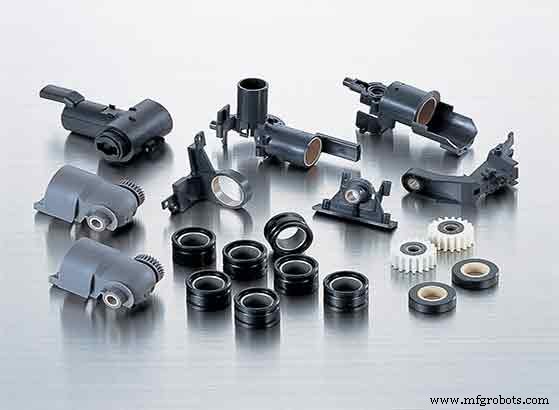
Adhesives are unnecessary for overmolding. Therefore, the products tend to be very durable and flexible. There is no need for any types of mechanical fasteners during the insert molding process since the essential parts of the metal are present in the mold. Due to the materials used, products that go through overmolding tend to be stronger than those that go through insert molding.
Cost
Insert injection molding greatly reduces the cost of assemblage and generates more than a thousand parts in a day is possible. Insert injection molding costs reduce greatly when the production is in large quantities. However, overmolding involves two steps, and it is more expensive than insert molding.
Advantages and Disadvantages of Overmolding vs Insert Molding
The introduction of insert molding and overmolding during manufacturing processes in various industries provides many benefits; however, no matter the level of perfection of material, it will always have a downside.
Insert Molding Pros
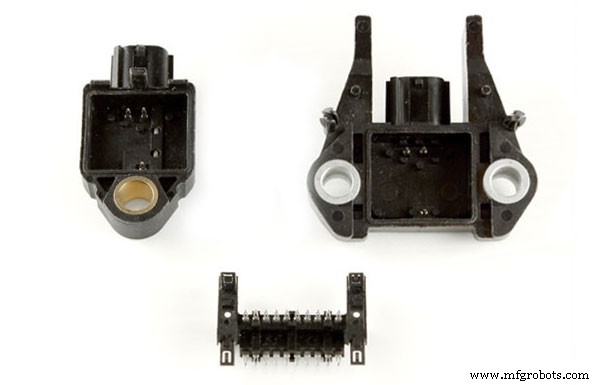
There are many benefits associated with the use of insert molding, and some of them include:
- Cost Reduction: Creating thousands of products in a day is possible with insert injection molding. The economic significance of this led to the reduction in the cost of molding production.
- Faster Assembly Time: Assembling of products required in any CNC machining is usually difficult but, insert molding eliminates the need for assembling. Due to the elimination of assembling, there is a reduction in the total cost of production.
- Performance of the Parts: Depending on the function the product will serve, the parts can serve different purposes. The combination of plastic and metal parts benefits the users of the products and the manufacturers. Using plastic parts enhances the flexibility of the design and makes it lighter compared to when metal is used.
Insert Molding Cons
Although insert molding entails numerous benefits, its use has a few downsides. They include:
- Multiple Manufacturing Technologies: Custom-designed inserts require machining processes like die casting. This is done before the actual injection molding process. The effect of such is an increase in expenses per part.
- Part Design Complexity: Making custom-made metal inserts in injection molding will require designers to understand the design for manufacturing principles of the technology. Only then can the integration of involved technologies be practical.
Overmolding Pros
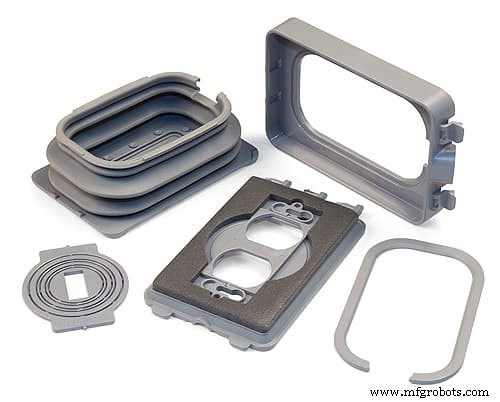
Just like insert molding, overmolding also have many beneficial effects, and some of them include:
- Increased Material Flexibility: Since overmolding requires the combination of many parts. This increases the flexibility of the part due to leveraging each of the benefits of the materials involved. Moreover, manufacturers can use the overmolding design guide to improve flexibility.
- Elimination of Adhesives: There is no need for adhesives in overloading because different parts are allowed to fuse with the help of overmolding. Therefore, the durability of the products increases. There is also an overall reduction in the cost of production.
- Improved Product Performance: Adding other materials of good quality to a product significantly increases the product’s performance. Products that undergo overmolding have two material edges over the normal products used in the industries. Therefore, the performance of overmolded products is enhanced.
Overmolding Cons
Although overmolding provide enhanced products performance, there are a few downsides to its use, and they include:
- Multiple Production Processes: There are two steps involved during the manufacturing process using overmolding, increasing the part cycle time. The cost of production tends to increase compared to when you only need to mold a single part in a single process. Also, overmolding requires more tools than a single molding since it is a two-step process.
- Debonding: There is a risk of delamination if two distinct parts are bonded together in an injection mold. Delamination will occur once there is a fluctuation in the optimal temperature range. Mechanical interlocks are necessary in cases where the heat available cannot successfully bond the materials together.
How to Choose Between Insert Molding and Overmolding
Before choosing between these two processes, you have to consider the overmolding vs insert molding difference. This will help you make informed decisions.
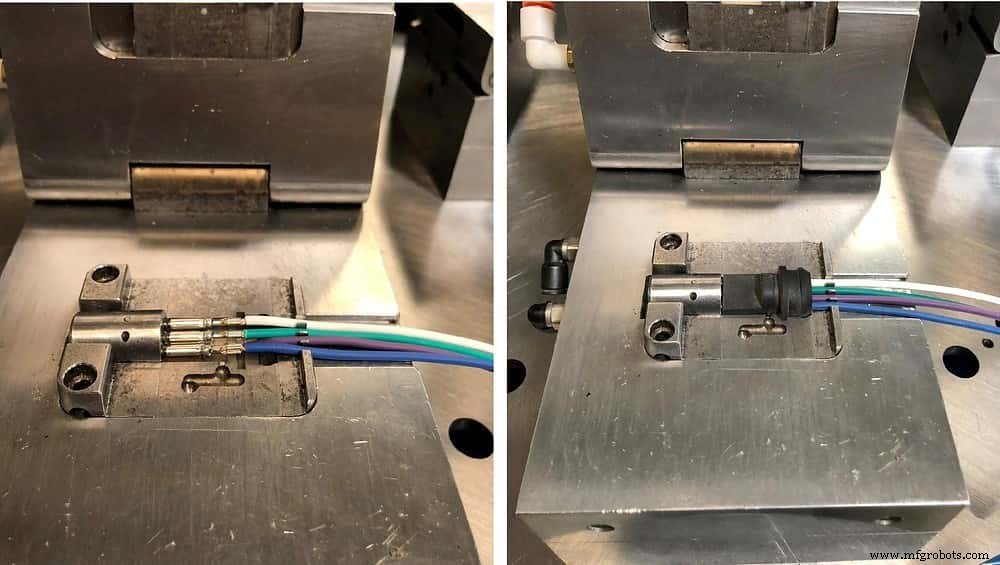
It would be best to also consider your applications before choosing your preferred manufacturing process. Some components made with overmolding may not be possible with insert molding, and vice versa.
Use overmolding with injection molding if:
- Rubber or thermoplastics can be part of the finished product
- There are multiple layers of colors on the finished products
- Production of the secondary layer and the substrate will take place
- There is no need for dissembling the final piece
Select insert molding if:
- The substrate used is prefabricated
- The substrate contains computerized parts, metals, or wires
- The final piece needed to be a solid piece
Conclusion
Overmolding and insert molding are effective injection molding processes. They help to create various parts for an extensive range of applications. It is important to consider the overmolding vs insert molding difference before choosing a process for your project. The kind of finished piece you desire and its application will determine the process you will need to use.
Due to the similarities between the two manufacturing processes, there may be difficulties in selecting the best process to use. Therefore, you need the help of professionals to help you make the best decision. In such a case, you can contact RapidDirect to get expert advice.
Premium Quality Injection Molding Services
At RapidDirect, we offer the best injection molding services with the help of expert technicians. We manufacture injection molded parts that meet customers’ expectations and even exceed them. Our experts are knowledgeable, and they will help you choose the best process for your project.
We also offer other manufacturing services, including CNC machining, sheet metal fabrication, and 3D printing. With RapidDirect, you can be sure of competitive pricing, automated DfM analysis, shortest lead time, and many more. Upload your design file today to get an instant quote!
FAQs
What is TPE Overmolding?This process involves meting and injecting TPE (thermoplastic elastomer) onto an already existing substrate or plastic part. This way, a chemical bond is created between the plastic material and the TPE.
Is Insert Molding the Same as 2K Injection Molding?While insert molding involves forming a secondary part over a substrate, 2K injection molding is quite different. Double injection (2 shot molding) is a highly specialized manufacturing process for creating complicated injection-molded parts. It is automotive and involves injecting multiple materials into single, multi-chambered molds.
What Plastics Can You Overmold?Some of the plastics that can be overmolded include:
High-density polyethylene (HDPE)
PEEK resin
Polymethyl methacrylate acrylic (PMMA)
Acrylonitrile butadiene styrene (ABS)
PBTR resin
Resin
- Four Proven Manufacturing Methods for Durable O‑Rings
- Understanding Composite Manufacturing: Processes, Technologies, and Economic Impact
- Design for Manufacturing: A Strategic Blueprint for Cost Efficiency and Quality
- How Product Serialization Protects Your Manufacturing Business: Key Benefits & ROI
- Digital Thread Maturity: Unlocking Seamless Smart Manufacturing
- Insert Molding vs. Overmolding: Choosing the Right Plastic Fabrication Technique
- Mastering Plastic Injection Molding for Efficient Manufacturing
- Is Metal Casting Right for Your Product? 5 Key Indicators to Make the Decision
- Selecting the Optimal Manufacturing Method for Durable Electronics Enclosures
- The Complete Manufacturing Process of Electronic Cables