



Understanding 10 Key Plastic Manufacturing Terms—A Practical Guide
For professionals and newcomers alike, the terminology of plastic manufacturing can seem daunting. Plastics are prized for their versatility, but their diverse properties—often varying even within a single grade—require precise language.
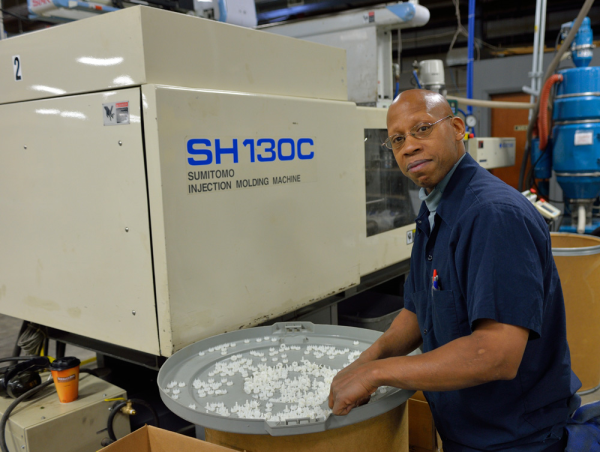
From marine and aerospace applications to automotive and semiconductor components, plastic parts play a critical role across industries. Below are ten essential terms every engineer, designer, or supplier should master.
1. Annealing
Annealing involves gradually heating a plastic above its glass‑transition temperature, holding that temperature for a specified duration, and then cooling it slowly. This process relieves internal stresses introduced during molding or machining, improving dimensional stability and mechanical performance.
2. Creep
Creep is the time‑dependent, permanent deformation that a solid material experiences under sustained load. In high‑pressure applications—such as seals or structural parts—engineers must select polymers with low creep rates to maintain integrity over the product’s life.
3. Conductive Plastics
Conductive plastics are hybrid polymers engineered to carry electrical current or dissipate static charge. By incorporating conductive additives—copper, silver, aluminum, carbon black, or carbon fibers—designers can tailor a part’s resistivity to meet EMI, grounding, or antistatic requirements.
4. Continuous Service Temperature
This is the maximum temperature a plastic can operate at indefinitely without a measurable loss in mechanical or electrical properties. Operating at or below this limit preserves part life, whereas the higher “maximum service temperature” is only safe for brief exposure.
5. Crazing
Crazing manifests as a network of hair‑like microcracks beneath a part’s surface. Often a precursor to catastrophic failure, it can also be observed in ceramic glazes. Early detection is key to preventing fracture.

6. Flame Rating / UL 94
UL 94 is a globally recognized flammability test developed by Underwriters Laboratories. Ratings—V‑0, V‑1, V‑2 for vertical flame and HB for horizontal burn—describe how quickly a material extinguishes and the amount of dripping. V‑0, for example, stops within 10 seconds.
7. Molding Shrinkage
During the cooling phase of injection or extrusion, plastics contract. The shrinkage rate varies by polymer grade and part geometry, so designers must account for it to achieve the desired dimensions and tolerances.
8. Self‑Extinguishing
Self‑extinguishing refers to a polymer’s ability to cease burning once the external flame source is removed. This property is critical for safety‑critical components in aerospace, automotive, and consumer electronics.
9. Stress Crack
A stress crack is a localized fracture caused by tensile, compressive, or shear forces. Materials with high brittleness or inadequate impact resistance are more prone to stress cracking under repeated loading.
10. Viscosity
Viscosity measures a material’s resistance to flow. In fluids, it correlates with “thickness” (e.g., glue > water). For polymers, it reflects how a material resists deformation under stress—a concept often discussed as the inverse of creep. Some researchers even treat glass and certain polymers as extremely viscous fluids, citing phenomena such as the slow flattening of antique glass panes.
Have more questions about plastic manufacturing terminology? Let us know in the comments, and we’ll provide clear definitions. We’d also love to hear which terms you find most useful.
Explore additional industry jargon by downloading our complimentary Glossary of Plastic Manufacturing Terms.

Resin
- Plastic Demystified: An Expert FAQ on Definition, Materials, and Applications
- Is Plastic Manufacturing Sustainable? Innovations Reducing Its Environmental Footprint
- Can Organic Materials Drive the Next Generation of Plastics?
- Plastic Manufacturing: Evolution, Current Trends, and Future Outlook
- Biodegradable Plastics: Benefits, Challenges, and the Path Forward
- 6 Key Ways Plastic Materials Transform Modern Home Construction
- Plastics Power Modern Robotics: Boosting Efficiency, Safety, and ROI
- Polyurethane vs. Plastic: A Technical Comparison
- Manufacturing with Recycled Materials: Building a Sustainable Future
- 5 Sustainable Manufacturing Trends You Can't Miss