



What Plastic Makes LEGO Bricks? A Deep Dive into ABS and Production
Four years ago, a LEGO set first arrived in our home, sparking a childhood obsession that grew into a full‑blown hobby. As a plastics engineer, I was curious: what material underpins the iconic bricks that have powered countless creative projects?
LEGO’s journey began in 1932 when Ole Kirk Christiansen, a Danish carpenter, crafted wooden toys in his Billund workshop. By 1934, the company adopted the name LEGO, a blend of the Danish words *leg* (play) and *godt* (well). The transition to plastic toys in 1947 marked the start of a new era, culminating in the first interlocking bricks in 1949.
From Vision to Volume: The Birth of the Modern Brick
In 1954, Christiansen’s son, Godtfred, envisioned LEGO bricks as a universal system for creative play. The breakthrough came in 1958 when the company patented the modern brick design, addressing earlier limitations in locking capability and versatility. Five years later, a suitable material was identified: acrylonitrile‑butadiene‑styrene (ABS).
Why ABS? The Science Behind the Strength
ABS is a thermoplastic polymer comprising three monomers—acrylonitrile, butadiene, and styrene. The butadiene component, a natural‑rubber derivative, grants the material exceptional impact resistance and toughness. Developed during the mid‑1940s war effort, ABS became a staple in high‑performance plastics. LEGO’s current supply chain is largely based on a proprietary variant known as Novodur ABS, sourced from Lanxess AG, the spin‑off of Bayer AG’s plastics division. For transparent elements, LEGO uses Makrolon polycarbonate, and Macrolex dyes provide the vibrant colors that have become synonymous with the brand. Certain cloth and string components are fabricated from Delrin or nylon variants.
Mass Production: From Granules to Finished Sets
LEGO’s injection‑molding process is a marvel of automation:
- Large silos store up to 33 tons of ABS granules.
- Granules are heated to approximately 450 °F (230 °C) before being pressed into molds under hundreds of tons of pressure.
- Cooling and ejection take about 10 seconds, after which pieces travel along conveyor belts into boxes.
- Robot trucks, guided by floor grooves, transport full boxes to an assembly hall where a giant printer stamps logos, numbers, and other details.
- Automated cassette systems release the exact number of pieces needed for each set, after which packaging operators seal the boxes and add instructions.
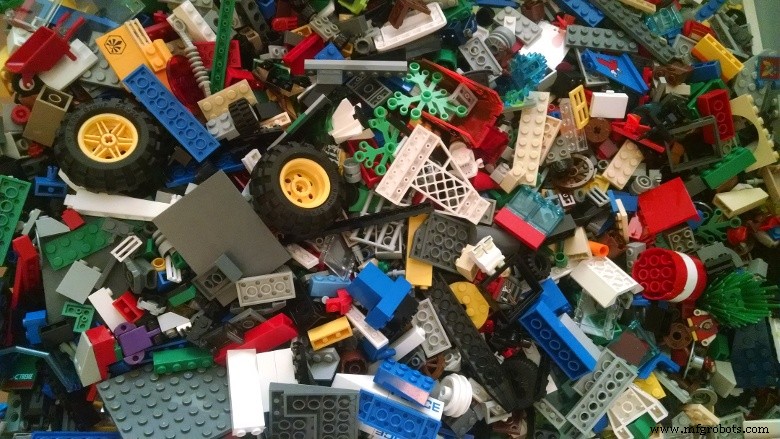
Images of the production line illustrate the precision and scale of this operation:
Understanding the meticulous process behind each brick gives new appreciation for the toy that has fueled so many creative minds.
Share Your LEGO Story
Do you have a favorite LEGO memory? Let us know in the comments below!
Learn More About High‑Performance Plastics
Download our free ABS and high‑performance plastics guide to dive deeper into the science of the materials that power modern manufacturing.

Resin
- Platinum: From Ancient Alloys to Modern Catalysts – Applications Explained
- Cushioning Laminates: Production, Materials, and Future Trends
- Acrylic Plastic: Properties, Production, and Future Trends
- Premium Plastic Food Wrap: Preserve Freshness & Seal Odors
- Are Plastic Hardware Truly 100% Plastic? The Role of Plastic Fillers Explained
- Understanding Glass Fibers in Reinforced Plastics: Production, Types, and Applications
- Vented Plastic Screws for High‑Vacuum Systems: Design, Materials, and Leak Prevention
- Resin Identification Codes: A Comprehensive Guide to Plastic Recycling
- The Evolution of Polymer Raw Materials: From Gutta‑Percha to Modern Plastic Resins
- Polypropylene: Key Features, Uses, and Production